
东观军情|日本加速研发潜射导弹 “专守防卫”已名存实亡
According to reports from Kyodo News, The Tokyo Shimbun, and other Japanese media on August 19, the Japanese Ministry of Defense has revealed its budget request for the fiscal year 2027 in advance. To strengthen the so-called "capability to attack enemy bases," the Self-Defense Forces will develop and equip submarine-launched hypersonic missiles. Wei Dongxu, a military commentator from China Central Television, believes that Japan's development and deployment of covert, underwater-strike hypersonic missiles provide substantial support for the rise and expansion of "new militarism."
01
To attack other countries from underwater, submarines will stealthily fire the first shot
Wei Dongxu believes that according to the current "Defense Capability Development Plan," Japan's annual defense budget will further increase, possibly exceeding 10 trillion yen. The ambitions of the Kishida government to expand military forces and engage in external military actions are evident.
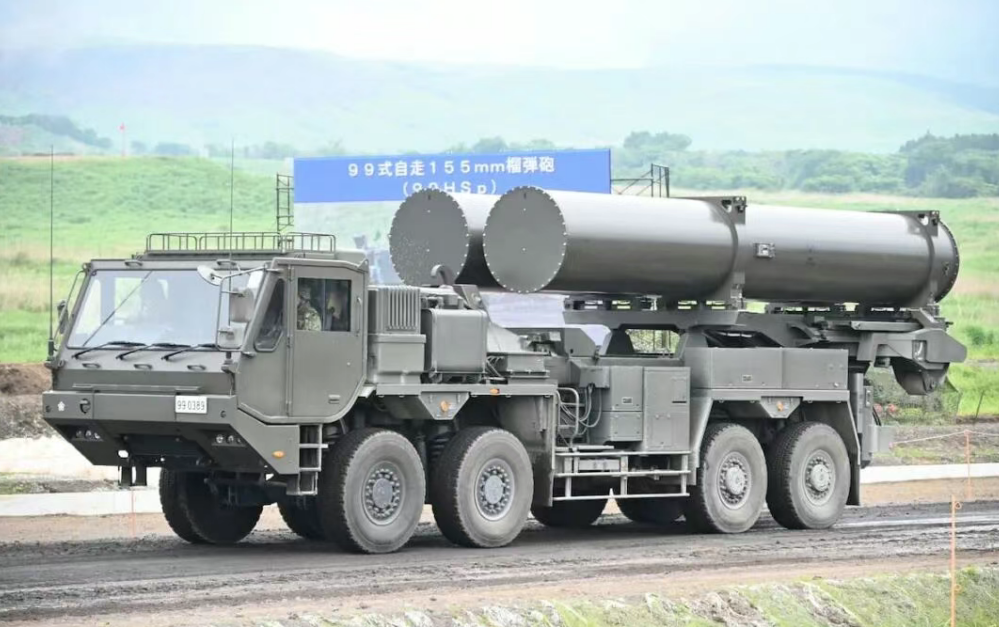
The "Type 25 High-Speed Glide Bomb" launch vehicle, equipped with mobile deployment capabilities.
The Japanese Ministry of Defense has identified the development and equipping of submarine-launched hypersonic missiles as one of its "re-militarization" goals. The Ministry believes that underwater combat platforms are less likely to be attacked by the enemy and are suitable for implementing long-range fire strikes. The Ministry is currently developing a "missile vertical launch module" for the Maritime Self-Defense Force, which can be embedded in conventional submarines and large unmanned underwater vehicles. Currently, the Ground Self-Defense Force has equipped the "Type 25 High-Speed Glide Bomb," which has a range of 600 to 800 kilometers for its basic model. By 2027, the improved version equipped with a wave-riding body warhead will have a range of 2000 kilometers, making it the most formidable standoff strike weapon in Japan's arsenal.
It now appears that the improvements to the "Type 25 High-Speed Glide Bomb" not only include an extended range but also a general-purpose modification. Once the submarine-launched version of the "Type 25 High-Speed Glide Bomb" matures, it can be embedded in the "Big Whale" class lithium-ion battery submarines with a displacement of over 3000 tons in the form of a firepower module. This will enable the Japan Maritime Self-Defense Force's underwater combat platforms to quietly approach the waters near other countries and use long-range, high-penetration missiles to launch surprise attacks on high-value targets in deep areas. The concept of using large unmanned underwater vehicles to carry long-range missiles is even more dangerous. This is because large unmanned underwater vehicles have stronger stealth capabilities than submarines and do not pose a risk of personnel casualties. It is evident that the Japanese Ministry of Defense has already selected the combat platform for "firing the first shot" in external military actions.
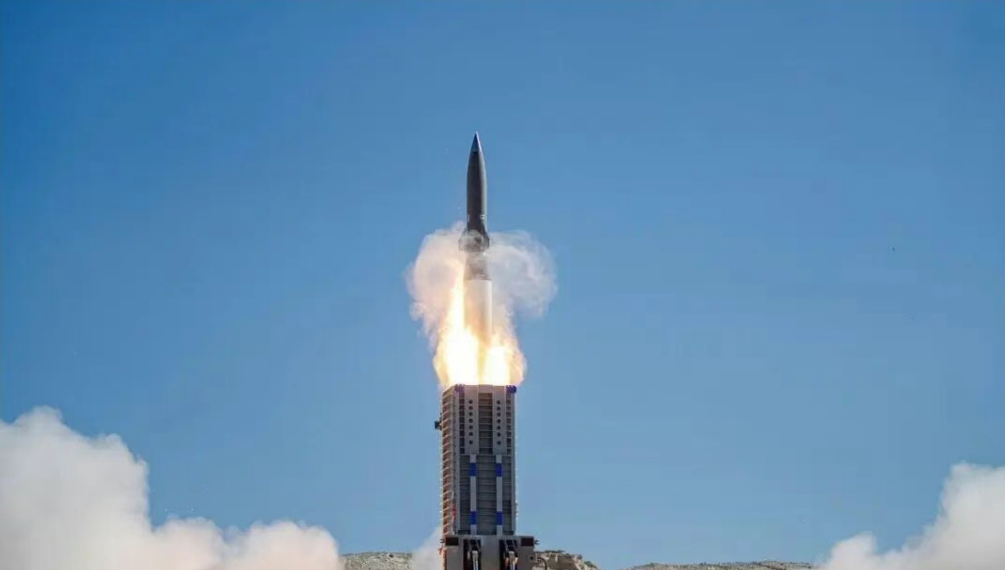
Japan tests the "Type 25 High-Speed Glide Bomb"
02
Japan attempts to use "AUKUS" to conceal its true intentions
To accelerate the rapid upgrade of hypersonic missile technology, Japan has begun cooperation with Australia. On August 18, Japanese Defense Minister Kōzuki Shinjirō held talks with Australian Deputy Prime Minister and Defense Minister Richard Marles in Canberra. The two sides reached an agreement on the Japan Self-Defense Forces conducting test launches of long-range missiles within Australian territory for the so-called "strengthening counterattack capability (capability to attack enemy bases)."
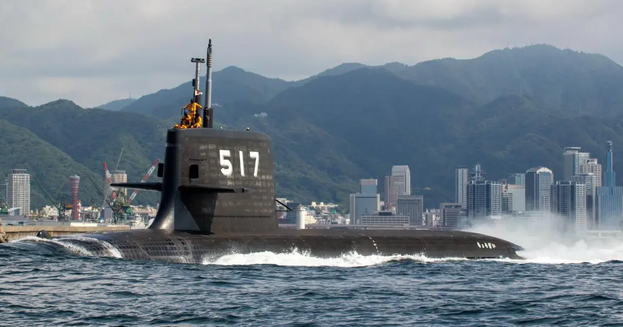
Japan Maritime Self-Defense Force "Big Whale" class submarine
Wei Dongxu believes that the second pillar of the "AUKUS" defense cooperation framework includes a joint development project for hypersonic missiles. Japan has joined the cooperation framework of the second pillar of "AUKUS." To improve and upgrade hypersonic missiles, Japan needs vast and sparsely populated weapon testing grounds, as well as to introduce more advanced and mature technologies. In both of these aspects, Australia can provide assistance. Australia has large weapon testing grounds and has been collaborating with the United States on hypersonic missile development for over 15 years.
Wei Dongxu believes that Japan, under the guise of "strengthening counterattack capability," is accelerating the development of offensive weapons using the "AUKUS" platform, and the so-called "exclusive defense" has long been a mere formality. The international community must expose and refute its schemes to break through the constraints of the pacifist constitution under the pretext of "cooperation."
Commentator|Wei Dongxu
Editor|Wang Yiming
Reviewed by|Yang Qiong
Supervised by|Cai Yaoyuan
日本防卫省正在加速研发潜射高超音速导弹,以增强其军事能力,目标是在2027年前实现。预计国防预算将超过10万亿日元,反映出向进攻性军事战略的转变。日本还与澳大利亚在高超音速导弹技术方面进行合作,表明其防御姿态发生了重大变化。
- 日本正在研发潜射高超音速导弹,以增强其打击能力。
- 预计到2027年,国防预算将超过10万亿日元。
- 日本与澳大利亚在高超音速导弹技术方面进行合作。
- 25型高速度滑翔导弹的射程为600-800公里,改进版预计可达到2000公里。
- 日本的军事战略正向进攻能力转变,削弱了其和平宪法的基础。