
日本加速“再军事化” 学界警惕军工复合体崛起

Since May, Japan has been frequently active regarding arms exports: Prime Minister Sanae Takaichi visited Australia, prioritizing cooperation in weaponry and technology as a key direction for bilateral security collaboration; Defense Minister Shinjiro Koizumi visited the Philippines to discuss the export of Japan's second-hand frigates. Recent data released by the Japanese government indicates that, influenced by Japan's strengthened defense capability policy, the order volume of the Ministry of Defense has tripled over the past five years, accounting for half of the government's public demand orders for the fiscal year 2025.
The Japanese government is continuously "loosening restrictions" on the military-industrial sector through various means. It can be said that the Japanese military-industrial complex has been reactivated and is rapidly rising, marking another significant trend in Japan's acceleration of "remilitarization." This has raised ongoing concerns and vigilance among scholars within Japan.
On April 21 of this year, the Japanese government passed a cabinet resolution, completing the revision of the "Three Principles on Transfer of Defense Equipment" and its operational guidelines, which in principle will allow the export of lethal weapons. In response, Sun Ziqiang, director of the East Asia Community Institute, pointed out that Japan's long-held principle of peace is undergoing a significant transformation. Sun Ziqiang also expressed his concerns about the role of Japan's military-industrial sector in this context.
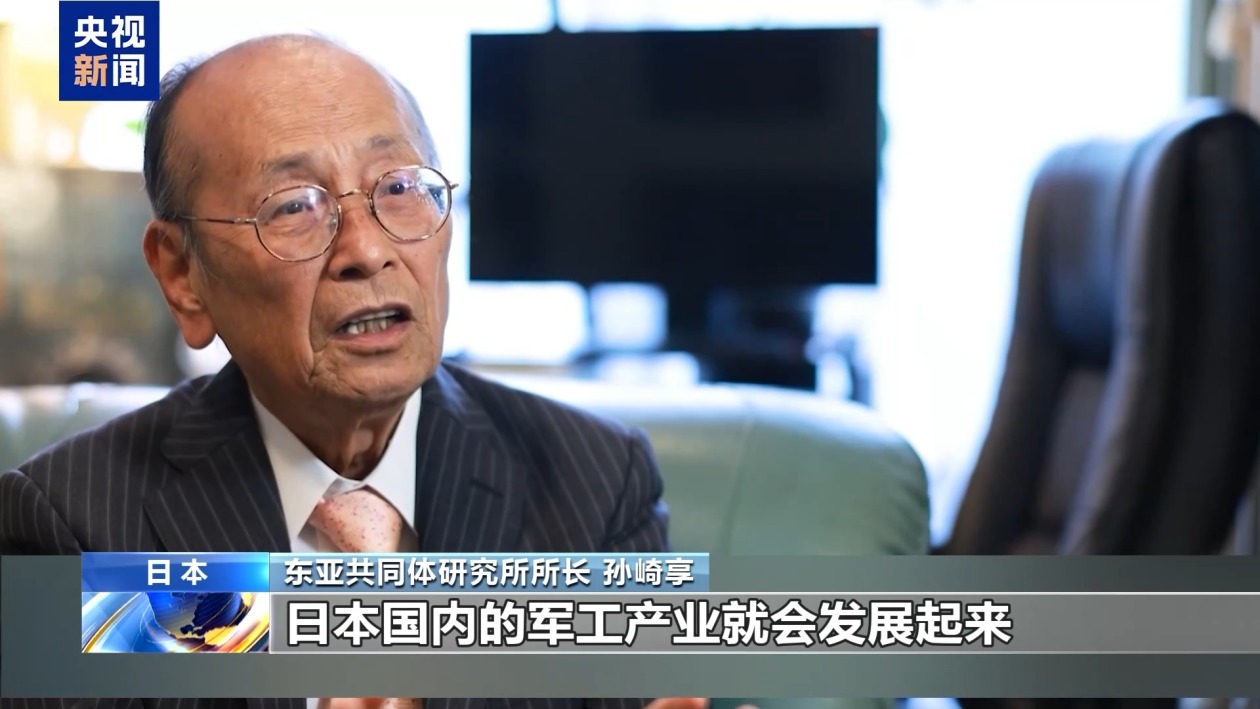
Sun Ziqiang, Director of the East Asia Community Institute: Japan's long-standing national positioning has been to avoid war and promote peace. According to this principle, members of the Self-Defense Forces do not participate in overseas combat and do not provide weapons to areas where fighting occurs. The government's decision to export missiles, ammunition, and other materials used on the battlefield signifies a major change in Japan's peace strategy. Once Japan can export weapons, the domestic military-industrial sector will develop, and related forces will gradually gain political voice. Therefore, there may emerge political forces that combine with economic interests to obstruct the peace route, which is very dangerous.
In fact, some Japanese scholars have consistently held a skeptical and cautious attitude towards the Japanese government's continuous increase in defense budgets, the purchase of various equipment, and the ongoing profits of Japan's military-industrial sector in this process.
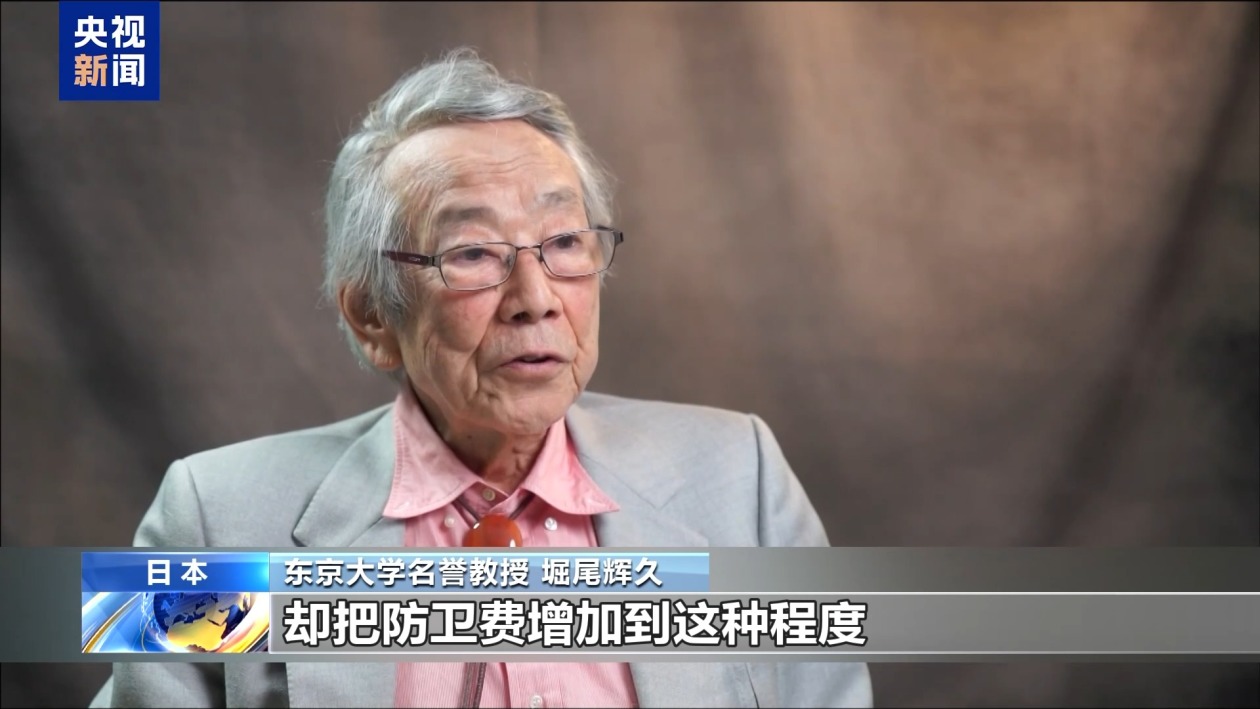
Hirohisa Hori, Emeritus Professor at the University of Tokyo: Japan clearly has a pacifist constitution that stipulates Japan does not engage in war and does not possess military forces. But why has the Japanese government increased the defense budget to such an extent while the education budget has not increased? Isn't that strange? Japan's defense budget is indeed astonishing, and Japan has purchased a variety of equipment. Where exactly will these missiles be deployed, and what are they intended to target?
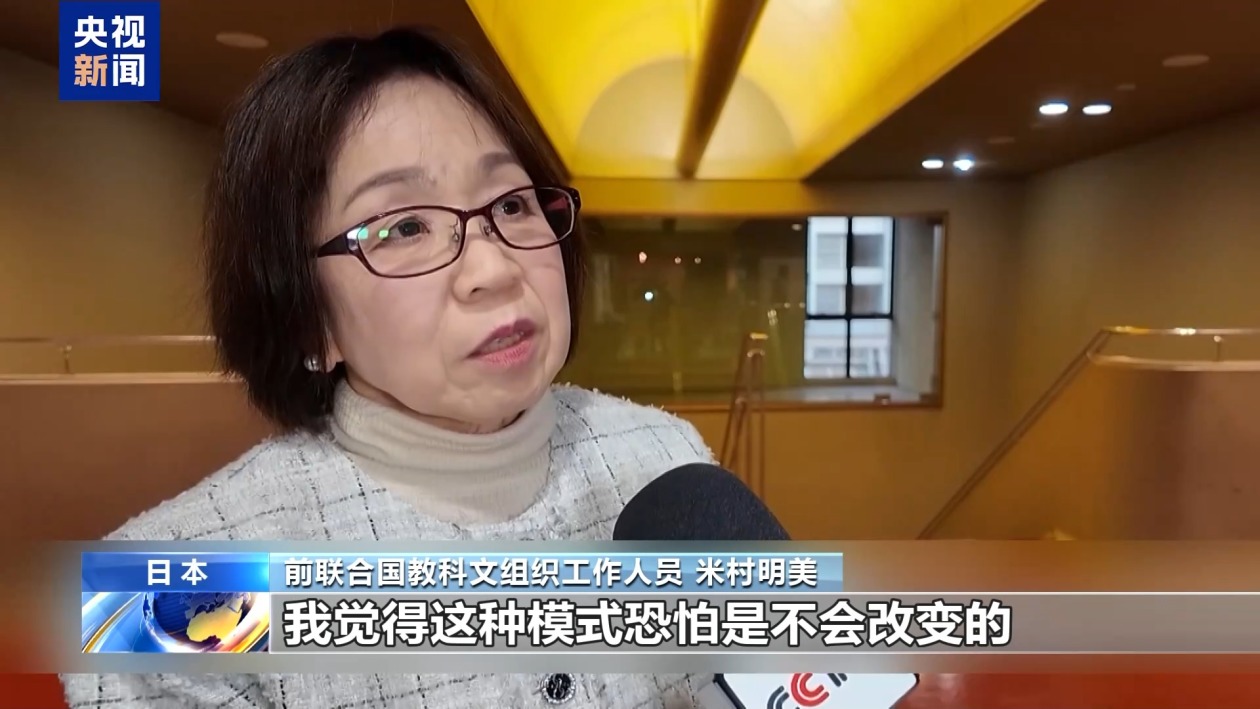
Akiyo Yoshimura, former UNESCO staff member: I believe there are military-industrial forces behind the Japanese political scene that are fanning the flames, known as the so-called "behind-the-scenes society," attempting to profit from war. If the current situation does not change, this scenario will continue. I hope that money is not invested in the arms trade but rather in other fields, and that war is avoided at all costs.
日本通过增加国防支出和允许武器出口,加速其军事化进程,最近的政府决策和与澳大利亚和菲律宾的国际合作证明了这一点。这一转变引发了学者们对日本长期和平原则的影响以及军工复合体潜在崛起的担忧。
- 日本的国防订单在过去五年中增加了三倍,现在占政府2025年公共需求订单的一半。
- 日本政府已修改其原则,允许出口致命武器。
- 学者们对日本的军事化及军工复合体的影响表示担忧。