
激光、微波、弹炮相结合 看我军反无人机“铁三角”亮眼表现
Recently, a certain brigade of the Army's 75th Group Army conducted a long-distance maneuver to the vast desert and Gobi, carrying out multi-subject, cross-day-and-night live-fire tactical exercises. This comprehensive training honed the troops' rapid response, firepower strike, and continuous combat capabilities, solidifying the practical foundation for air defense against enemy threats.
Upon receiving the maneuver order, various air defense units quickly assembled and rushed to the designated combat area. After arriving at the position, radar detected a swarm of drones launching a low-altitude, concentrated attack on the position.
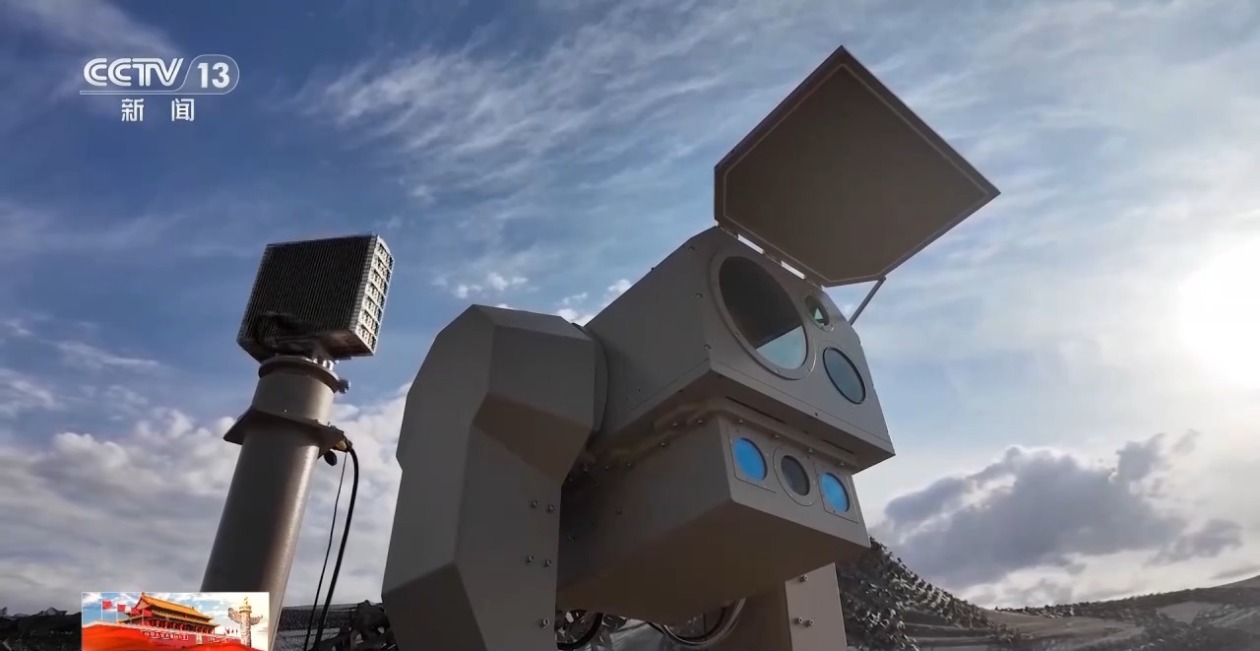
The anti-drone unit swiftly organized a counterattack, activating ground-based lasers and microwaves simultaneously to implement electro-optical blinding and spectrum suppression, disrupting the swarm's assault formation. For the few remaining targets that breached defenses, combat drones quickly took to the air to carry out precise strikes; finally, the high-altitude artillery unit conducted concentrated interceptive fire to eliminate the remaining targets of the swarm.
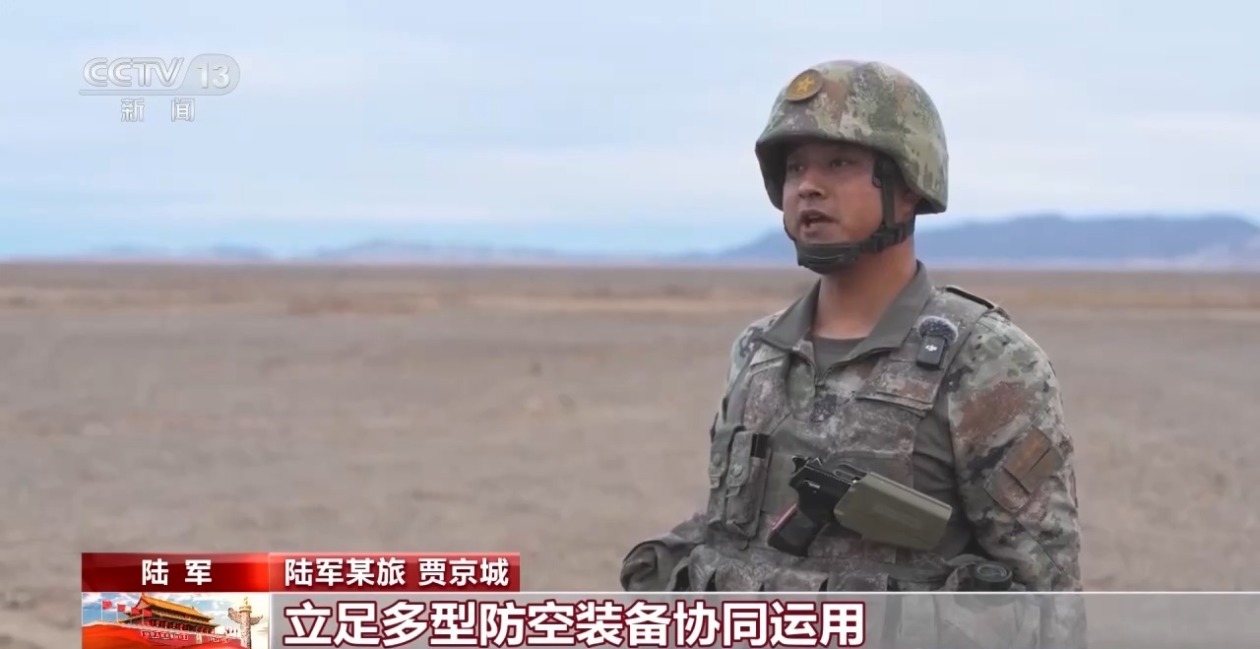
Brigade member Jia Jingcheng: This exercise closely focused on practical combat challenges, based on the coordinated use of multiple types of air defense equipment, specifically honing core capabilities such as complex air situation assessment, emergency response, and multi-means coordinated strikes, effectively addressing practical shortcomings and enhancing the soldiers' emergency response and precise air control skills.
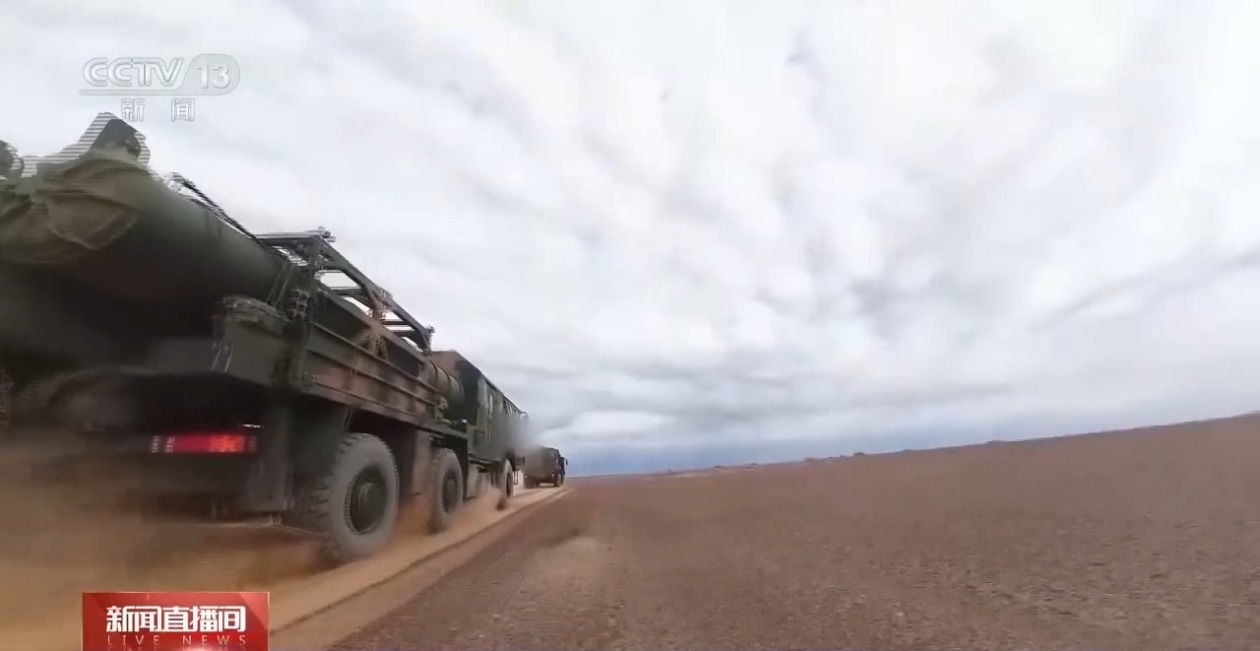
Just after the first round of counterattacks concluded, the control group issued an order to expose the position, prompting the soldiers to quickly retract and relocate their equipment, and swiftly complete the setup of the new position, including firepower organization and concealment, restoring air defense capabilities. Meanwhile, the radar network was activated to establish a reconnaissance and early warning network with full coverage and real-time tracking.
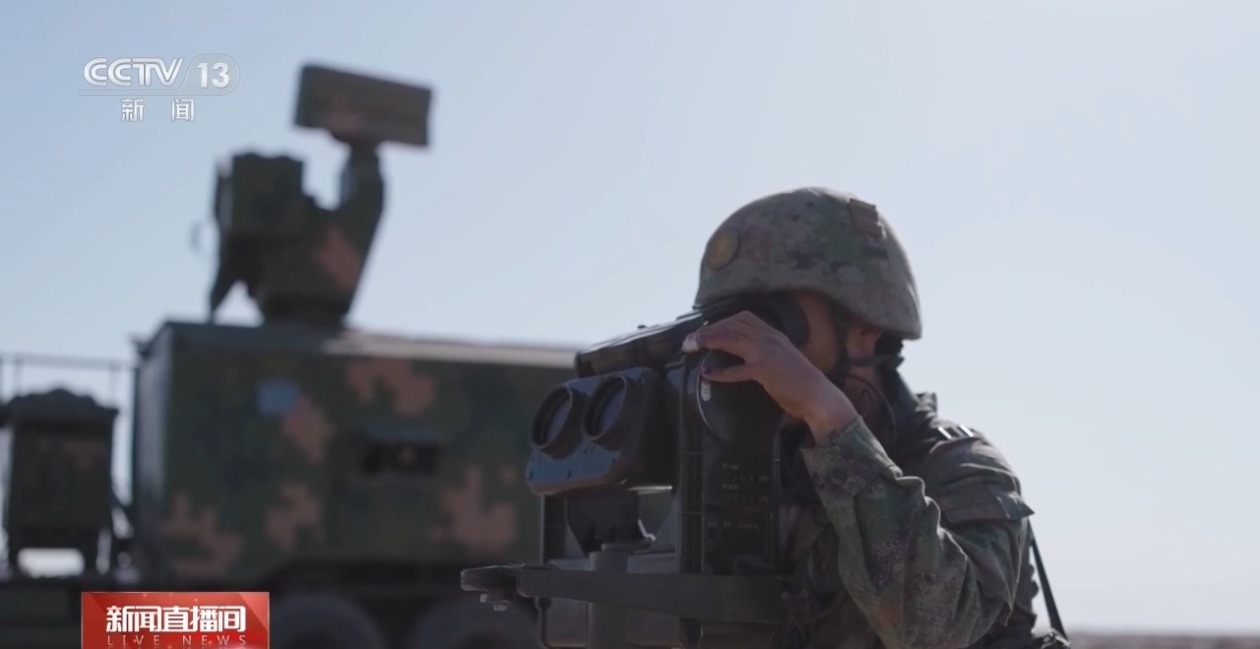
Each combat unit quickly organized a counterattack, successfully destroying the breaching targets. The exercise continued from day into deep night, with each combat unit switching to nighttime operational modes, and radar, electro-optical, and infrared detection equipment continuously searching the airspace.

Brigade member He Qing: This exercise was based on different battlefield environments during day and night, continuously conducting various types of air situation counterattacks, battlefield maneuvers, and emergency response topics, rigorously training the troops in the unfamiliar and complex Gobi environment, steadily improving their rapid response, maneuvering counterattack, and sustained readiness capabilities.
The "Iron Triangle" of our military's counter-drone capabilities
In the new domain and new quality equipment of our military, laser weapons, gun-missile combined weapons, and high-power microwave weapons are referred to as the "Iron Triangle" of counter-drone equipment.
The Iron Triangle consists of three key components. First, let’s look at this "blade of light"—the laser weapon. It damages airborne drones by emitting high-energy beams. In combat, it produces no explosion sound, no fire, and no recoil; it reaches its target instantly, hitting precisely where aimed, with an extremely low cost per use. It is a new type of weapon that can be fired almost indefinitely as long as there is sufficient power supply.
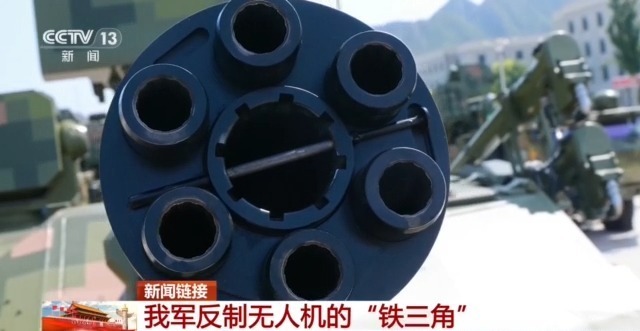
Next, this muscular-looking equipment features a six-barrel rotary cannon at its center, with four short-range air defense missile launchers mounted on the sides. This is the second component of the "Iron Triangle"—the gun-missile combined weapon.
It integrates the dense barrage of the rotary cannon with the precise strikes of short-range missiles, serving as the hard-core strength of the counter-drone system with "kinetic interception and end-stage coverage." It boasts advantages such as fast response speed, powerful interception firepower, high shooting accuracy, and good mobility, capable of independent operation or integration into a networked defense system. In recent diversified practical training exercises, it has effectively reduced the threat posed by low, slow, and small targets as a "blade" in end-stage defense.
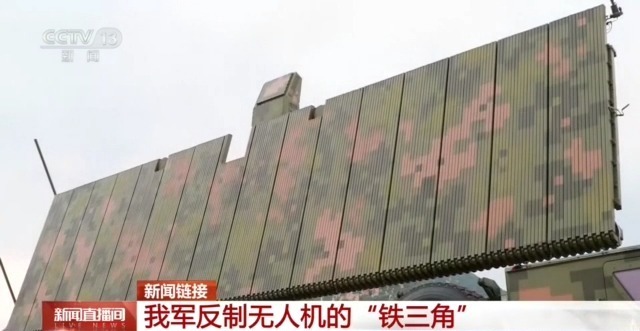
The final component of the "Iron Triangle" is the high-power microwave weapon, which is the tallest among the three counter-drone equipment. Its towering panel is integrated with the vehicle, and it is equipped with a detection radar at the back. It uses an 8×8 high-mobility chassis to instantly release microwave pulses, incapacitating drones by damaging their internal electronic components, causing them to crash. Unlike lasers, which provide "point-to-point" targeting, it focuses on large-area "area damage," capable of saturating and destroying swarms of drones in a single attack, making it a powerful tool against "swarm" threats.
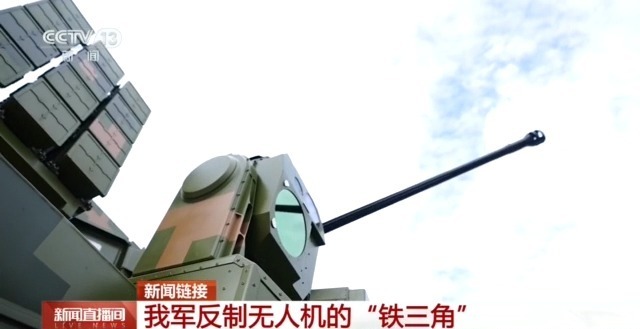
From the close-range hard kill of gun-missile combinations to the soft and hard capabilities of lasers and microwaves—the "Iron Triangle" weaves a low-altitude counter-drone net with "projectiles, cannons, light, electricity, and waves." It supports and integrates with detection methods such as radar, electro-optical, and electronic reconnaissance, forming a layered defense system of "long-range early warning detection, mid-layer electronic suppression, and close-range kinetic interception," which is becoming a new quality combat capability for our military to respond to intelligent warfare and safeguard low-altitude security.
Expert Analysis: Understanding the Offensive and Defensive Game of Drones on the Battlefield
In fact, drone warfare has already become a new focus of high importance for military forces around the world. So, what changes have drones brought to modern warfare?
In recent years, during localized armed conflicts, drones, especially suicide drones, have been widely used, posing significant threats and damage to the opponent's important high-value military targets and infrastructure.
In addition to suicide drones, various countries have also widely employed reconnaissance-strike integrated drones and highly stealthy reconnaissance drones, indicating that drones have become an important combat force in modern warfare.
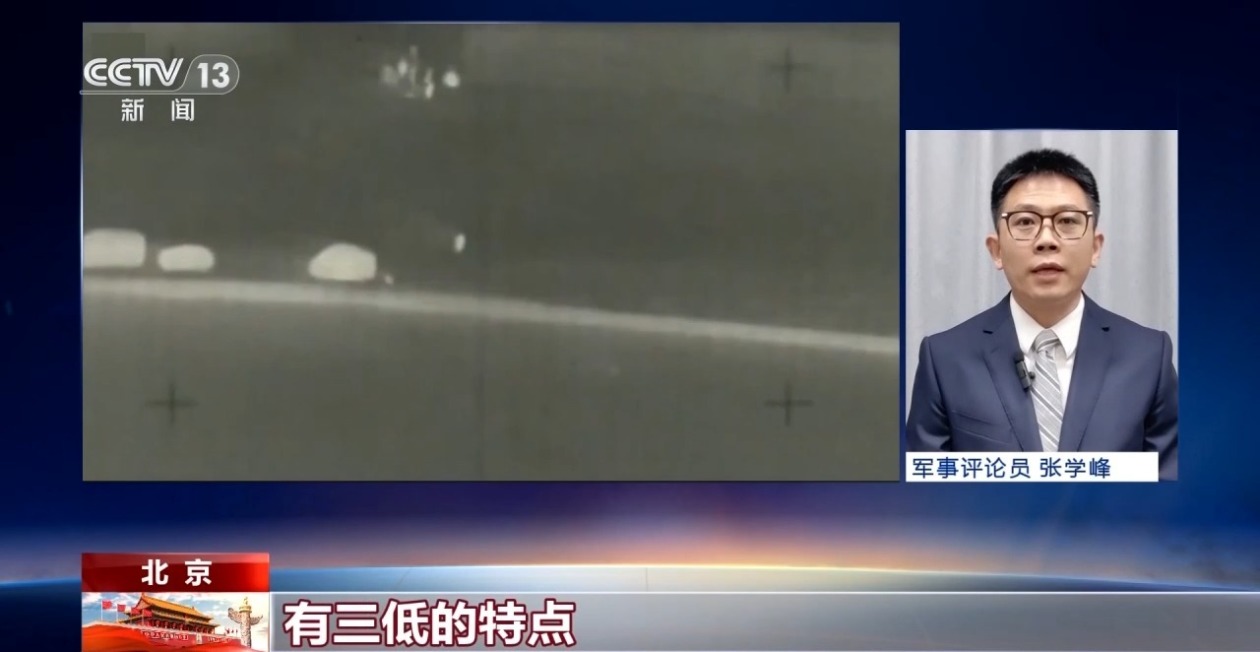
Military commentator Zhang Xuefeng noted that the widely used suicide drones currently exhibit three low characteristics:
The first is a low development threshold; some drones can be considered large-scale model aircraft, using propeller power systems and simple guidance systems, with some being modified from commercial drones. Therefore, not only can major powers develop them, but also small countries and armed entities with limited technological capabilities can produce and acquire them, leading to a trend of proliferation of such drones.
Secondly, they are relatively low-cost. A typical 200-kilogram suicide drone costs only a few tens of thousands of dollars, while smaller multi-rotor drones can cost only a few thousand dollars. Low costs mean they can be procured and used in large quantities. For instance, in the Russia-Ukraine conflict, both sides can launch over a thousand drones in a single day and night, making such swarm attacks more difficult to intercept.
Thirdly, in terms of flight characteristics, they typically fly at low altitudes, and their small size results in a small radar cross-section, increasing the difficulty of interception.
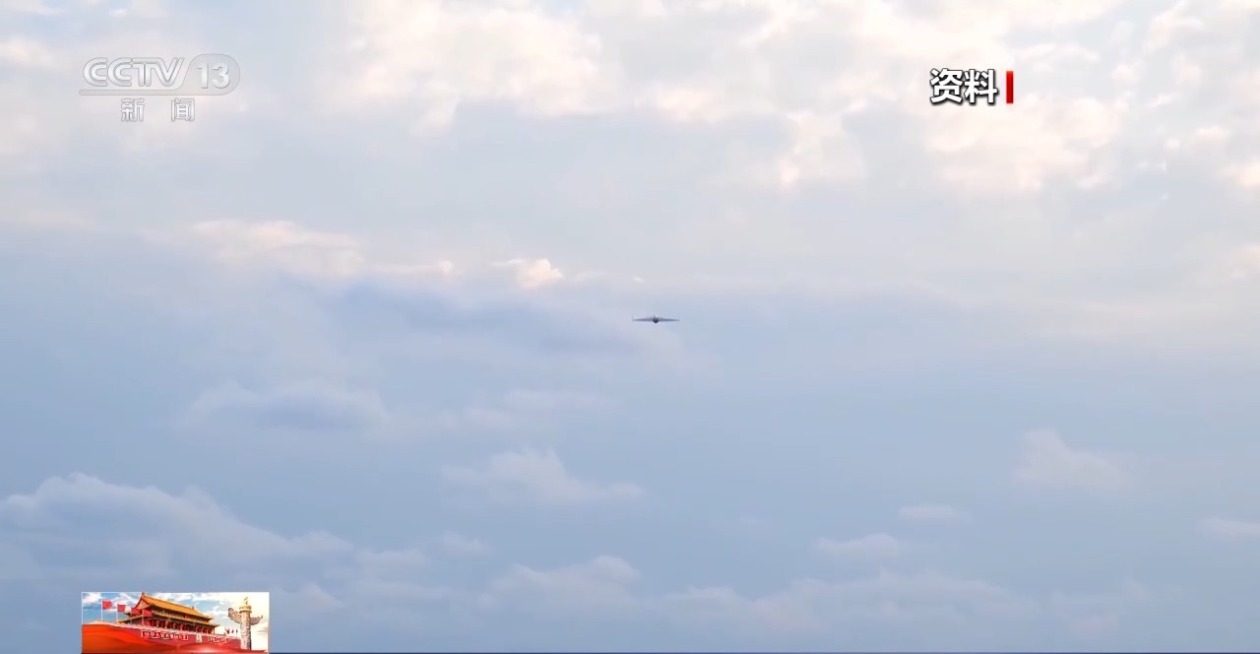
Despite the low technical threshold and cost of these drones, effectively preventing them will significantly increase the pressure on the defending side.
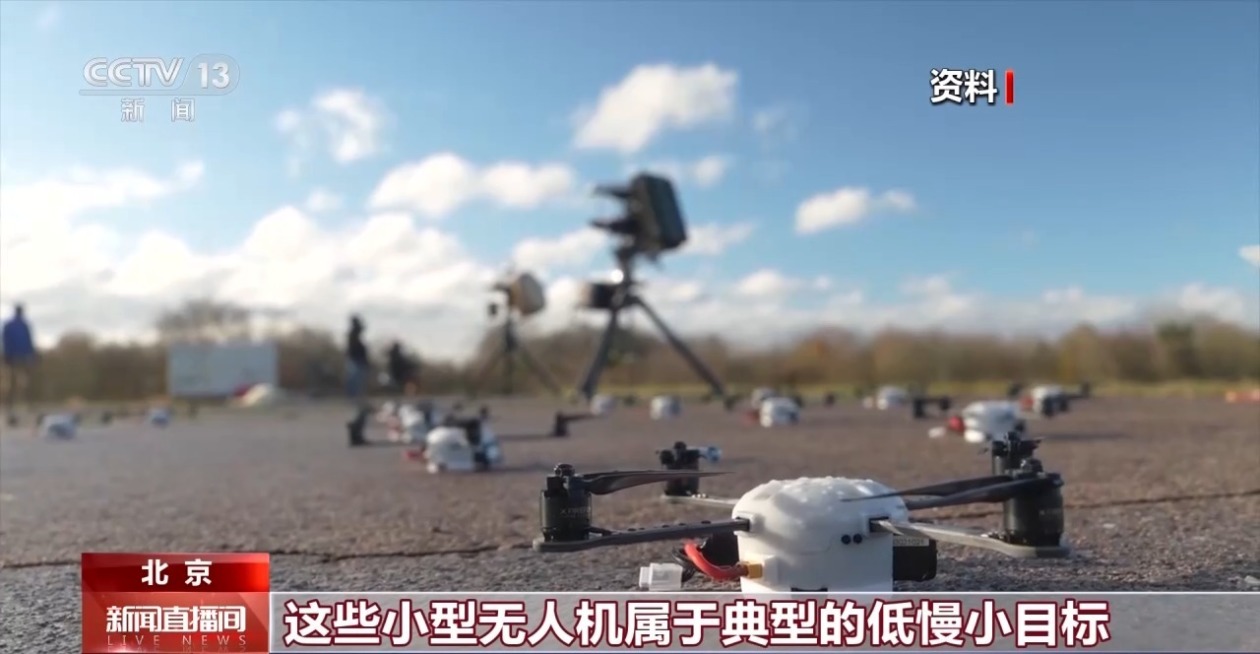
Zhang Xuefeng: In the face of drones, traditional air defense systems have encountered many issues, such as difficulty in detection, high interception costs, and inability to defend effectively. This is because traditional air defense systems primarily target enemy fighter jets, cruise missiles, and ballistic missiles, while these small drones are typical low, slow, and small targets. Ground protection systems are limited by terrain and obstacles, and the curvature of the Earth affects the detection range for such low, slow, and small targets, making it challenging to achieve full airspace coverage.
第75集团军在戈壁沙漠进行战术演习,重点应对无人机群攻击的快速反应。利用激光和高功率微波武器,各部队在昼夜行动中有效应对威胁。此次演习旨在增强各类防空系统之间的协调,提高对不断演变的空中威胁的作战准备。
- 第75集团军在戈壁沙漠进行战术演习。
- 演习涉及对无人机群攻击的快速反应。
- 使用激光和微波武器应对无人机威胁。
- 训练强调多类型防空协调。
- 演习在昼夜进行。