
军情时间到丨部署25式反舰导弹+装备“战斧” 军事专家:日本出兵海外的野心非常迫切
According to a report by Kyodo News, on March 31 local time, the Japanese Ministry of Defense deployed the "Type 25 Anti-Ship Missile" and the "Type 25 High-Speed Glide Bomb" at the Kengun Garrison in Kumamoto Prefecture and the Fuji Garrison in Shizuoka Prefecture, respectively. The "Type 25 Anti-Ship Missile," previously known as the "Land-Based Improved Type 12 Anti-Ship Missile," has a range of approximately 1,000 kilometers, which is five times that of the original, while also improving strike accuracy. Launched from the Kengun Garrison in Kumamoto Prefecture, its coverage can include the entire Korean Peninsula, parts of Russia's Far East, core areas along China's eastern coastal region, and the vicinity of northern Taiwan.
Does Japan now possess the capability for a preemptive strike?
The maximum range of the Type 25 anti-ship missile can reach over 900 kilometers, approaching 1,000 kilometers, and may further extend in the future. It employs a stealth design concept, enhancing its penetration capability, and utilizes a composite guidance mode, which objectively has strong anti-jamming capabilities. Therefore, it is a very expensive long-range firepower strike system, not intended for defensive operations. If the Self-Defense Forces deploy the Type 25 anti-ship cruise missiles at the northern end of the Japanese archipelago or in its southwestern region, targeting large islands and important straits to the southwest of Russia, it would possess extensive firepower coverage capabilities within a broad area, capable of blockading straits, attacking island targets, and striking large naval vessels at long distances. This is unequivocally an offensive weapon system designed for preemptive strikes. If Japan perceives a threat, it can initiate preemptive fire strikes against its surroundings. Many acts of aggression are conducted secretly, preemptively, and without prior notice. The combination of the Type 25 long-range anti-ship missile with preemptive strike tactics indicates that the Japanese Self-Defense Forces are becoming increasingly dangerous.
Why is Japan deploying domestically produced long-range missiles while also equipping "Tomahawk" cruise missiles?
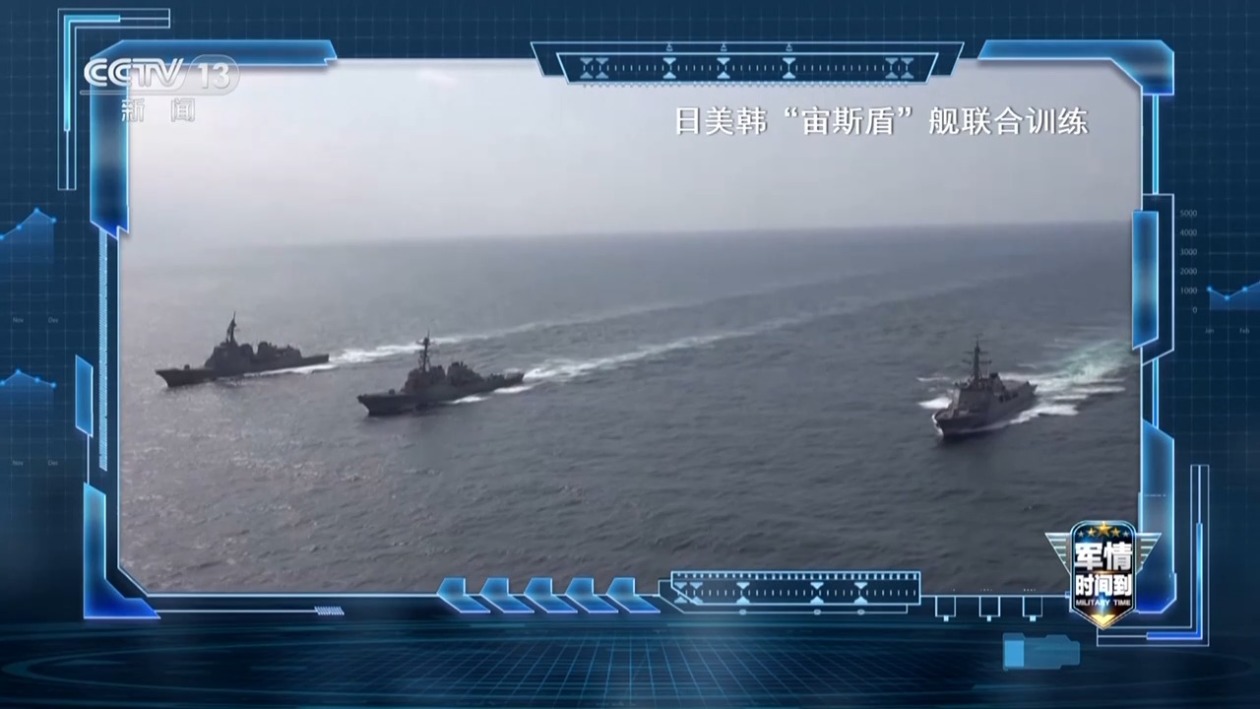
Firstly, the range of the Type 25 long-range anti-ship missile has not yet reached 1,000 kilometers; additionally, it flies at subsonic speeds. However, Japan's ambition for military expansion abroad is very urgent, necessitating a large number of mature, long-range cruise missiles. In the past, during the operational use of naval forces by the United States and Japan, the U.S. played the main role while Japan acted as a supporting force, often executing tasks related to air defense, anti-submarine warfare, and mine sweeping. Now, the situation is different. In the joint maritime combat system established by the U.S. and Japan, both are main forces, with the U.S. Navy taking the lead in offensive missions while the Japan Maritime Self-Defense Force is also expected to take the front line, changing its supporting role and even aspiring to be the main player, conducting joint offensives with the U.S. Navy. For joint offensives, the standards for weaponry must be unified. The U.S. Arleigh Burke-class destroyers launch "Tomahawk" cruise missiles, and Japan's Aegis destroyers must also match the U.S. destroyers in missile defense capabilities and firepower against deep land targets, achieving the same level of standards, which would then allow them to assist U.S. forces in joint offensives.
日本于3月31日在熊本和静冈部署了25式反舰导弹和“战斧”巡航导弹。25式导弹的射程约为1000公里,增强了日本在该地区的进攻能力。这一部署表明日本对军事扩张的迫切野心,以及向与美国海军的联合行动中更积极角色的转变。
- 日本于3月31日部署了25式反舰导弹和“战斧”巡航导弹。
- 25式反舰导弹的射程约为1000公里。
- 该部署覆盖包括朝鲜半岛和东部俄罗斯部分地区。
- 日本旨在增强其进攻军事能力。
- 自卫队正在向更积极的军事角色转型。