
四川舰甲板全貌完整亮相 专家:离正式交付不远
Recently, a video has gone viral online, fully revealing the complete appearance of China's new 076-type amphibious assault ship, the Sichuan. The deck's electromagnetic catapult, arrestor wires, and aircraft markings have all been completed. Military expert Li Yaqiang believes that the video indicates the construction is nearing completion, and the Sichuan is not far from official delivery.
This is the world's only amphibious assault ship equipped with an electromagnetic catapult, which combines the dual attributes of amphibious landing and air combat, and can accommodate various types of aircraft including helicopters, unmanned fixed-wing, and manned fixed-wing aircraft. How will this all-capable warship enhance China's long-range power projection capabilities?
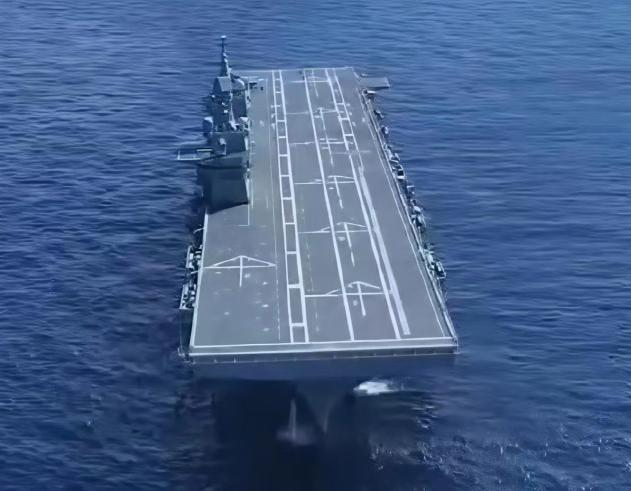
△ The deck has been marked! The electromagnetic catapult is in place! The arrestor wires have been installed!
The complete appearance of the deck is fully revealed
Construction progress is nearing the end
The video first shows an aerial view of the Sichuan's deck, this giant ship with a full load displacement of over 40,000 tons features a dual-island superstructure and a full-length flight deck, with various markings already completed, and the electromagnetic catapult and arrestor wires also in place.
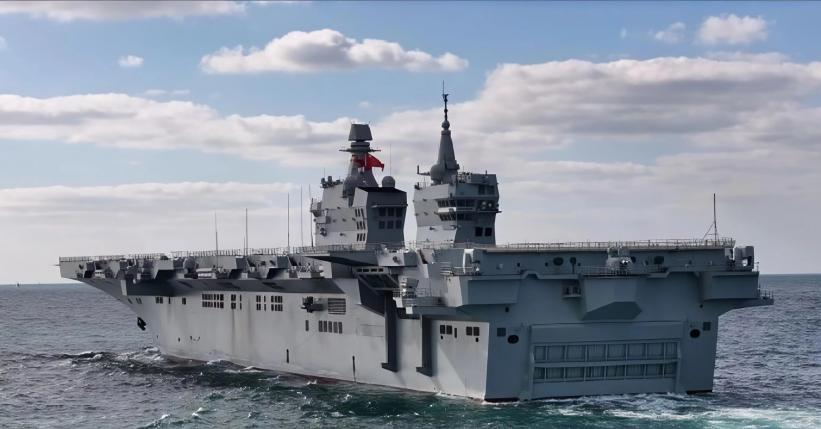
Li Yaqiang: The naval vessel's paint job is the final step in the work, indicating it is dressed and ready to go. All technical challenges for the Sichuan have basically been overcome, meaning it is close to being ready for launch.
World's first electromagnetic catapult on an amphibious assault ship
Achieving "quasi-aircraft carrier" operational standards
Looking down at the full-length flight deck of the Sichuan, its most notable feature is the application of electromagnetic catapult and arrestor technology for the first time on an amphibious assault ship, allowing the Sichuan to carry various fixed-wing aircraft, helicopters, and large drones.
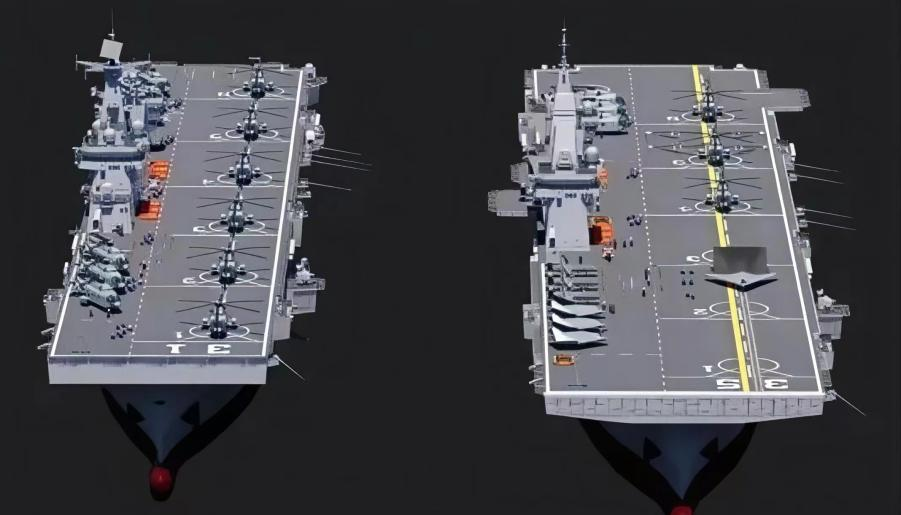
△ The Sichuan can flexibly configure its onboard aircraft according to mission requirements
Military expert Du Wenlong believes that the Fujian can rely on the electromagnetic catapult to launch the J-35 fighter jet, and the Sichuan, also equipped with an electromagnetic catapult, can replicate the launch and recovery effects seen on the Fujian without any modifications, which will elevate the Sichuan's combat capabilities to that of a quasi-aircraft carrier.
The electromagnetic catapult on the 076-type amphibious assault ship avoids the vertical short takeoff and landing technology route of other countries' amphibious assault ships and light aircraft carriers, aiming to provide more and stronger air cover for landing forces in future amphibious operations.
Li Yaqiang: The U.S. Navy's amphibious assault ships do not have catapults, resulting in weaker fire support during landing operations. The U.S. military is equipped with AV8B and F35B vertical takeoff and landing fighters, which have very limited combat capabilities, payload, operational radius, and sortie intensity, and cannot be compared to conventionally launched aircraft. Currently, all amphibious assault ships, except ours, do not have catapults, so we are the strongest in terms of airborne force deployment capabilities.
Three-layer internal layout
Aviation and landing dual capabilities maximized
Before being referred to as a "quasi-aircraft carrier," the Sichuan remains fundamentally an amphibious assault ship, with three internal layers: upper, middle, and lower. The upper layer serves as an aviation hangar for storing fixed-wing fighters, drones, and helicopters, equipped with aircraft transfer rails, ammunition elevators, and maintenance workstations; the middle and lower layers are vehicle loading decks and dock spaces for parking light tanks, amphibious assault vehicles, and multiple air-cushion landing craft.
The Sichuan's land delivery capability is as formidable as its aviation capability, enabling it to stand alone on future battlefields.
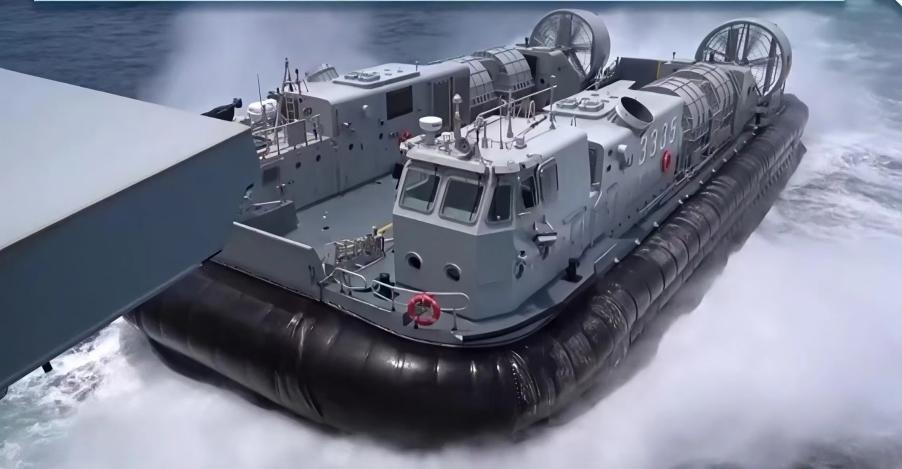
△ Air-cushion landing craft carried by the Sichuan
Li Yaqiang: For amphibious assault ships, tonnage is undoubtedly king. A larger tonnage means better seaworthiness, more equipment and personnel can be loaded, and the combat missions it can undertake are larger and more numerous. If in the past, support from an aircraft carrier or airfield was necessary, now amphibious assault ships can execute small-scale, high-intensity combat missions on their own. This is a task that past amphibious assault ships found difficult to fully undertake.
Dual-island structure densely packed with detection equipment
Comprehensive situational awareness and command
As the camera sweeps over the two sci-fi-like islands of the Sichuan, one notices the dense array of phased array radars and various detection antennas, maximizing situational awareness capabilities. Li Yaqiang explains that this is determined by the difficulties and complexities of amphibious operations; the Sichuan possesses strong situational awareness and command capabilities while performing quasi-aircraft carrier and amphibious combat missions.
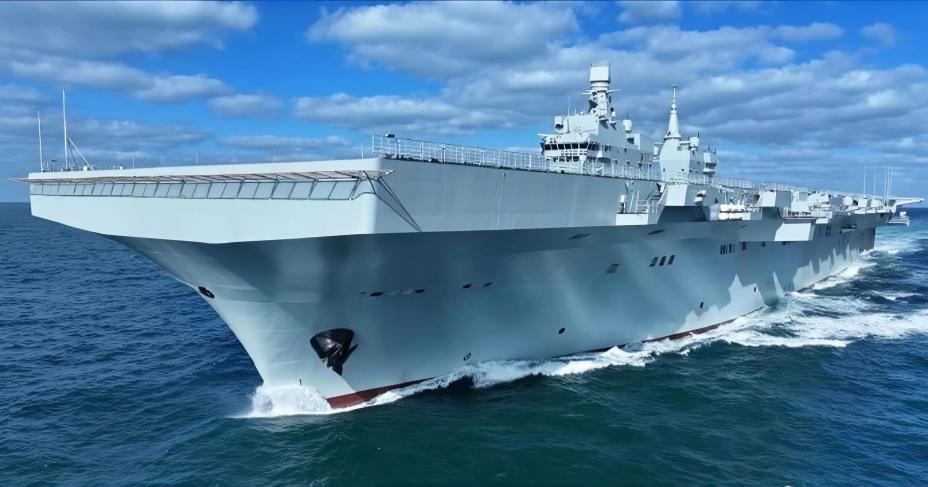
△ Radar antennas densely packed on the island structure
Li Yaqiang: Amphibious assault ships require extremely strong perception, detection, communication, information transmission, and processing capabilities. Because of the multidimensional integration of land, sea, air, and space, during landing operations, the entire combat mode of the amphibious assault ship shifts, including air defense, missile defense, anti-ship, anti-submarine, and land attack. All combat operations can be reflected in amphibious assault operations. Command tasks are very difficult and complex, necessitating a variety of communication and detection equipment.
Aircraft carrier + electromagnetic catapult dual assault coordination group
The traditional single-platform combat model is difficult to adapt to today's complex and high-intensity maritime tasks. What kind of combat power will emerge when aircraft carriers and amphibious assault ships equipped with electromagnetic catapult systems work together?
Li Yaqiang: In high-intensity combat situations, combining aircraft carriers and amphibious assault ships, especially those equipped with catapults, will lead to closer cooperation, even mutual support. Recently, the aircraft carrier and the 075 amphibious assault ship conducted joint training together, enhancing each other's capabilities.
In addition to mutual support, the command relationship between amphibious assault ships and aircraft carriers can alternate, especially during amphibious assault operations, where command can shift from maritime to ground. The simultaneous presence of aircraft carriers and amphibious assault ships in combat operations may lead to many currently unpredictable combat styles and actions, significantly enhancing new combat capabilities.
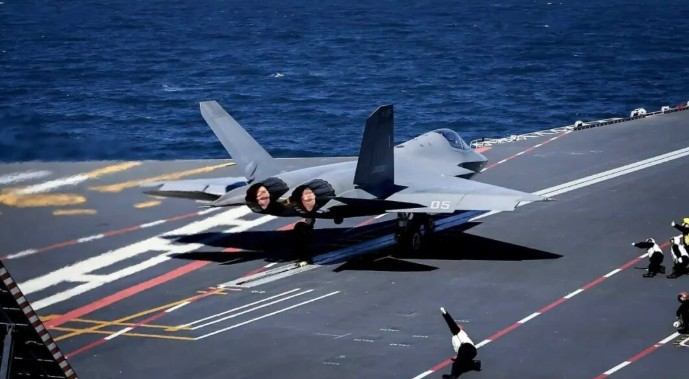
△ Expert: How the J-35 launches from the Fujian, the Sichuan will launch the same way
Redefining global amphibious equipment standards
Military experts analyze that the electromagnetic catapult track of the Sichuan can easily launch 30-ton class J-35 stealth fighters and KJ-600 fixed-wing early warning aircraft. The manual for amphibious assault ships in the hands of global navies has been rewritten, with the once rapidly catching up Chinese Navy becoming the new standard setter.
Li Yaqiang: The Sichuan's addition of an electromagnetic catapult brings significant flexibility to amphibious assault operations, future maritime combat, and coordinated operations, enabling more effective responses to complex and varied combat needs. This trend-setting capability will likely be out of reach for other countries for a considerable time. Electromagnetic catapults, including electromagnetic arrestors, are not capabilities that ordinary navies can possess.
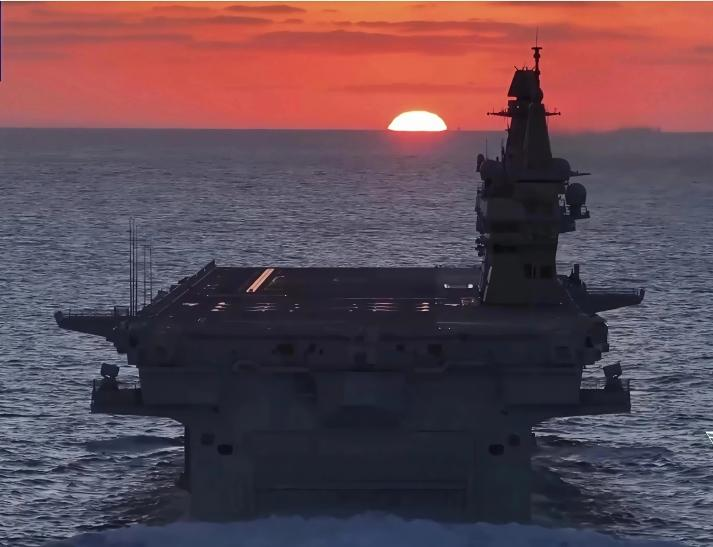
四川两栖攻击舰已完成建造,接近交付,配备先进的电磁弹射器和拦阻索。这艘排水量超过4万吨的舰艇旨在支持多种类型的飞机,增强中国在海洋力量投射方面的作战能力。军事专家表示,四川舰将显著提升中国进行两栖和空中作战的能力。
- 四川两栖攻击舰是全球首艘配备电磁弹射器的舰艇。
- 建造接近完成,所有主要系统已安装。
- 该舰可支持多种类型的飞机,增强其作战能力。
- 军事专家认为这将显著提升中国的海洋力量投射能力。
- 该舰设计允许在两栖和空中作战中具备双重能力。