
Crimean War
The Crimean War was fought from 1853 to 1856, primarily involving the Russian Empire against an alliance of the Ottoman Empire, Britain, France, and Sardinia. It centered on the Eastern Question, Russian expansion, Ottoman weakness, European balance-of-power politics, and control of strategic access around the Black Sea and Mediterranean, with the immediate origins in disputes over religious sites in the Holy Land.
Fighting was concentrated on the Crimean Peninsula and linked coalition expeditionary warfare, siege operations, and military logistics. Key episodes include the Siege of Sevastopol, which lasted nearly a year, the Battle of Balaclava with its Charge of the Light Brigade, and the Battle of Inkerman. The war exposed the incompetence of military leadership and the terrible conditions faced by soldiers, leading Florence Nightingale to pioneer modern nursing and battlefield medicine, and it was one of the first wars extensively documented by war correspondents and photographers.
The Treaty of Paris of 1856 diminished Russian influence in the Black Sea region and imposed diplomatic constraints on Russian power. Approximately 650,000 died, mostly from disease.
 Lord Raglan
 Garnet Wolseley
 Napoleon III
 Armand de Saint-Arnaud
 Abdülmecid I
 Omar Pasha
 Nicholas I of Russia
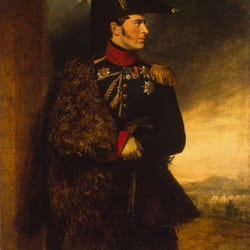 Alexander Menshikov
The war grew from Russian pressure, Ottoman vulnerability, religious-diplomatic disputes, and balance-of-power fears.
The Crimean War grew from the Eastern Question: how European powers would manage the weakening Ottoman Empire without allowing any one state, especially Russia, to dominate the region. Religious disputes over holy places mattered, but they sat inside a broader contest over influence and access.
Britain and France entered the war because Russian expansion threatened the balance of power and access routes toward the Mediterranean and India. The Ottoman Empire fought to preserve sovereignty and resist Russian pressure.
This context matters because the war was about strategic position as much as immediate diplomatic claims.
The central campaign focused on Allied landings in Crimea and the prolonged siege of Sevastopol.
The war's best-known campaign took place in Crimea, where British, French, Ottoman, and later Sardinian forces targeted the Russian naval base at Sevastopol. The siege became a prolonged test of logistics, engineering, artillery, disease control, and coalition coordination.
Battles such as Alma, Balaklava, and Inkerman exposed both battlefield courage and operational weaknesses. The famous Charge of the Light Brigade became a symbol of command failure and heroic loss.
Sevastopol's fall weakened Russia's position and helped push the war toward settlement.
The war exposed severe logistical and medical failures while accelerating reforms in nursing, administration, and war reporting.
The Crimean War became notorious for supply failures, disease, poor sanitation, inadequate medical care, and administrative breakdowns. Many casualties resulted from illness and exposure rather than direct combat.
Florence Nightingale's work and public attention to hospital conditions became part of a broader transformation in military medicine and nursing. War correspondents and photography also made the conflict more visible to publics at home.
This makes Crimea important as a conflict that changed military administration and public accountability, not only battlefield tactics.
The settlement constrained Russia in the Black Sea and exposed weaknesses that encouraged later Russian reform.
The Treaty of Paris ended the war and limited Russian naval power in the Black Sea. The settlement was a diplomatic check on Russian ambitions and a temporary reinforcement of Ottoman security.
The war also exposed weaknesses in Russian military organization, logistics, and state capacity, contributing to later reform pressures. For Britain and France, it demonstrated both expeditionary capability and the costs of coalition operations under difficult conditions.
The Crimean War should therefore be read as a hinge between older dynastic diplomacy and more modern public, logistical, and administrative warfare.
Crimean War analysis should separate diplomatic origins, siege warfare, logistics, medical reform, and later mythmaking.
Crimean War memory often centers on dramatic episodes such as the Charge of the Light Brigade or Florence Nightingale. Those are important, but the conflict's strategic value is wider: balance of power, Russian limits, Ottoman survival, coalition logistics, and public scrutiny.
Sources may emphasize national military memory, diplomatic history, or medical reform. A comprehensive analysis connects these aspects rather than reducing the war to a single anecdote.
The Crimean War serves as a case study in expeditionary warfare under logistical stress and diplomatic constraint.
The war exposed how diplomacy, alliance systems, and imperial strategy could pull a local conflict into a wider European settlement crisis.
The Crimean War mattered because it was more than a siege campaign.
It was a crisis in the European balance of power, with Britain, France, the Ottoman Empire, and Russia all pushing competing strategic interests.
The war illustrates that battlefield operations often sit within a larger diplomatic architecture.
The war became associated with reform in the army, medicine, and public awareness of military suffering.
The Crimean War is remembered not only for its campaigns but for its reform legacy. Logistical failures and medical breakdowns fed public debate about how states should manage war.
That legacy matters because the war helped shape modern expectations about care, reporting, and military administration. It also became part of how governments explained the need for reform.
A useful conflict page should show how war can change institutions well beyond the battlefield.
The war exposed how alliance discipline, naval access, and diplomacy could determine the shape of a campaign.
The Crimean War was also a test of coalition management. Britain and France had to coordinate strategy while supporting Ottoman resistance to Russian expansion, and that coordination shaped how the war was fought and why it became so costly.
Black Sea access mattered because it determined where armies could land, how supply could be sustained, and which positions had strategic value. The siege of Sevastopol became emblematic of a war in which logistics and alliance politics mattered as much as battlefield dash.
The war thus illustrated the clear link between diplomacy, maritime access, and operational outcomes.
No analysis & reports about Crimean War
No discussions about Crimean War yet
Start the first discussion