
Franco-Prussian War
The Franco-Prussian War, also known as the Franco-German War, was the 1870-1871 conflict between the Second French Empire and the Prussian-led North German Confederation with its German allies. Triggered by tensions over the Spanish succession and the Ems Dispatch, it saw Prussia's well-organized army decisively defeat France in engagements including Sedan, where Napoleon III was captured, and in the siege of Paris.
The war destroyed French dominance on the continent, completed German unification under Prussian leadership with the proclamation of the German Empire at Versailles, brought down the French Second Empire and established the Third Republic, and forced France's cession of Alsace-Lorraine. That grievance shaped European politics for decades and fed the Franco-German rivalry that contributed to the First World War. The conflict caused approximately 180,000 deaths.
ATTACKER
 Otto von Bismarck
 Helmuth von Moltke the Elder
 Napoleon III
 Achille Bazaine
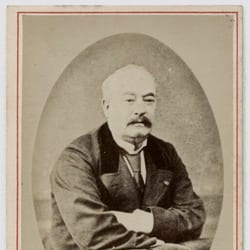 François Bazaine
 Abel Douay
 Charles Frossard
 François Canrobert
 Auguste Ducrot
 Emmanuel Wimpffen
The war emerged from a crisis over continental prestige, Spanish succession politics, and Bismarck's effort to complete German unity.
The immediate crisis centered on the Hohenzollern candidacy for the Spanish throne and French fears of diplomatic encirclement. Prussian minister-president Otto von Bismarck used the crisis to mobilize German opinion, while Napoleon III's government sought to preserve French prestige.
The deeper issue was the European balance after Prussia's victory over Austria in 1866. France saw a Prussian-led Germany as a threat; Bismarck saw war with France as a path to bind the southern German states to Prussia.
The origins connect diplomacy, nationalism, alliance politics, and the final stage of German unification.
Prussian-led German forces mobilized more effectively and defeated French armies, culminating in Napoleon III's capture at Sedan.
Prussia and its German allies benefited from staff planning, rail mobilization, coalition coordination, and operational discipline. French forces had capable weapons and experienced troops, but mobilization and command problems weakened their strategic position.
The defeat at Sedan and the capture of Napoleon III shattered the Second French Empire. France continued the war under a republican government, but the strategic initiative had already shifted decisively to the German coalition.
The war was not merely a list of battles; it was a contest of mobilization systems and state capacity.
After the empire collapsed, France continued fighting through a republican Government of National Defense and the siege of Paris.
The war did not end with Sedan. A new French republican government tried to continue resistance, while German forces besieged Paris and fought newly raised French armies outside the capital.
The siege created civilian hardship, political radicalization, and a difficult transition from imperial defeat to republican survival. It also set the conditions for the Paris Commune after the armistice.
This phase connects battlefield defeat to internal political crisis and the social consequences of siege warfare.
The war ended with German unification and French territorial loss, creating a new power center in Europe and a lasting grievance.
During the war, the German Empire was proclaimed at Versailles with the Prussian king as emperor. This made German unification a battlefield and diplomatic fact, not only a nationalist project.
The peace settlement imposed indemnity and transferred Alsace and part of Lorraine to Germany. For France, the loss became a symbol of humiliation and revanche; for Germany, it created a strategic frontier and a future vulnerability.
The settlement transformed European politics by replacing fragmented German states with a powerful empire at the center of the continent.
Franco-Prussian War analysis should link tactical events to state formation, nationalism, and the later European security problem.
Reference summaries and official memory resources explain the conflict's major sequence, while source collections help anchor the war in contemporary documents. They are less complete on ordinary soldiers, civilians under siege, colonial troops, and the politics of memory in both countries.
A high-value page should avoid treating the war as merely a prelude to World War I. It deserves analysis as a war of state formation, military modernization, domestic collapse, and long-term border politics.
The war showed how rail mobilization, staff coordination, and coalition organization could decide campaigns quickly.
The Franco-Prussian War is a major case for modern staff planning. German coalition forces benefited from mobilization planning, railway use, and more coherent operational command, which gave them decisive advantages over the French army.
The conflict illustrates how industrial-age war rewarded systems as much as battlefield bravery.
The loss of Alsace-Lorraine shaped French memory and German strategic identity for decades.
The peace settlement did more than redraw borders. It anchored French revanchism and German confidence in the new empire, creating a memory problem that outlived the war itself.
A strong conflict page should show how victory and defeat became political fuel. The war's legacy was not just territorial change but a long emotional and strategic afterlife.
The siege of Paris turned battlefield defeat into domestic political crisis and a new republican order.
The Franco-Prussian War also matters because the siege of Paris converted military failure into regime change. The fall of the Second Empire and the emergence of republican government showed how external defeat can trigger internal constitutional upheaval.
That dynamic makes the war more than a campaign study. It is a case where the military outcome and the political outcome were welded together.
The war sits at the intersection of modernization, nationalism, and state collapse.
No analysis & reports about Franco-Prussian War
No discussions about Franco-Prussian War yet
Start the first discussion