
South Sudanese Civil War
The South Sudanese Civil War was a post-independence conflict that began in 2013 after a political split inside the ruling SPLM and escalated into a multi-sided war marked by ethnic mobilization, mass displacement, famine risk, and repeated peace efforts. It links Salva Kiir, Riek Machar, SPLA/SPLM history, South Sudanese state formation, oil politics, and UN reporting on atrocities. The war was a crisis of liberation-movement rule after independence. Institutions built during wartime struggled to manage factional rivalry, command integration, resource distribution, and civilian protection.
 Riek Machar Teny
DEFENDER
 Salva Kiir Mayardit
 Gabriel Jok Riak
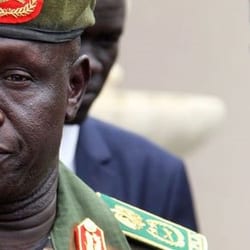 James Ajongo Mawut
 James Hoth Mai
 Kuol Manyang Juuk
 John Uliny
SUPPORTER
The war began from a split inside the ruling movement and exposed weak post-independence institutions.
South Sudan became independent with high expectations but fragile institutions. The SPLM and security forces carried wartime structures into state government, leaving unresolved questions about command, patronage, oil revenue, federalism, and political succession.
The 2013 crisis grew from factional competition inside the ruling movement, especially between President Salva Kiir and Riek Machar. What began as a political split quickly became an armed conflict with national consequences.
The conflict involved factional armies, ethnic mobilization, local militias, atrocities, displacement, and severe food insecurity.
The war was fought through factional military commands, defections, local militias, and shifting alliances. Ethnic identity became militarized in many areas, deepening civilian targeting and revenge violence.
The humanitarian effects were enormous. Displacement, hunger, sexual violence, attacks on civilians, and the disruption of oil and agriculture made the war a state-building disaster as much as a battlefield contest.
The war links SPLA/SPLM history, Kiir-Machar rivalry, oil politics, Sudan relations, UN missions, and regional mediation.
The South Sudanese Civil War links directly to the Second Sudanese Civil War because the ruling movement and army emerged from that earlier struggle. Wartime legitimacy did not automatically translate into stable post-independence governance.
The conflict also connects to Sudan through oil transit and border questions, and to the wider region through IGAD mediation, refugee flows, and peace enforcement.
Power-sharing agreements reduced major fighting but left core security and governance problems unresolved.
Peace agreements attempted to create cease-fires, transitional governments, and power-sharing arrangements. These deals reduced some fighting, but implementation remained fragile because the same armed elites retained control over security and resources.
South Sudan's postwar risk is rooted in incomplete security-sector reform, delayed elections, factional distrust, and local conflicts that outlast national agreements. The war's end is therefore best understood as partial and conditional.
Oil revenue, patronage, and state control shaped the war as much as battlefield gains.
Oil wealth created both opportunity and instability. Revenue control mattered for patronage, military funding, and bargaining among elites, while shutdowns and disruptions deepened the state's fragility.
South Sudan's war was also a struggle over the machinery of government and resource distribution.
UN missions and regional mediation limited some violence but could not fully enforce political settlement.
UNMISS and regional mediation efforts were essential to civilian protection and ceasefire monitoring, but they could not by themselves unify armed elites or resolve the political dispute.
A strong conflict page should show peacekeeping as a stabilizing layer, not a substitute for a functioning political settlement.
South Sudan analysis should separate national factional politics, ethnic violence, local conflicts, and regional mediation.
The war is often summarized as Kiir versus Machar, but that framing is incomplete. Local conflicts, community security dilemmas, oil revenue, military patronage, and regional diplomacy all shaped the conflict.
The civil war is connected to the longer SPLA/SPLM legacy and the practical problem of turning a liberation army into a national state.
South Sudan's war shows how elite splits, oil revenue, and weak institutions can turn independence into renewed civil conflict.
The South Sudanese Civil War demonstrates how a new state can inherit the institutions of a liberation movement without inheriting stable governance. Oil revenue, patronage, and military fragmentation all fed a conflict that quickly became a test of state survival.
The war's core issue was not only battlefield control but the failure to turn independence into durable political order.
No analysis & reports about South Sudanese Civil War
No discussions about South Sudanese Civil War yet
Start the first discussion