B-1B Lancer

🇺🇸United States
Rockwell International, North American Aircraft
1985 – Present
Spotlight

Swing-wing supersonic bomber with the largest conventional payload in the USAF

Flying the Air Force's $320M Supersonic B-1 Bomber (CNBC)

Watch on YouTube
Overview
B-1B Lancer
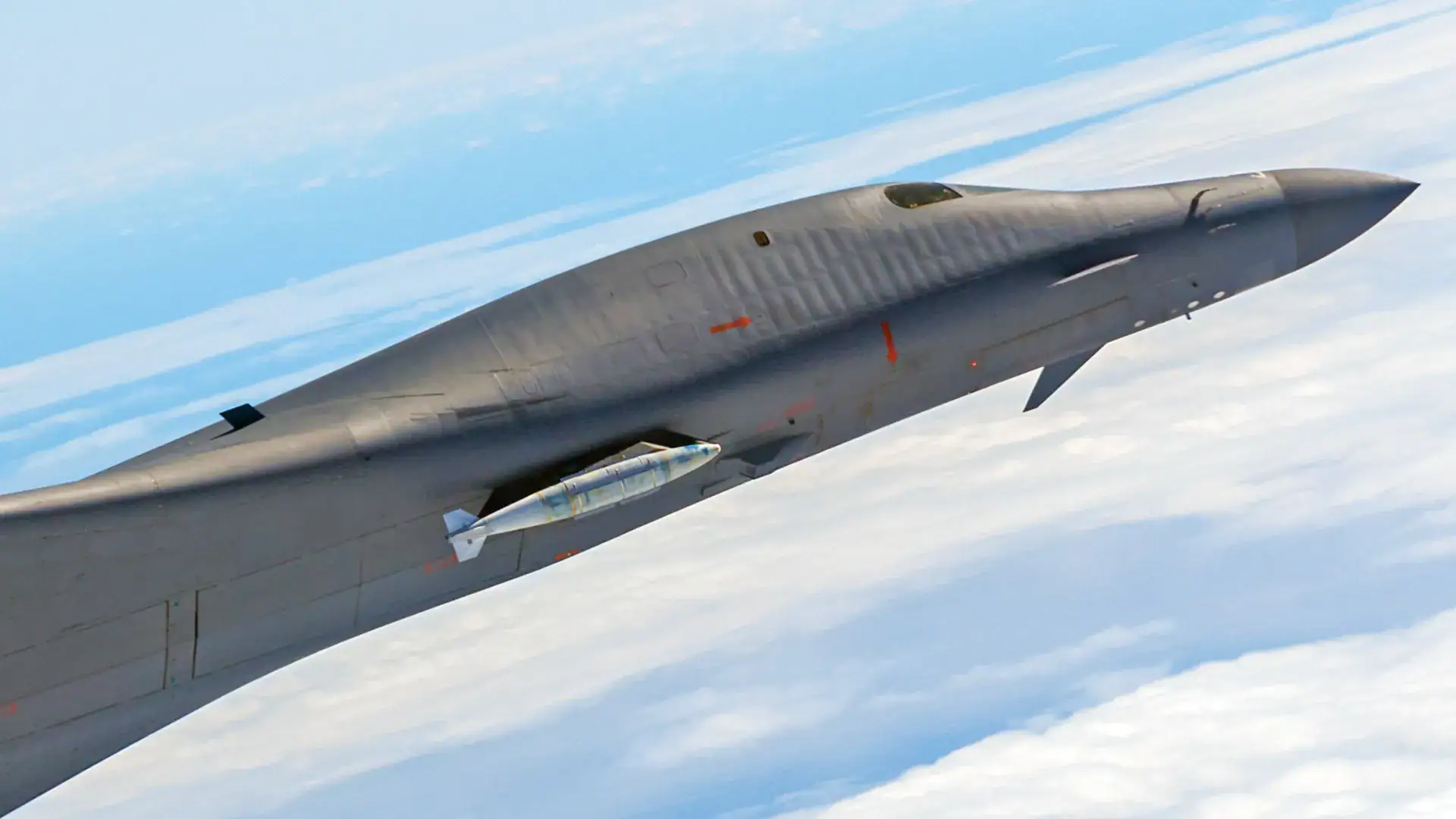
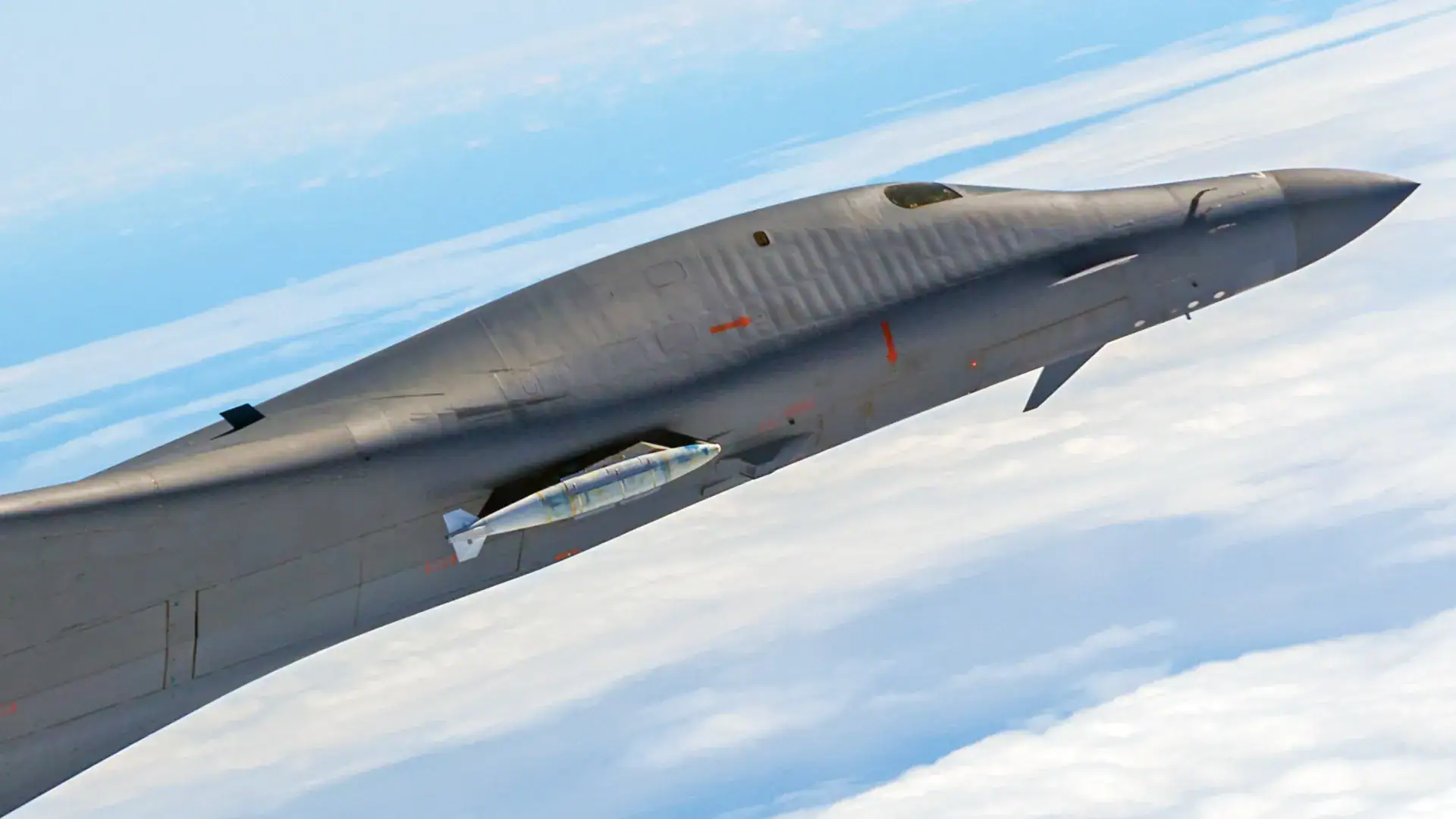
The B-1B Lancer is a multi-role, long-range bomber capable of flying intercontinental missions without refueling and penetrating sophisticated enemy defenses.
Specifications

General

Crew4
Engines4
StealthNo
Internal BayYes
Max Payload Kg34,019 kg
Max Speed Mach1.2 Mach
Nuclear CapableNo
Service Ceiling M9,144 m

Other

Height10.4 m (34 ft)
Length44.5 m (146 ft)
Wingspan41.8 m extended forward / 24.1 m swept aft
Unit CostUS$317 million (FY1998)
Fleet Size45 aircraft (after 2021 divestment of 17)
Powerplant4 × GE F101-GE-102 afterburning turbofans, 30,000+ lbf each
Fuel Capacity120,326 kg (265,274 lb) internal
Max Speed Kmh1,340
Max Takeoff Weight216,634 kg (477,000 lb)
Latest Developments
Oct 7, 2026strong signal
The ‘New’ B-1B Lancer Super ‘Beast’ Bomber Has a Message for the US Air Force, Russia, and Even China

the Air Force is fitting Load Adaptable Modular pylons that hold six apiece — thirty-six externally, on top of the twenty-four the aircraft already carries across three internal bomb bays.

Oct 4, 2026strong signal
Air Force pulls bombers from RAF Fairford

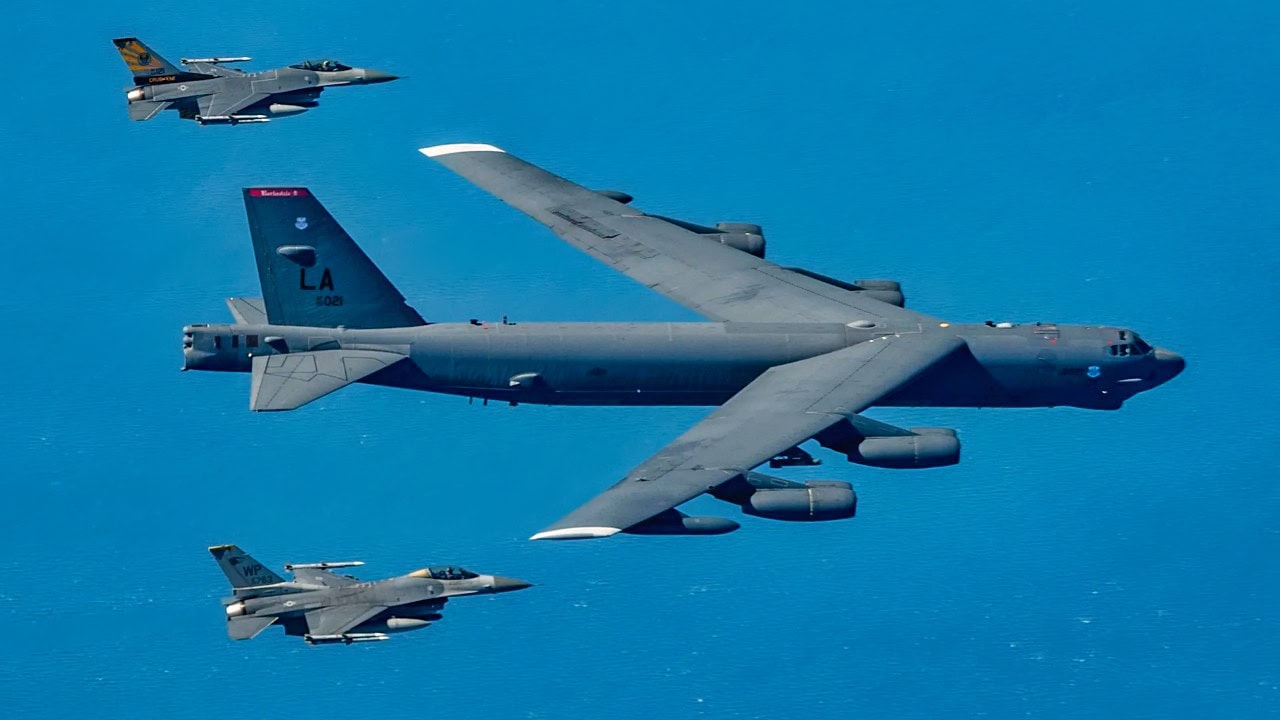
B-52 Stratofortress and B-1B Lancer bombers have staged at the base before heading to the Middle East on missions.

Oct 4, 2026strong signal
Air Force pulls bombers from RAF Fairford after security incident

B-52 Stratofortress and B-1B Lancer bombers have staged at the base before heading to the Middle East on missions.

Sep 27, 2026strong signal
5 arrested in suspected terror plot at UK base used by US Air Force

Air Force B-52 Stratofortresses and B-1B Lancers operated out of RAF Fairford to conduct missions against Iran at the start of the Iran war this year.

Sep 18, 2026strong signal
Saved from the Chopping Block: The US Air Force B-1B Lancer and B-2 Spirit Stealth Bombers Are Getting A Massive Upgrade

The USAF had planned to invest nearly $1.7 billion in continuing to modernize the B-1B Lancer and B-2 Spirit bombers over the next five years.

Featured Coverage
Research Notes

Supersonic bomber adapted for conventional strike

high

The B-1B evolved from a nuclear-era penetration bomber into a major conventional long-range strike platform.

The B-1B Lancer was originally conceived around high-speed, low-altitude penetration, but its modern operational identity is heavily tied to conventional strike. The aircraft combines variable-sweep wings, large internal weapons bays and intercontinental tanker-supported reach. In practice, this made it a flexible platform for sustained conventional campaigns where payload, persistence and retasking mattered more than stealth.

Large conventional payload and mission endurance

high

Its main comparative strength is carrying a very large guided and unguided weapons load over long distances.

The Lancer’s key battlefield contribution is payload mass. U.S. Air Force descriptions emphasize its ability to carry the largest conventional payload among U.S. bomber types, which gives commanders a way to deliver repeated effects from a single sortie. With external support from tankers and modern targeting workflows, the aircraft can cover large theaters while supporting multiple target sets.

Aging fleet with a defined bridge role

high

The aircraft remains useful, but its service story is now tied to fleet age and transition toward newer bombers.

The B-1B’s relevance should be read alongside its age and the planned arrival of the B-21. It still offers substantial conventional strike capacity, but sustaining a variable-geometry bomber fleet is expensive and maintenance-intensive. That makes the Lancer a bridge capability: still operationally valuable, especially for payload-heavy missions, while no longer the long-term center of the bomber force.

Key parameters at a glance

high

Figures are drawn from the official U.S. Air Force fact sheet.

Role
Long-range, multi-mission conventional bomber
Length
44.5m (146 ft)
Wingspan
41.8 m extended / 24.1 m swept
Max takeoff weight
216,634kg (477,000 lb)
Speed
Mach 1.2 at sea level (900+ mph)
Payload
34,019 kg (75,000 lb) — largest internal payload in the USAF
Powerplant
4 × GE F101-GE-102 afterburning turbofans
Crew
4 (commander, copilot, two weapon systems officers)
Service ceiling
More than 9,144 m (30,000 ft)
In service
45 aircraft; planned to fly through 2037

Program milestones

high

Officially documented milestones from the B-1A prototype to the planned B-21 transition.

1974-12B-1A prototype first flight

Rockwell's original B-1A flew in December 1974; the program was cancelled in 1977 before production.

1981-10Program revived as B-1B

The Reagan administration restarted the program, ordering 100 B-1Bs with reduced radar cross-section and revised avionics.

1984-10First B-1B flight

The first production B-1B flew in October 1984; deliveries to Dyess AFB began in mid-1985.

1986-10Initial operational capability

The B-1B achieved IOC with Strategic Air Command; the 100th and final aircraft was delivered in May 1988.

1998-12Combat debut in Operation Desert Fox

First combat use over Iraq; the fleet later flew extensively over Kosovo, Afghanistan, Iraq and Syria in a conventional-only role.

2021-02Fleet reduced to 45

Air Force Global Strike Command retired 17 of the most worn airframes, freeing maintenance resources and paving the way for the B-21.

2026-04Service extension through 2037

Budget plans fund B-1B modernization to keep the fleet lethal and relevant through 2037 while B-21 Raiders are fielded at Ellsworth AFB.

Strategic significance

medium

The B-1B occupies an unusual position in the U.S. bomber triad: designed as a low-level nuclear penetrator, it was progressively stripped of its nuclear mission in the 1990s and 2000s under arms-control agreements and now flies exclusively conventional missions. What remains is the largest internal weapons capacity in the Air Force inventory — 75,000 lb across three bays — combined with supersonic dash speed and intercontinental range, making it the service's principal high-volume standoff-missile carrier for weapons such as JASSM-ER and LRASM.

In day-to-day posture the B-1B is the workhorse of Bomber Task Force rotations, deploying in small detachments to Guam, Europe and the Middle East to signal presence and rehearse long-range strike with allies. Its combination of speed, payload and anti-ship missile capacity gives it particular weight in Indo-Pacific maritime-strike scenarios, though its lack of stealth confines it to standoff employment against modern integrated air defenses — a contrast with the B-2 and the incoming B-21.

The fleet's future is a managed decline rather than an abrupt exit. After retiring 17 airframes in 2021 to stabilize maintenance on the remaining 45, the Air Force now plans to modernize and fly the B-1B through roughly 2037 while B-21 Raiders are fielded, first at Ellsworth AFB. Until the B-21 arrives in numbers, the B-1B remains the capacity backbone of American conventional long-range strike, even as fatigue on its 1980s airframes makes sustainment progressively harder.

Videos

Why the B-1B Lancer Is a Speed Beast (WION Podcast)

Watch on YouTube

B-1B Lancer in 4K — 'Black Death' (Bilibili)

Watch on Bilibili

Why the B-1B became the USAF's most debated bomber (Bilibili)

Watch on Bilibili
Sources & References
Related Discussions

No discussions about B-1B Lancer yet

Start the first discussion