The E-3 defined what airborne battle management means for Western air forces. A single orbit converts a fighter force from a set of individually-scanning radars into a managed system: the rotodome supplies the wide-area picture, the mission crew allocates targets, deconflicts airspace and directs tankers, and the datalinks push that picture to shooters that cannot see as far as the Sentry can. That role has proven remarkably durable — the aircraft has been central to Desert Storm, Balkan and Afghan operations, NORAD air sovereignty and, more recently, counter-drone and counter-missile warning in the Gulf.
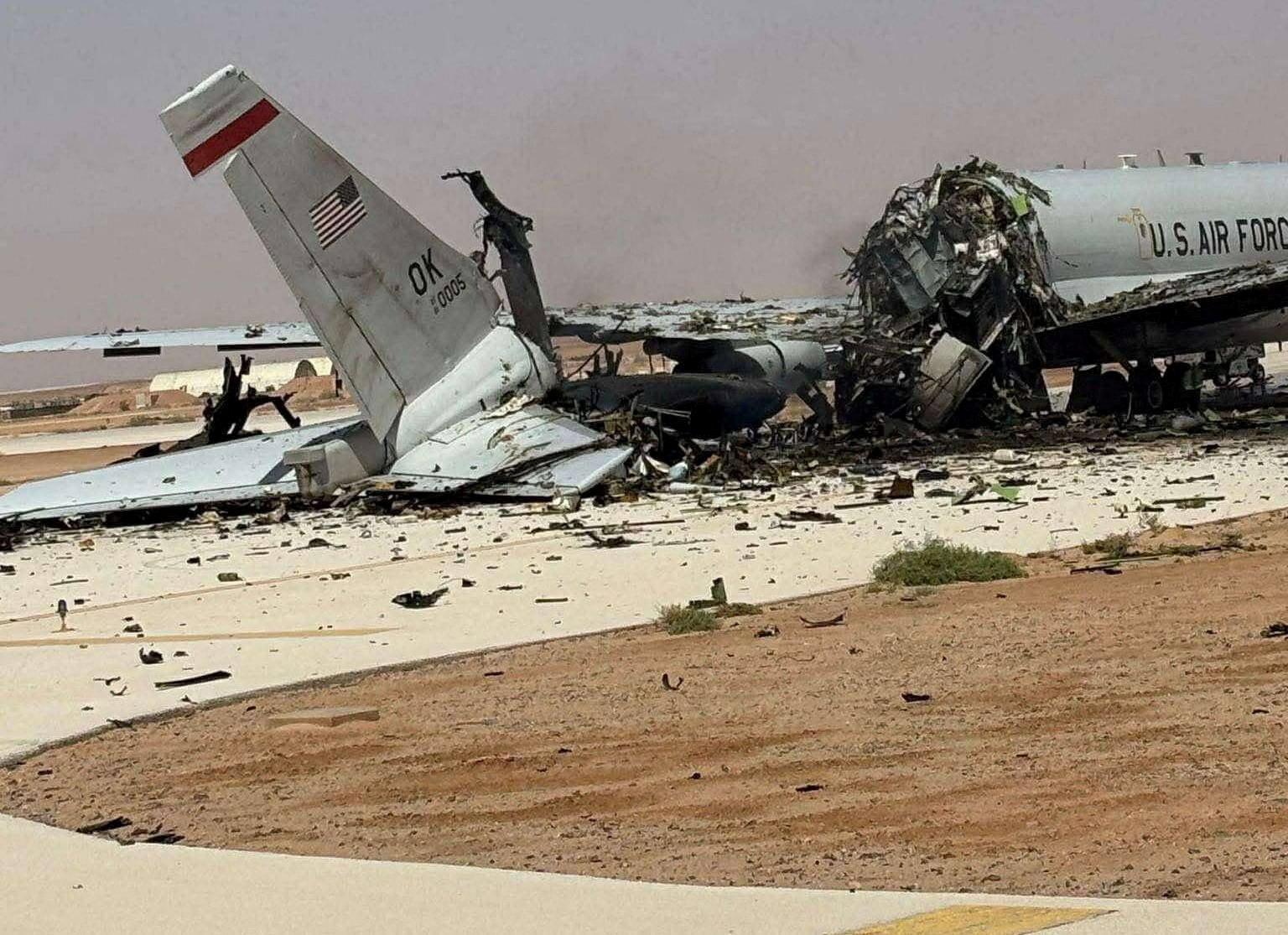
The problem is that the capability now rests on a shrinking, ageing fleet. Sixteen aircraft on a 1950s 707 airframe, averaging roughly 45 years and posting a mission-capable rate in the mid-50s, cannot cover simultaneous demands in Europe, the Middle East and the Pacific — as the 2026 Iran crisis showed, when six aircraft deployed forward left thin coverage in Alaska. The loss of one airframe to a strike on Prince Sultan Air Base also underlined a second issue: a large, predictable, non-stealthy orbiting radar is an attractive target, and long-range air-to-air and ballistic threats push the orbit further back from the fight, shrinking useful radar coverage exactly where it is most needed.
Replacement has been the harder problem. The E-7A Wedgetail offers a modern AESA on a supportable 737 airframe, but the program has been cancelled, restored by Congress and then left out of a budget request in the space of about two years, with the Air Force arguing that survivability in a high-end fight favours space-based and distributed sensing instead. NATO has taken a different route — a roughly USD 1 billion life extension holding its 14 E-3As to 2035, with up to 10 Saab GlobalEye selected as the successor and a networked Alliance Federated Surveillance and Control architecture beyond that. Either way, the E-3's real legacy may be the demonstration that the airborne C2 function is far easier to build than it is to retire.