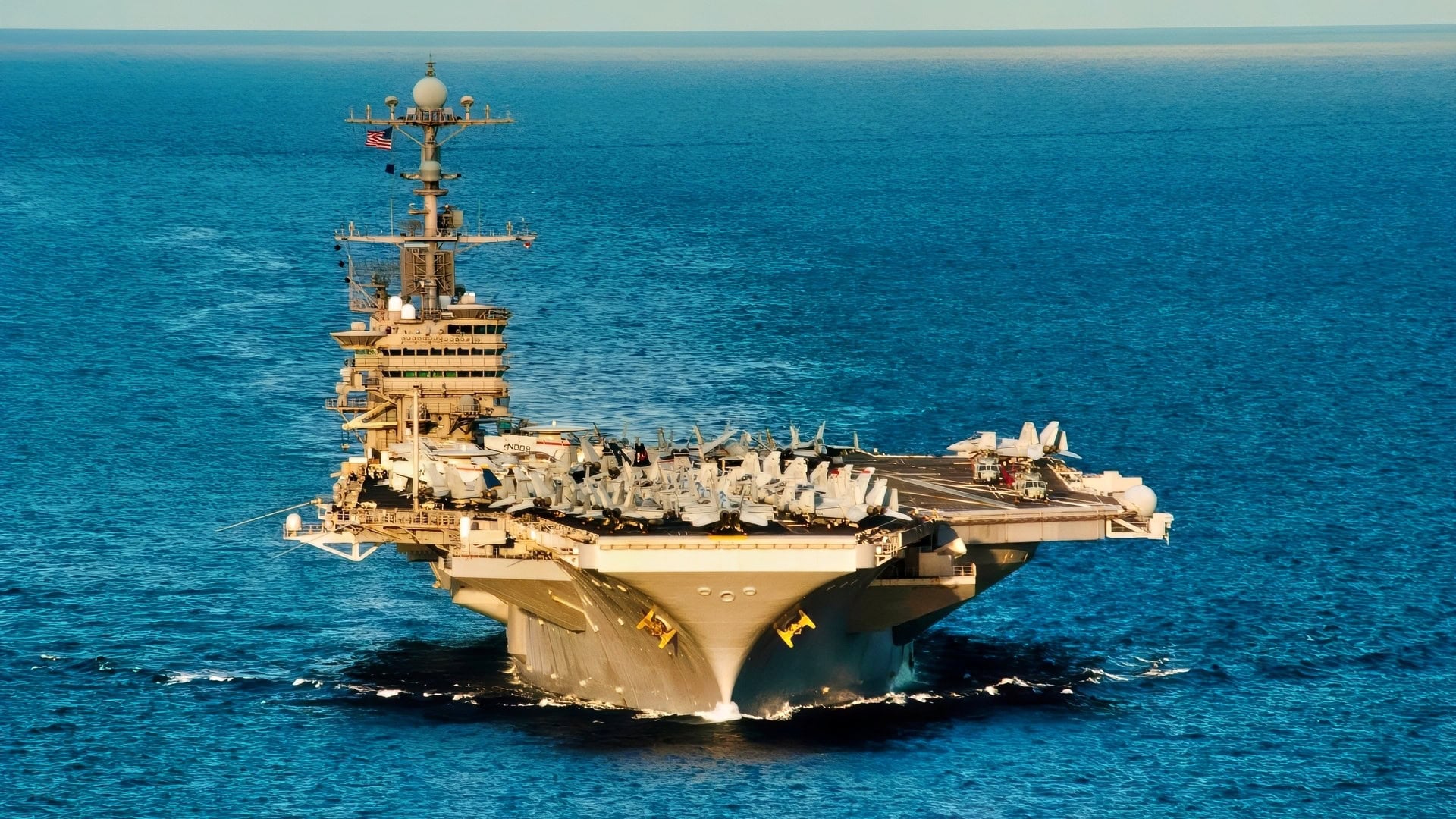
The DF-21D's importance lies less in its individual performance than in the planning problem it created. By fielding the first land-based ballistic missile intended to strike a moving ship, China converted a fixed cost — coastal launchers on its own territory — into pressure on the most expensive assets the US Navy operates. The effect is felt at the operational-planning level well before any shot is fired: a carrier strike group that must assume ASBM coverage out to roughly 1,500 km either accepts risk inside that ring or fights from ranges that strain its air wing's unrefuelled reach. That is the essence of the anti-access/area-denial concept, and the DF-21D was its first credible physical expression.
The system's real constraint is the kill chain rather than the missile. A MaRV with an active radar seeker can correct in the terminal phase, but the seeker must be delivered to a basket small enough for it to acquire the ship, and that requires a target position accurate to within a few kilometres at launch plus a mid-course update. China's Yaogan electro-optical, synthetic-aperture-radar and ELINT satellites, over-the-horizon backscatter radar along the coast, and maritime patrol aircraft are assessed as the sensor layers that close that loop. Each of those links is more vulnerable to jamming, deception, emission control and anti-satellite action than the missile itself, which is why analysts consistently caution that detecting a carrier group is not the same as targeting one. The August 2020 launches into the South China Sea remain the only publicly known live-fire event against a ship-sized target at sea, and the claimed hit has never been independently verified.
The DF-21D now sits inside a broader and deeper ASBM family rather than standing alone. The DF-26 offers roughly 4,000 km of reach with a comparable anti-ship role, the DF-17 adds a manoeuvring glide vehicle, and the air-launched YJ-21 extends the concept to bomber platforms; the 2024 US DoD report indicates the DF-26 is progressively replacing the DF-21 in PLARF service. The reasonable assessment is that the DF-21D's principal legacy is doctrinal — it forced distributed maritime operations, longer-range carrier air wings and counter-ISR investment onto Western navies — while the burden of executing the mission at scale shifts to its longer-ranged successors.