The DF-26's significance rests less on any single performance figure than on what one launcher can be tasked to do. At an assessed range of roughly 4,000 km it is the only Chinese land-based system credited with conventional reach to Guam, and the same airframe is assessed to accept either a nuclear or a conventional payload — swapped, according to open-source analysis, in the field rather than at a depot. That makes the brigade, not the missile type, the unit of ambiguity: an observer watching a DF-26 unit disperse cannot infer from the launcher what mission it has been assigned.
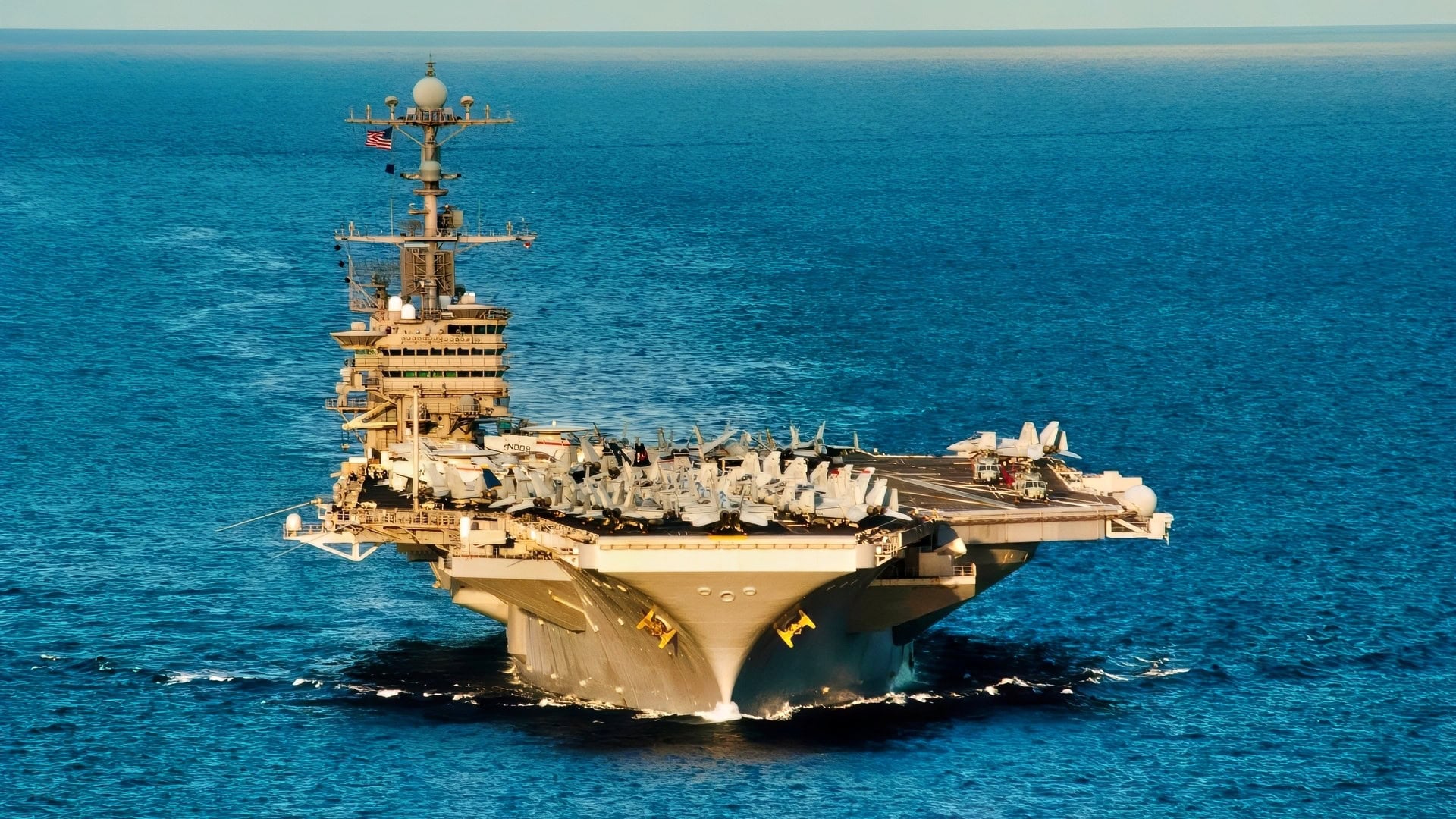
Against ships the DF-26 extends a problem the DF-21D introduced at shorter range. Where the DF-21D holds targets inside roughly the First Island Chain, an anti-ship DF-26 pushes the threatened area out toward the Second Island Chain, and both depend on the same fragile precondition — a detection, tracking and mid-course update chain able to keep a moving carrier localised for the flight time of a ballistic shot. Reported tests, including the August 2020 firings into the South China Sea, have not been independently verified against a manoeuvring, defended target, so the operational reliability of that chain remains the central open question rather than the missile's kinematics.
For US and allied planning the practical consequence is that hardening and dispersal at Guam and comparable rear-area bases now carry the weight that was previously assigned to Okinawa and Japan. The 2024 US DoD report's count of roughly 250 IRBM launchers, together with its description of the DF-26 supplanting DF-21 brigades, suggests Beijing is consolidating a large fraction of its theatre strike capacity into a single dual-capable system. Any launch detected from that force would be read under time pressure with no reliable way to distinguish a conventional shot from a nuclear one — an escalation-management problem that is a deliberate feature of the design rather than an artefact of it.