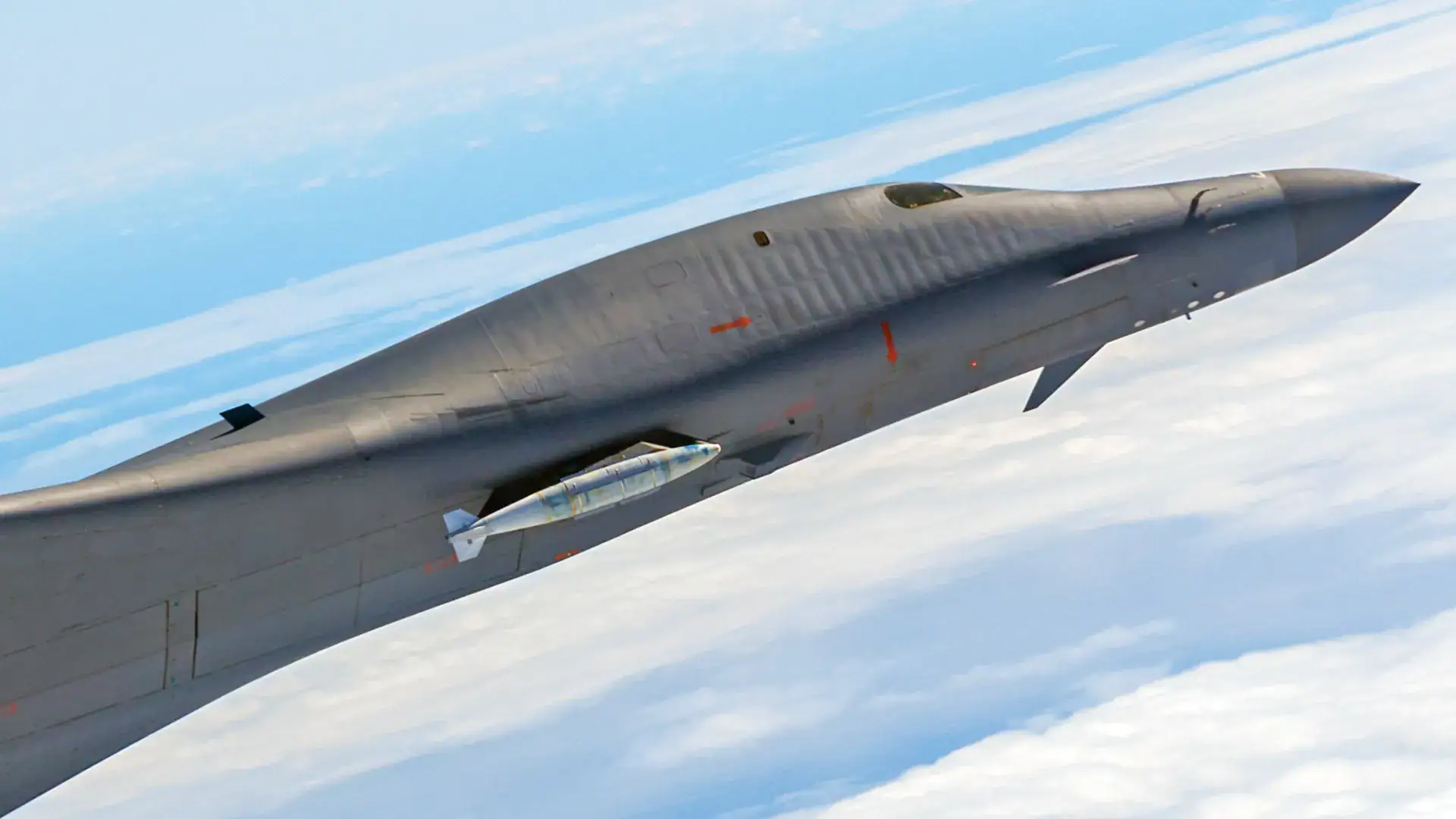
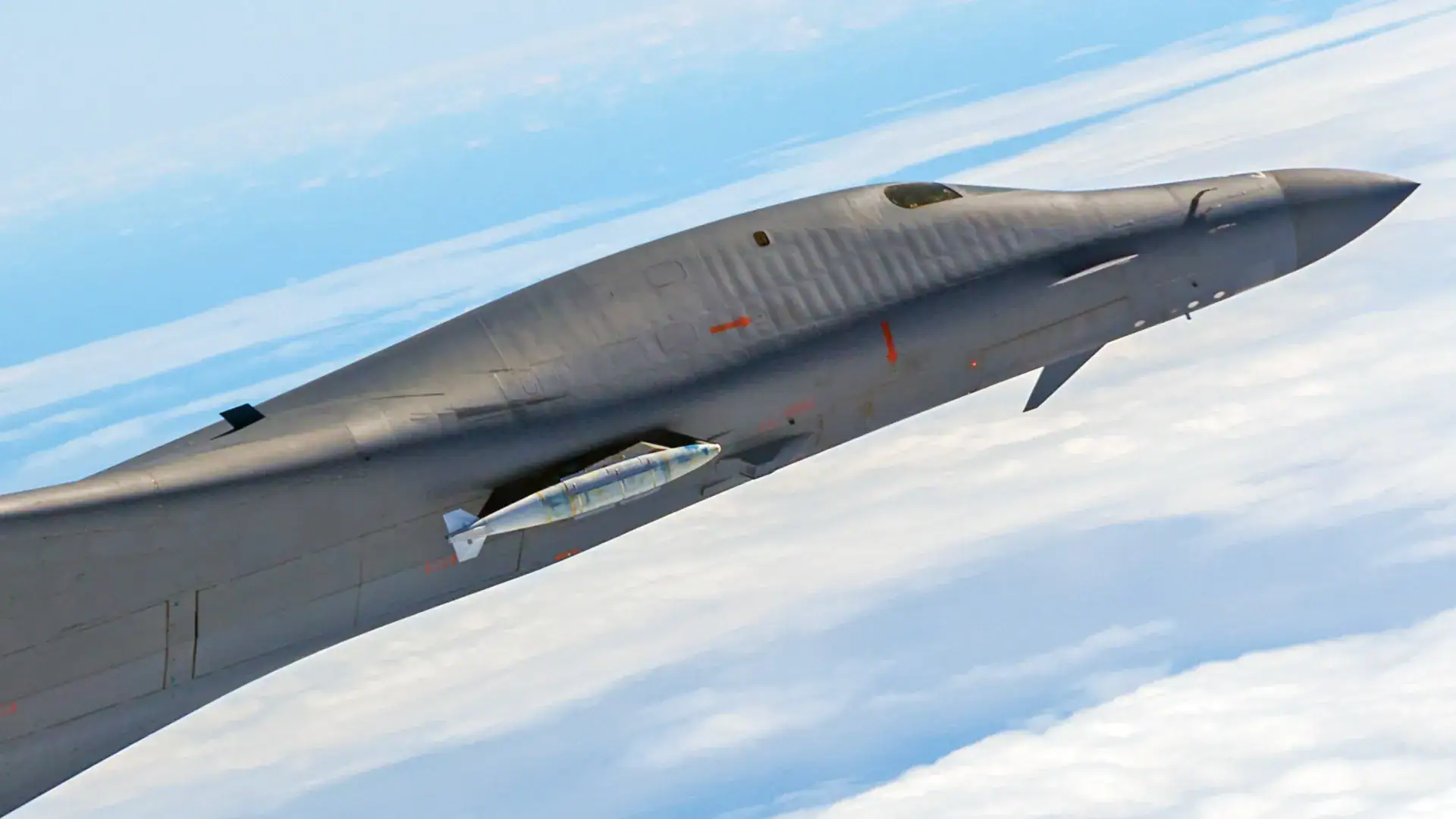
The B-1B occupies an unusual position in the U.S. bomber triad: designed as a low-level nuclear penetrator, it was progressively stripped of its nuclear mission in the 1990s and 2000s under arms-control agreements and now flies exclusively conventional missions. What remains is the largest internal weapons capacity in the Air Force inventory — 75,000 lb across three bays — combined with supersonic dash speed and intercontinental range, making it the service's principal high-volume standoff-missile carrier for weapons such as JASSM-ER and LRASM.
In day-to-day posture the B-1B is the workhorse of Bomber Task Force rotations, deploying in small detachments to Guam, Europe and the Middle East to signal presence and rehearse long-range strike with allies. Its combination of speed, payload and anti-ship missile capacity gives it particular weight in Indo-Pacific maritime-strike scenarios, though its lack of stealth confines it to standoff employment against modern integrated air defenses — a contrast with the B-2 and the incoming B-21.
The fleet's future is a managed decline rather than an abrupt exit. After retiring 17 airframes in 2021 to stabilize maintenance on the remaining 45, the Air Force now plans to modernize and fly the B-1B through roughly 2037 while B-21 Raiders are fielded, first at Ellsworth AFB. Until the B-21 arrives in numbers, the B-1B remains the capacity backbone of American conventional long-range strike, even as fatigue on its 1980s airframes makes sustainment progressively harder.