
100 Protector Robots for Ukraine Show Europe's New Defense Logic in 2026
 Dr. Klaus Weber
100 Protector Robots for Ukraine Show Europe's New Defense Logic in 2026
One hundred vehicles are usually not a strategic number in the European defense economy. In the case of battle tanks, air defense systems, or combat aircraft, it at best marks a medium tranche. For ground-based robotic systems, it is something different. The fact that the German government is financing the procurement of 100 heavy Protector ground robots for the Ukrainian National Guard, with the first 10 systems already delivered, is therefore not just another piece of aid news for Ukraine. It is an indication of where Europe's military innovation chain actually lies in 2026: not in Brussels, not in the bodies of PESCO, but at the interface between Ukrainian frontline necessity and European follow-up financing.
The Protector is Not a Symbol Device, but a Workhorse of Attrition Warfare
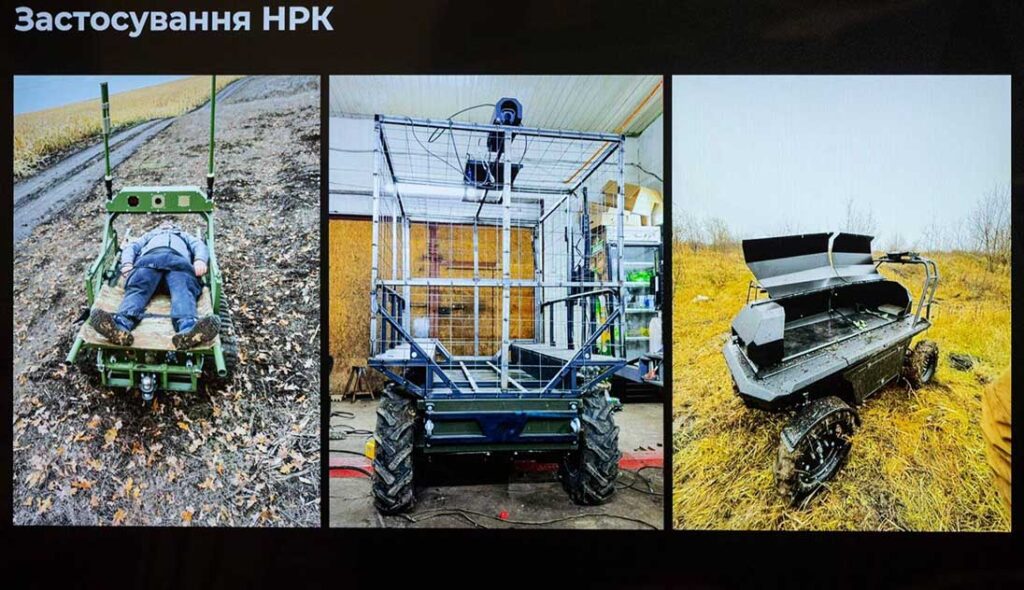
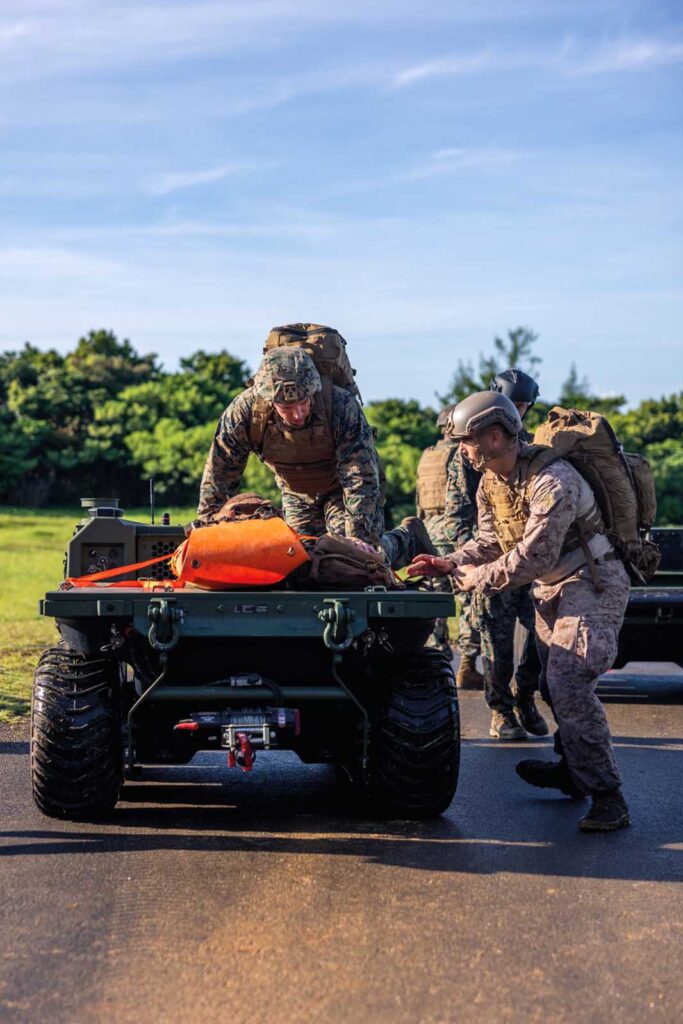
The technical specifications alone show why the order is more than a PR event. The Protector is not a light scout based on a quad, but a diesel-powered, more than five-meter-long heavy unmanned ground vehicle in the weight class of a Humvee. In the configuration delivered to the National Guard, the payload is 1,480 kilograms; in addition, it has a towing capacity of up to four tons. The system is powered by a 190-horsepower engine, with a total weight of up to four tons. The military purpose of this platform is correspondingly sober: to bring ammunition, supplies, fuel, and engineering materials the last, most dangerous mile forward and to extract the wounded without a driver from the fire zone.
This sounds unremarkable. Exactly therein lies the strategic significance. Europe has become accustomed over the past three years to thinking about military modernization in large platforms: Patriot, F-35, frigates, 155mm production lines. However, the war in Ukraine forces a different priority. The most costly stretch is often not the operational advance, but the banal logistics trip between covered deployment areas and forward positions. Those who automate this section do not make headlines, but they reduce losses, increase ammunition availability, and extend the endurance of a brigade. Capabilities arise here not through prestige, but through repeatability.
Germany Finances, Ukraine Develops, Europe Learns Late
That is precisely why the German financing is politically revealing. Berlin is not primarily buying German industrial time, but Ukrainian development speed. According to the National Guard and the manufacturer Ukrainian Armor, the Protector was codified by the Ukrainian Ministry of Defense in June 2025 and transferred to series production within two months. That is the real news. While European programs often lose years between requirements, certification, and contracts, Ukraine has built a war industry that translates feedback from deployment into product cycles almost in real time.
This is the part of the European turning point that is rarely discussed in Berlin and Brussels. Europe is increasingly financing not only Ukrainian consumption but also Ukrainian learning curves. The value of the German package lies less in the number 100 than in the question of what these 100 systems mean institutionally. They signal that Ukraine is no longer merely a recipient of Western technology in certain segments, but a producer of operationally tested solutions that European states can now flank with capital, supply, and possibly later with their own production.
“Robotizing logistics allows important tasks to be carried out without unnecessary risk to personnel,” explained Ukrainian Armor CEO Vladyslav Belbas. The statement is remarkable because it does not sell the system as a wonder weapon, but as a response to personnel attrition.
The Real Integration Story Runs Through Poland, Finland, and Denmark
Those who view the German order in isolation miss the larger trend. Almost simultaneously, PGZ announced to Ukrinform that it is preparing joint production of ground-based robotic systems with a Ukrainian partner. In August, a confidentiality agreement was already signed; the next step is to be a cooperation agreement. The wording of the PGZ representative is more important than any Sunday speech about European sovereignty: Build with Ukraine or Build for Ukraine. This is not a Brussels doctrine, but an industrial stopgap born out of wartime pressure and delivery times.
There are further examples. A Finnish-Ukrainian structure is to produce 320 TerMIT 2.0 systems. In Denmark, a joint venture is being established for the series production of the Ukrainian system Ravlyk, where development and system engineering remain in Ukraine, while assembly, quality control, logistics, and regulatory adjustments are anchored in the EU. In other words: Europe's ground-based robotics is currently integrating not through common procurement authorities, but through distributed manufacturing nodes around Ukrainian combat experience.
Especially for a German observer, this is an uncomfortable but necessary insight. We in Europe like to talk about technological sovereignty as if it begins with the country of origin stamp on the final product. In reality, it often begins much earlier, with control over iteration, software adaptation, operational data, and production relocation. Those who further develop the design and set the pace possess more sovereignty than those who merely assemble the casing at the end. In this segment, the pace is currently remarkably often set in Ukraine.
Why These 100 Systems Say More About Europe's Future Than Some Billion-Euro Line
The Protector order thus refutes an old European reflex: that defense capability primarily arises from centralized large programs. No, it arises in attrition warfare first where failures can be cheaply replaced, processes quickly adapted, and personnel risks systematically reduced. A heavy logistics robot is strategically important not because it is spectacular, but because it is scalable. If a system can deliver almost a ton of supplies in one trip or recover the wounded without a driver, that does not change the map of Europe, but it changes the daily survival calculations at the front. And it is from exactly such daily calculations that military effectiveness ultimately arises.
For Germany, the lesson is clear. Those who still believe that European defense integration must first proceed through institutional purity confuse order with performance. The real existing integration of 2026 is messier and at the same time more productive: Berlin finances Ukrainian systems, Poland prepares for co-production, Finland and Denmark create manufacturing capacity, and the front validates in weeks what European tenders would otherwise take years to accomplish. This is not a clean sovereignty architecture. But it is, unlike many summit declarations, a functional one.
Here lies the paradox. Europe has been talking about strategic autonomy for years, but is now achieving it in one area precisely by making Ukrainian war experience the industrial school of the continent. This may be sobering for some in Brussels. Nevertheless, it is rational. Those who today only transfer money to Kyiv help in the short term. Those who anchor production chains around Ukrainian systems in Poland, Finland, or Denmark change the European capability base. The first 10 of 100 Protector robots therefore mark not just a delivery. They mark the moment when Europe begins to understand that defense autonomy does not arise where the most beautiful programs are written, but where the fastest learning cycles occur under fire.
Germany is financing the procurement of 100 heavy Protector ground robots for the Ukrainian National Guard, with the first 10 systems delivered in 2026. This initiative reflects a shift in European military strategy towards enhancing logistics and operational capabilities in response to the ongoing conflict. The Protector robots are intended for transporting supplies and evacuating casualties, marking a significant development in military logistics.
- Germany is financing the procurement of 100 heavy Protector ground robots for Ukraine.
- The first 10 systems have already been delivered to the Ukrainian National Guard.
- The Protector is designed for logistics and casualty evacuation in combat zones.
- The procurement signifies a shift in European military innovation towards practical solutions for frontline needs.
- Ukraine has developed a rapid production capability for military equipment in response to the war.