
110 Missiles and 400 Drones Reshape the Russian Military's Energy Warfare Against Ukraine - Kyiv's Three Bridges Become New Targets
 Dmitri Volkov
110 Missiles and 400 Drones Reshape Russian Military's Energy Warfare Against Ukraine—Kyiv's Three Bridges Become New Targets
What truly warrants caution is not the integer '400', but rather the fact that the Russian military has included the power grid and the Dnieper River crossings in the same target list. The strikes on the night of November 19 to 20, assessed by ISW on November 20, represent the largest missile-drone attack by the Russian military against Ukraine this month, primarily targeting critical infrastructure and Kyiv's bridges. It extends the cost of winter supply disruptions from the generation side to the transmission and distribution networks, river crossings, and emergency evacuations.
Numbers Are Not a Single Caliber
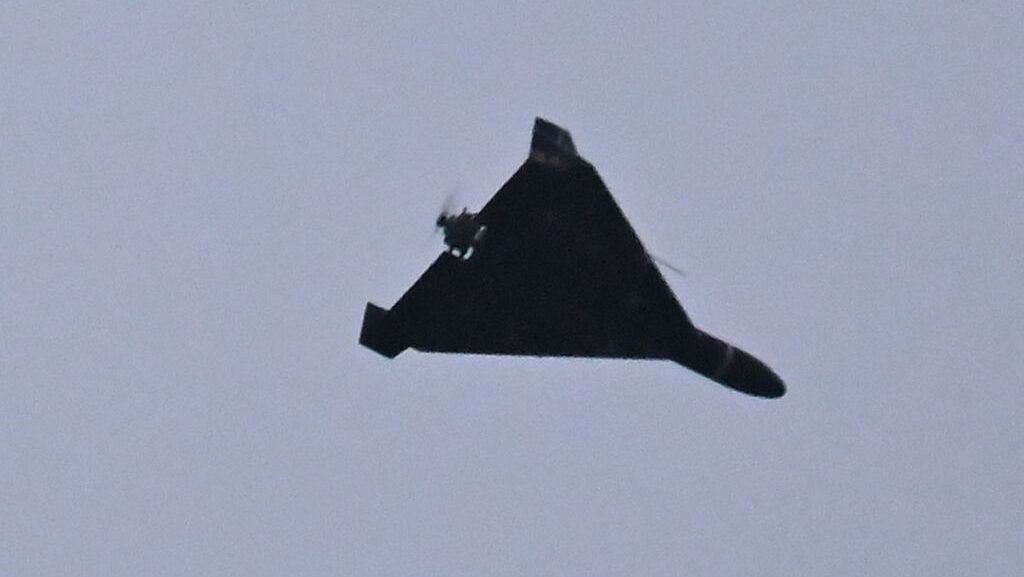
The early statement from the Ukrainian Air Force spokesperson indicated over 100 missiles, with a maximum of 80 cruise missiles and 20 ballistic missiles; approximately 400 attack drones, of which about 120 were jets. President Zelensky's statement cited over 400 drones and at least 110 missiles, including 27 ballistic missiles, and mentioned that some munitions carried cluster warheads. The data relayed by ISW from the Ukrainian side includes 27 ballistic missiles, 84 cruise missiles, and 404 Shahed/Gerbera-type drones. The three sets of figures likely correspond to different statistical cut-off points, aircraft classifications, or initial reports versus confirmations, and cannot be mechanically summed; the complete details of the original Air Force post remain to be confirmed.
This explains the wave structure. Cheap Gerbera/Parodiya-type decoys and Shahed drones first create a defensive screen; faster jet drones compress detection, identification, and re-engagement times; Kh-101 or 'Kalibr' cruise missiles approach from another axis; Iskander-M, KN-23, Zircon, and other ballistic or high-speed targets minimize the interception window. Specific models and allocations have not been fully publicly disclosed, so the aforementioned categories cannot be treated as a confirmed launch list for this round.
From Power Plants to Grids and Bridges
Zelensky's comments regarding cluster warheads, if confirmed through subsequent debris analysis, imply a military significance not in 'greater power' slogans, but in the fact that substations, switching stations, and outdoor transmission equipment have dense and vulnerable sub-targets: a single dispersal can disrupt multiple components and force bomb disposal, firefighting, and repair teams to delay entry until risks are cleared. The so-called secondary damage to repair teams still lacks independent evidence and cannot be considered a fact that has occurred.
According to the Kyiv mayor's statements and Al Jazeera reports, after damage to the Podilsko-Voskresenskyi Bridge, the right bank to left bank direction was closed, and the Darnytskyi and Pivdennyi bridges were also damaged and had restricted flow; the Russian Ministry of Defense stated that it struck roads and railway bridges used for transporting weapons and equipment. The two narratives are not mutually exclusive: bridges serve as nodes for military logistics, commuting, emergency services, and civil defense. For residents on the left bank, the combination of flow restrictions and power outages means that heating repair personnel, fuel, ambulances, and evacuation vehicles must compete for reduced river crossing capacity. This is a dangerous reflection of the November 17 incident at the Crimean Bridge, rather than a mere repetition of it.
Production Arithmetic Cannot Replace Interception Arithmetic
Previously, the Ukrainian side reported waves of 112 and 105 jet drones, with this round involving about 120 (all according to Ukrainian sources, with cross-batch classifications pending confirmation). The continuous increase is worth tracking, but cannot directly imply Russian monthly production; inventory releases, mission groupings, and identification rules can all alter ratios. A more useful metric is the confirmed number of incoming targets by type, the number shot down/failed, penetrated, and the duration of power outages after hits. Especially since the availability of interceptors like Patriot and IRIS-T is not publicly disclosed, the total number of launches in this round cannot be used to infer stock levels. Until stable interception details are publicly available, any 'leakage rate' can only be marked as pending confirmation.
Three Signals the Day After the Summit
This round of strikes occurred one day after the trilateral summit in Shenzhen involving China, Russia, and the United States. If Trump's statement that Putin is 'tired' of the war and desires peace is fully verified, the large-scale attack hours later illustrates that rhetoric and operational tempo can coexist. One explanation is a predetermined plan: the pre-assembled cruise and ballistic weapons and hundreds of drones are unlikely to be generated on short notice, with evidence being the base activities and flight preparations in the days prior. Another explanation is 'pricing' for the summit: using destructive capabilities to raise negotiation baselines, with evidence being the Russian side bundling bridges, energy, and negotiation conditions within the same information cycle. A third explanation is signaling to Europe: making the risks to the power grid, alerts in Polish airspace, and costs of refugees/aid enter European decision-making, with evidence being subsequent propaganda and renewed focus on cross-border infrastructure. Existing materials are insufficient to adjudicate between the three; it is most likely that a predetermined plan was amplified by political timing.
Winter Critical Point and 72-Hour Checklist
Al Jazeera quoted Ukrainian sources stating that this round caused power outages in Kyiv and 10 other regions, with nuclear power plants forced to reduce output; the Ukrainian Prime Minister reported at least 8 civilian deaths and 28 injuries. Since November 3, the cumulative number of energy attacks remains to be unified by the Ukrainian side; however, the cumulative effect is no longer just a single power outage, but the simultaneous depletion of spare parts, transformers, repair manpower, and residents' cold resistance capabilities. On the night of November 21, the Ukrainian Air Force initially reported that three Iskander-M/KN-23/S-400-type ballistic missiles and 148 Shahed and Gerbera/Parodiya drones were incoming, of which 87 were jets; the results and losses are still pending confirmation.
- Whether to again target the Dnieper River bridges, traction power supply, and substations;
- Whether Ukraine will retaliate against Russian refineries, ports, or energy logistics, and whether Russia will disclose verifiable damage;
- Whether the United States and Europe will announce, deliver, or deploy new air defense interceptors, rather than merely making political commitments.
Sources and Interpretation
Main sources: ISW's "Russian Offensive Campaign Assessment" from November 20; reports from the Ukrainian Air Force and public statements by Zelensky; Al Jazeera's report from November 20; statements from the Russian Ministry of Defense. Related searches from Kyiv Independent, Meduza, and Defense Post were restricted during this evidence collection, and their unverified claims were not included in the factual section. All figures are presented according to the aforementioned sources; Russian claims of results have not been independently verified.
Russian forces launched a large-scale missile and drone strike against critical infrastructure in Ukraine on November 19-20, 2023, targeting bridges and energy facilities in Kyiv and Dnipropetrovsk Oblast. The attack involved 110 missiles and 400 drones, resulting in at least 8 civilian deaths and 28 injuries. This operation followed a trilateral summit and aimed to disrupt Ukraine's energy supply and transportation networks.
- 110 missiles and 400 drones were used in the attack.
- The strikes targeted critical infrastructure, including bridges and energy facilities.
- At least 8 civilians were reported dead and 28 injured due to the strikes.
- The operation occurred shortly after a trilateral summit involving Russia, China, and the U.S.
- Ukrainian air defenses faced challenges due to the variety of attack methods employed.