
12 Civilian Ships Participate in PLA Landing Drill, Shortcomings in Taiwan Strait Landing Logistics Being Addressed
 Li Minghui
12 Civilian Ships Participate in PLA Landing Drills, Taiwan Strait Landing Logistics Shortcomings Being Addressed
On May 18, Japanese media Japan Forward once again brought an easily overlooked detail to the forefront: the PLA has been using civilian roll-on/roll-off ships and deck cargo ships in recent years to refine its logistics support plans for landing operations against Taiwan. This topic is not new, but it has become more specific now. Public satellite images and vessel identification data show that during an exercise in the summer of 2025 near Jieshi, Guangdong, at least 12 civilian vessels participated in beach unloading, including 6 roll-on/roll-off ferries and 6 deck cargo ships.
Civilian Ships Are Not a Replacement for Type 075, But a Supplement for the Second Wave
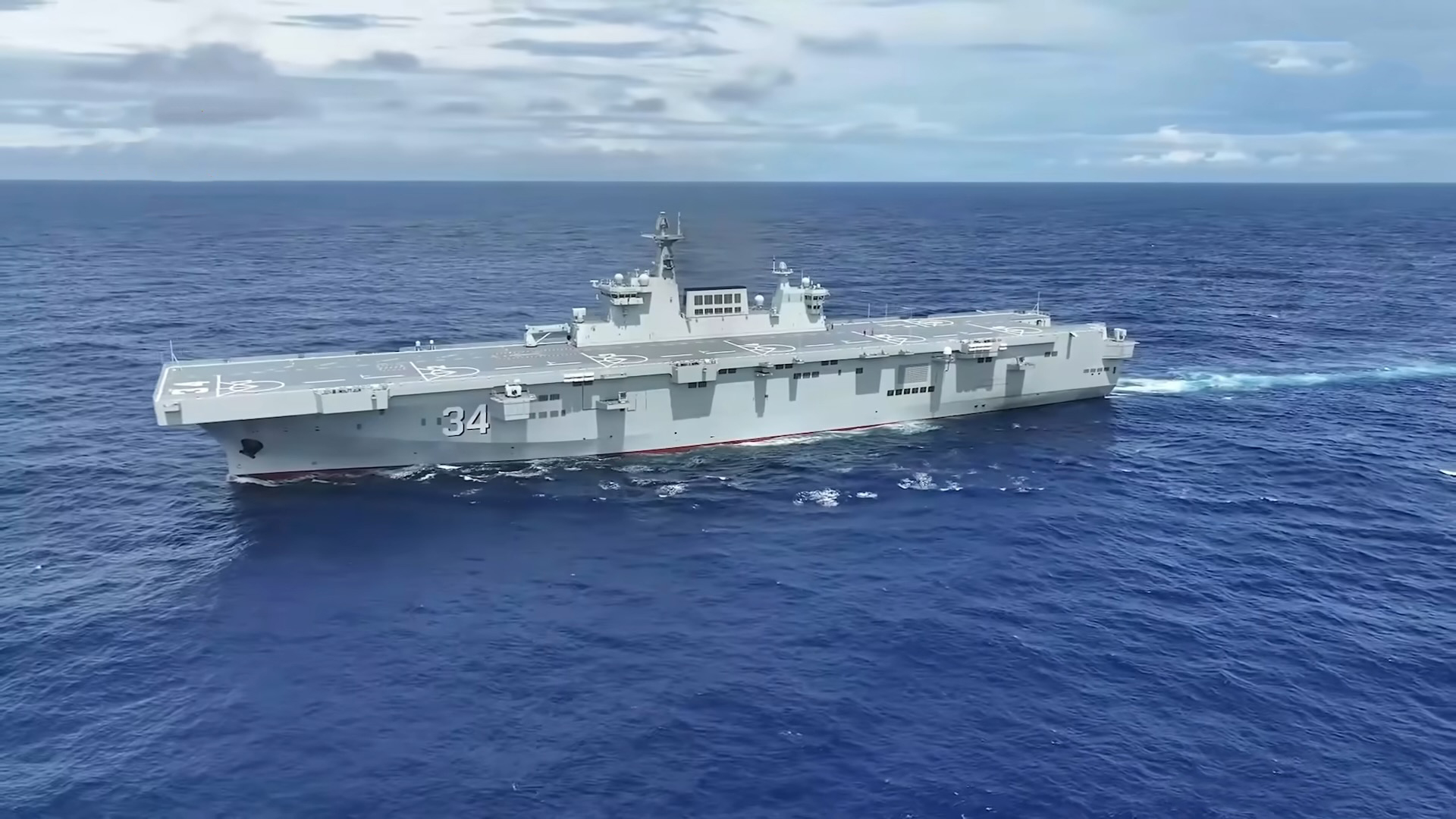
When discussing the PLA's landing capabilities, external observers often focus on the Type 071 dock landing ship, Type 075 amphibious assault ship, and the experimental Type 076. This perspective is not wrong, but it tends to overlook a more engineering-oriented issue: whether the first wave can land is one thing, but whether it can continuously deliver fuel, ammunition, engineering equipment, and vehicles after landing is another matter.
Satellite image investigations by Reuters in November 2025, along with analyses from Army Recognition and Asia Times, have mentioned that the PLA's exercises are not simply about "borrowing a few ships to transport vehicles," but rather about integrating commercial shipping routes, port loading, beach unloading, and temporary floating bridges into a cohesive process. In simple terms, the Type 075 is responsible for opening the door, while civilian roll-on/roll-off ships are responsible for continuously moving supplies through that door.
The Number of 12 Ships May Not Seem Large, But the Signal Is Significant
The 12 ships alone are not enough to change the balance of power in the Taiwan Strait. What is truly interesting is the combination of ship types. The value of roll-on/roll-off ships lies in their ability to allow vehicles to drive on and off directly, while the value of deck cargo ships lies in their simple structure, shallow draft, and open deck, making them suitable for temporary modifications and nearshore unloading. The U.S. Naval War College's China Maritime Studies Institute has long judged in its report "Civilian Shipping and Maritime Militia" that the PLA does not view civilian ships as temporary patches, but rather incorporates them into the logistical framework for cross-sea landings.
- Roll-on/roll-off ships provide bulk loading capacity for vehicles and personnel but rely on docks, ramps, or temporary unloading facilities.
- Deck cargo ships are more suitable for rough transport and nearshore unloading, but have limited protection, damage control, and adaptability to sea conditions.
- If modular landing facilities using water bridges mature, they could reduce reliance on complete ports in Taiwan.
The author believes that the key point here is not that "the PLA has already developed comprehensive capabilities to attack Taiwan," but rather that it is gradually breaking down its previously most glaring logistical shortcomings into industrial problems that can be trained, quantified, and mobilized. China's shipbuilding industry and coastal roll-on/roll-off transport scale are substantial; once the national defense mobilization laws, corporate transport fleets, and port scheduling systems are integrated, the military value will exceed the parameters of a single warship.
Shortcomings Are Also Obvious
The weaknesses of civilian ships are also quite pronounced. They are slow, have poor survivability, lack the compartmentalization and air defense systems of warships, and civilian crew members have limited wartime damage control training. If the Taiwanese military's coastal anti-ship missiles, mines, drones, and rocket artillery can create continuous lethality during the loading, cross-sea, and beach assault phases, the destruction of a fully loaded roll-on/roll-off ship could result in losses not just of a single vehicle, but potentially dozens to hundreds of vehicles and a large number of personnel.
Therefore, I do not agree with interpreting these exercises as a "countdown." A more accurate statement would be: the PLA is validating a method to transform civilian maritime transport into wartime delivery capabilities, while the Taiwan Strait defense side needs to identify civilian ships, coast guard, maritime militia, and regular amphibious fleets on the same target list.
Public information shows that the relevant judgments mainly come from Reuters' 2025 satellite image investigation, Asia Times' interpretation of the Jieshi exercise, and a series of reports from the U.S. Naval War College's CMSI on China's civilian ship mobilization system. Japan Forward's report on May 18 indicates that this topic is still being continuously tracked by Japan's security circles.
The Real Questions Remain Unanswered
If, in a future crisis, dozens of roll-on/roll-off ships depart simultaneously from different ports in the Bohai Sea, East China Sea, and South China Sea, are they being dispatched for commercial purposes, military exercises, or pre-landing mobilization? This identification window may be more important than building another Type 075. Because by the time civilian ships are lined up in a landing formation, it will be too late to discuss whether they are "civilian targets," both technically and politically.
Twelve civilian ships participated in a People's Liberation Army (PLA) landing exercise in Guangdong on May 18, 2025. The exercise included 6 roll-on/roll-off ships and 6 deck cargo ships, indicating the PLA's integration of civilian maritime resources into military logistics. This development reflects a strategic shift in enhancing landing capabilities, although vulnerabilities remain due to the nature of civilian vessels.
- 12 civilian ships participated in a PLA landing exercise in Guangdong.
- The exercise involved 6 roll-on/roll-off ships and 6 deck cargo ships.
- The PLA is integrating civilian shipping into its military logistics framework.
- Civilian ships are not seen as temporary solutions but as part of a broader logistical strategy.
- The report highlights the potential vulnerabilities of civilian ships in a military context.