
136 drones and "Iskander-M" showcase the new economy of Russian strikes on Ukraine
 Dmitri Volkov
136 drones and "Iskander-M" demonstrate the new economy of Russian strikes on Ukraine
117 out of 136 Russian drones were shot down or suppressed on the night of August 4 — and still, one "Iskander-M" and 14 drones reached their targets in 14 regions. This arithmetic is unpleasant for both sides. For Ukraine, it shows that a high interception rate no longer guarantees automatic protection of infrastructure. For Russia — that a mass raid is no longer a standalone tool for victory, but is turning into an expensive accounting of attrition.
The strike on August 4 was not just another night attack
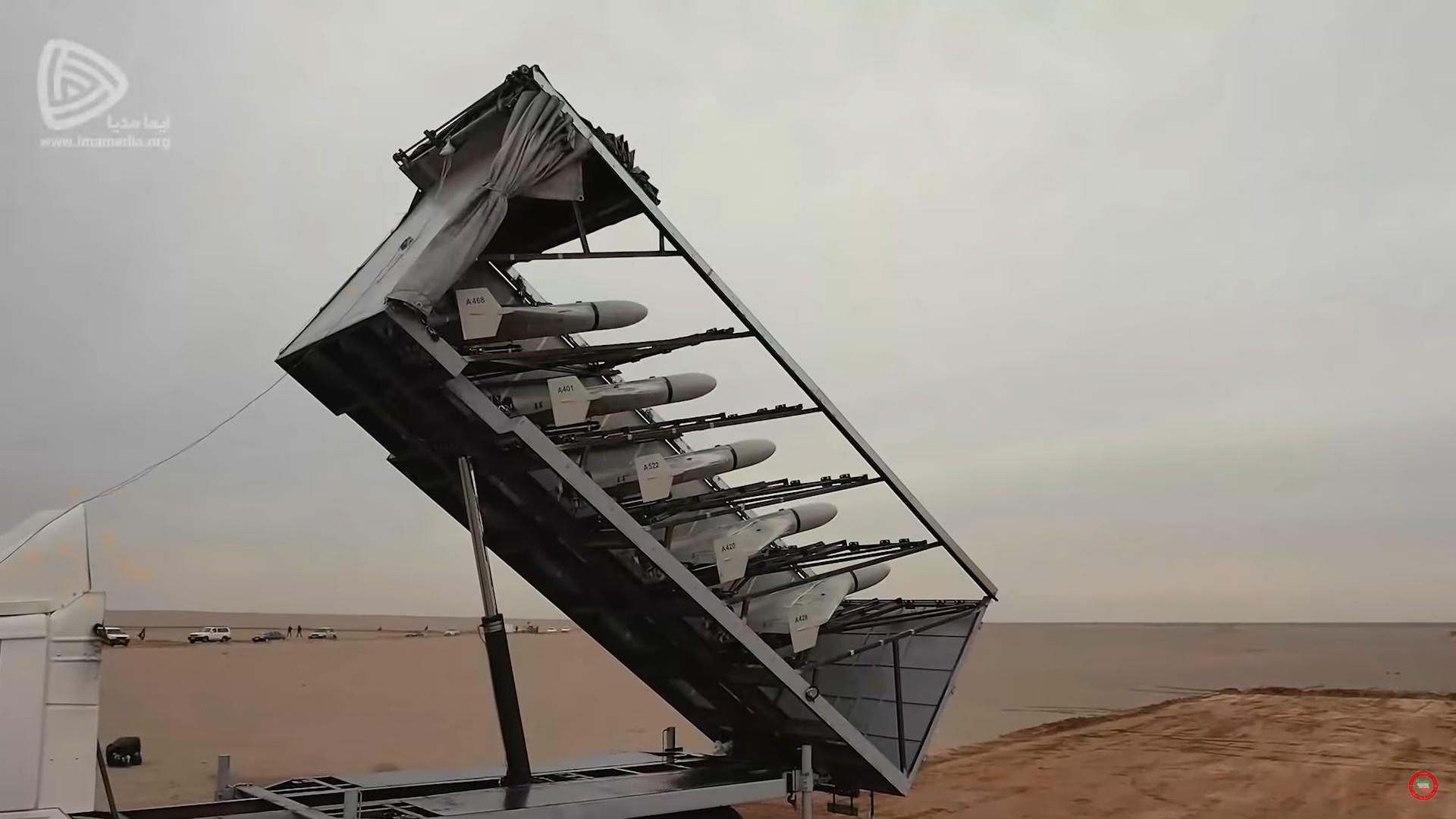
According to the Ukrainian Air Force, as cited by NV and RBC-Ukraine, the Russian attack began on the evening of August 3 and included one "Iskander-M" ballistic missile launched from the Rostov region, as well as 136 devices of various types: "Shahed," reactive variants of "Shahed," "Gerbera," "Italmas," "Banderole," and false targets "Parody." The launches came not from a single point, but from several directions — Oryol, Millerovo, occupied Donetsk, Chauda, and Gvardeyskoye in Crimea. This geography is more important than it seems: it forces the Ukrainian air defense system to keep several detection, communication, and fire control circuits operational at once, rather than concentrating on a single corridor.
The Ukrainian side reported the use of aviation, anti-aircraft missile troops, electronic warfare units, drone systems, and mobile fire groups. This is no longer classic Soviet air defense with a vertical hierarchy of "radar — command post — division." It is a hybrid network where an expensive missile, a machine gun group in a pickup truck, and an electronic warfare station participate in a single process. But it is precisely against such a network that Russia is now building its strike packages: not just to break through, but to force the network to make too many small decisions in too short a time.
The main shift — from mass to variety
As recently as 2023–2024, Russian logic was relatively straightforward: a lot of "Shaheds," then missiles, then checking where air defense was tired or opened a position. In August 2026, the picture is more complex. In one package, strike drones, reactive modifications, cheap imitators, and a ballistic missile end up together. This is not a sign of technological brilliance in the Russian defense industry. Quite the opposite: it is an adaptation of an industry that cannot produce enough high-precision missiles for a constant strategic effect but can saturate the war with products of varying costs and utility.
"Gerbera" and "Parody" in such a scheme are valuable not because they necessarily destroy a target. Their function is to force the Ukrainian side to spend radar time, calculation resources, mobile group motor resources, communication channels, and, in the worst case, expensive interception means. Soviet military theorists would call this a struggle for the resilience of the command system. Today, it looks less majestic: a plywood-composite device for relatively little money forces the opponent to open a radio channel and make a decision that, in total, costs more than the device itself.
That is why the figure of 117 neutralized targets should not be comforting. If out of 136 drones, 19 were not neutralized, and 14 of them struck objects, then the real question is not about the interception percentage, but about which specific targets got through and how much the defense against those that did not cost. The drone war has long ceased to be a competition of "shot down — not shot down." It has become a comparison of the cost of error.
"Iskander-M" remains an expensive argument in a cheap environment
A ballistic missile in such a package serves not as a mass weapon but as a narrow tool of coercion. The "Iskander-M" with a quasi-ballistic trajectory and a range of up to 500 kilometers remains one of the most complex targets for Ukrainian air defense, especially when the shortage of Patriot interceptors regularly becomes a subject of Ukrainian and Western statements. Forbes, citing data from the Ukrainian Air Force, reported on August 4 that in July, Russia set a record for missile strikes — 381 missiles of various types, averaging more than 12 per day. This does not mean an endless supply of missiles. It means that Moscow is deliberately shifting some pressure from the slow front line to the deep rear.
Here, the institutional logic of the Russian General Staff manifests itself. The spring-summer offensive of 2026, according to ISW estimates, did not give Russia an operational breakthrough; the pace of advancement remains low. When maneuvering on the ground does not yield results, the Russian school usually seeks a compensatory effect through fire defeat, destruction of logistics, and political pressure on cities. This is an old tradition, familiar from late Soviet thinking: if you cannot quickly change the line of contact, you must change the opponent's calculations in depth. In theory, it sounds beautiful. In practice — many night alarms, destroyed civilian infrastructure, and limited military results.
Two nights in a row show the limits of both systems
It is important that the attack on August 4 was not a singular episode. Ukrinform reported that on the night of August 3, Russia used 83 air attack means, including 76 "Shaheds" and false targets, one "Iskander-M" missile, five S-300/S-400 in strike roles, and one X-22; Ukrainian air defense neutralized 61 targets, but hits from six missiles and 16 drones were recorded. Babel reported on the night of August 5 about a new strike: one "Iskander-M" from the Bryansk region and 46 UAVs, of which 29 were neutralized, but 17 drones and the missile reached their targets. Three nights provide not random noise, but a pattern.
The pattern is as follows: Russia is reducing its dependence on one category of munitions and increasing the variety of strike means; Ukraine is increasingly destroying mass drones but is forced to defend too many directions; ballistic missiles remain a scarce but politically significant addition to the package. In Soviet textbooks, this would be called "comprehensive fire impact." In the reality of 2026, it resembles a factory of uncertainty, where each cheap device is needed not for victory in itself, but to conceal several truly dangerous targets.
What this says about the Russian defense industry
Russian industry, judging by the composition of the raids, is moving not towards a qualitative leap but towards an expansion of the range of cheap products. This is rational from the perspective of a sanctions economy. Producing one perfect device is difficult; producing several imperfect but sufficiently mass platforms is easier. "Italmas," "Gerbera," "Parody," and modified "Shaheds" form not a technological revolution but a market for military consumer goods. In a regular economy, such diversification is considered a strength. In a military economy, it often masks a problem: there are few expensive missiles, and cheap drones do not always deliver the desired effect.
To be fair, this approach works better than one would like to admit in Kyiv or Brussels. If every night forces Ukraine to raise aviation, activate electronic warfare, deploy mobile groups, and distribute missiles among cities, then Russia achieves an attrition effect even with high drone losses. But this is not a strategy for decisive victory. It is a strategy of exhaustion, designed for the opponent to first face shortages of personnel, missiles, generators, transformers, and political patience.
Forecast
In the coming weeks, I expect not a decrease but a further complication of Russian strike packages: more false targets, more reactive drones, more frequent single or paired launches of "Iskanders" against a backdrop of mass drones. Ukraine will likely maintain a high percentage of drone interceptions, but its real vulnerability will be measured not in percentages but in the number of objects that need to be covered simultaneously. The Russian system does not look brilliant; it looks persistent, crude, and adaptive. This is not enough to win the war quickly, but it is quite enough to make it more expensive for everyone — especially if the shortage of Patriot and other anti-missile systems persists into the fall.
The main conclusion is simple: the August raids demonstrate not the omnipotence of the Russian strike machine, but its transition to an economy of overload. In such a war, victory goes not to the one who launches the most expensive munitions, but to the one who forces the opponent to make mistakes more often than their budget allows.
Russian forces launched a coordinated attack on August 3-4, 2026, utilizing 136 drones and 1 Iskander-M missile, targeting multiple locations in Ukraine including Rostov Oblast and Oryol. Despite 117 drones being intercepted, 14 drones successfully struck targets across 14 areas. This operation reflects a strategic shift in Russian military tactics, emphasizing a diverse array of strike capabilities.
- 136 drones and 1 Iskander-M missile were used in the attack.
- 117 out of 136 drones were intercepted or suppressed.
- The attack targeted 14 areas in Ukraine.
- The operation involved multiple launch points from different regions.
- The use of diverse drone types indicates a shift in Russian military strategy.