

“PowerPoint makes us stupid,” said Gen. James Mattis, then-commander of U.S. Joint Forces Command, while speaking at a military conference hosted in North Carolina in April 2010.
It has been more than 16 years now since Marine Gen. James Mattis reduced one of the U.S. military’s biggest institutional problems to just those four words.
The comments were first widely covered in late April that year, and Mattis, who delivered his speech without slides, was then leading U.S. Joint Forces Command — the organization responsible for developing joint doctrine and helping the armed services operate together.
His objection wasn’t simply that PowerPoints were boring. Instead, he appeared to warn that reducing complex dynamics and conflicts to charts and bullet points risks creating a false sense of confidence among commanders whose decisions ultimately carry life-or-death consequences.
General James Mattis: Known for His Direct Language
James Norman Mattis has long been known for his direct language and blunt style. He spent more than four decades in the Marine Corps, commanding Marines during the 1991 Persian Gulf War, the early stages of the Afghanistan War, and the 2003 invasion of Iraq. He went on to lead U.S. Central Command before he retired in 2013, and later served as defense secretary under President Donald Trump from January 2017 until January 2019. He has had a long and storied career.
Some people know Mattis better as “Mad Dog” — a nickname that has become inseparable from his public image, although Mattis says the name is a media invention and was never his actual military call sign. In the Marines, Mattis was better known as the “Warrior Monk” —a reference to the fact that he was unmarried and had an extensive personal library.
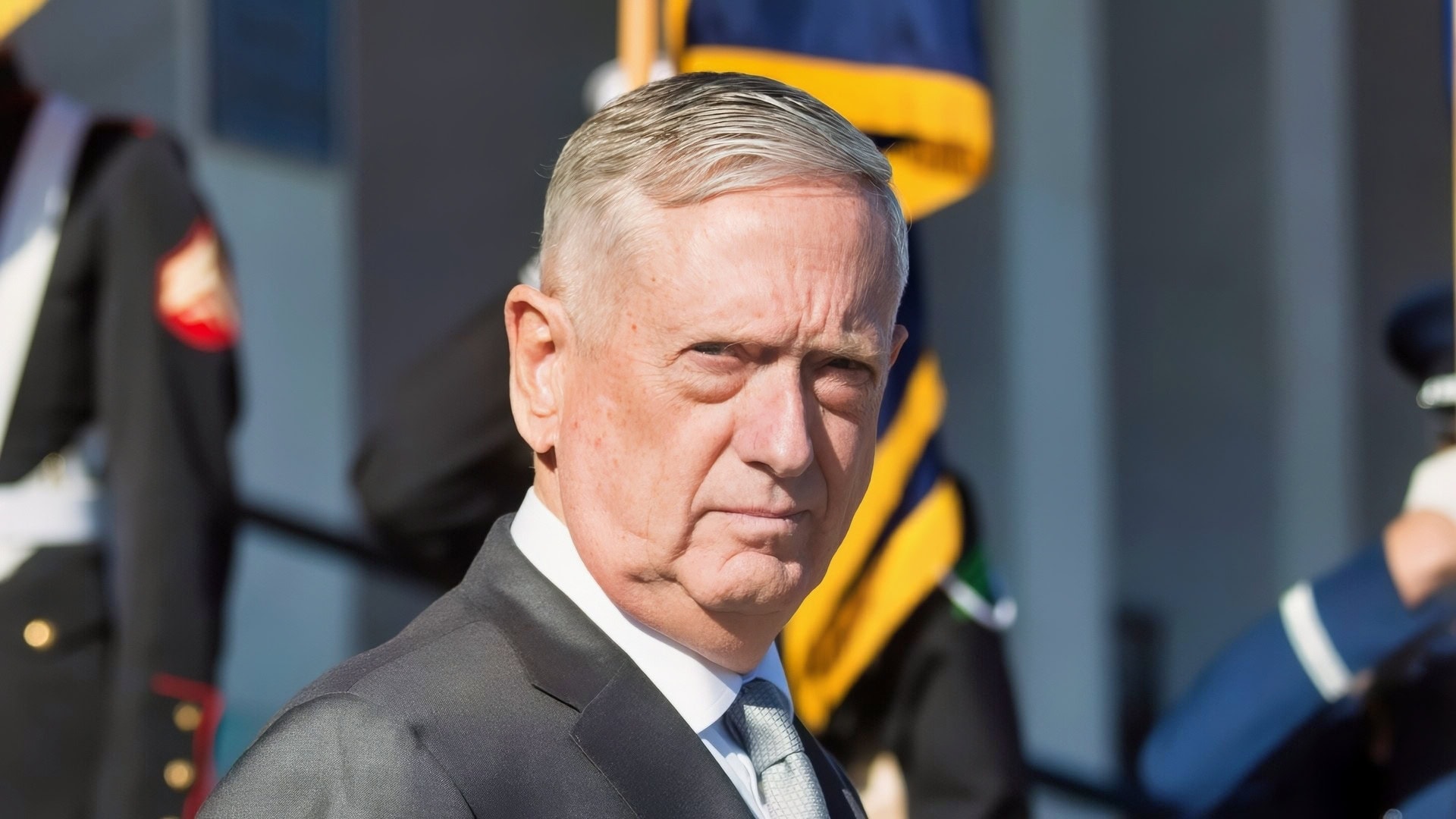
Secretary of Defense Jim Mattis waits for the arrival of President Donald Trump and Vice President Mike Pence Jan. 18, 2018, at the Pentagon in Washington, D.C. (DOD photo by U.S. Navy Petty Officer 1st Class Dominique A. Pineiro)
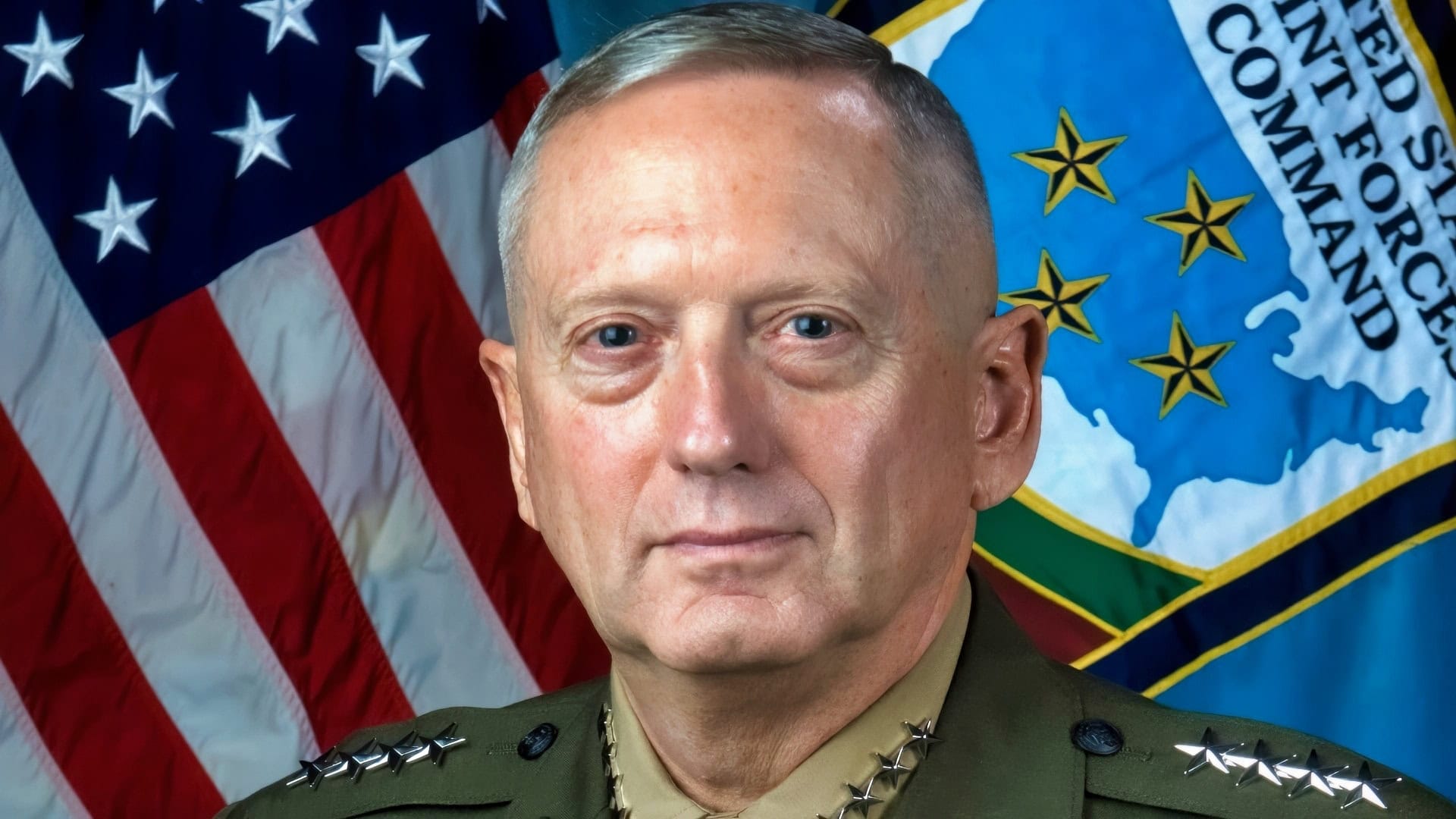
James Mattis US Marines Photo
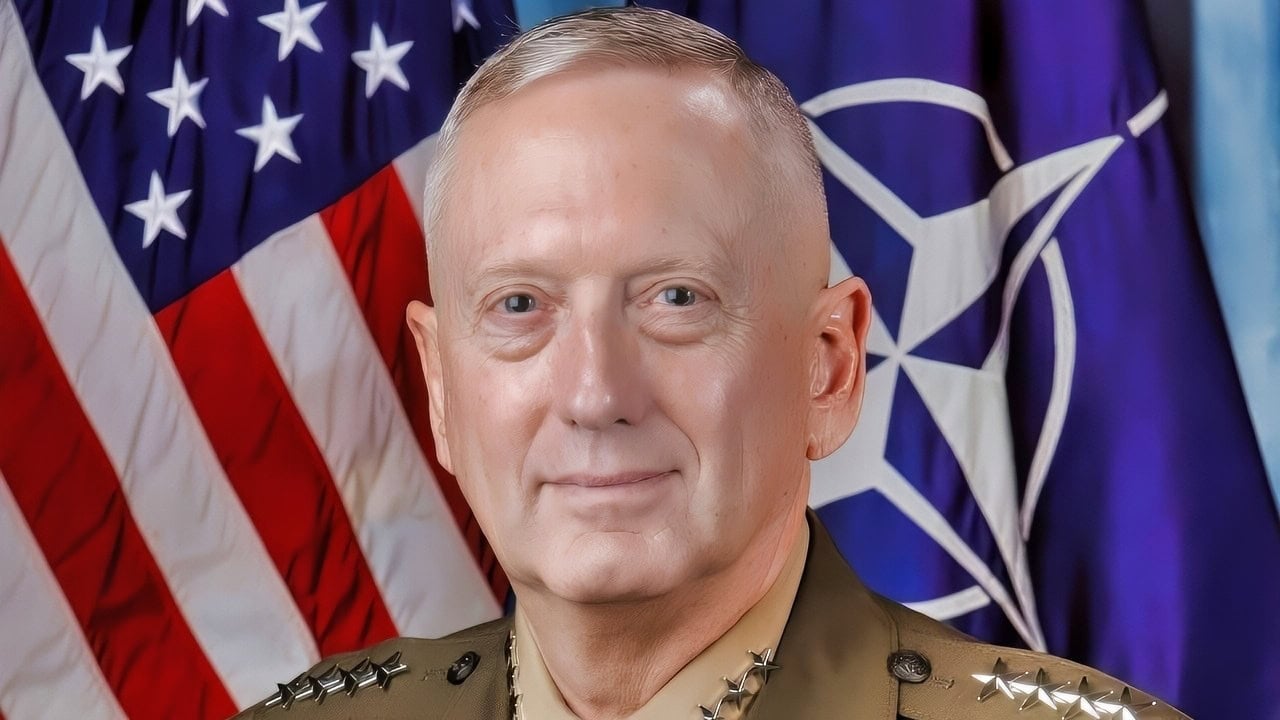
Jim Mattis Creative Commons Photo
His remark about PowerPoint, then, was not just a reflection of his reputation for using blunt language, but also his years of experience as a commander. Mattis always believed that officers needed to study history and read deeply in order to exercise good judgment — and a presentation was, perhaps, just too condensed.
The Military’s Big PowerPoint Problem
So, how big was the problem Mattis was talking about?
By 2010, PowerPoint had become deeply embedded in military life. In an April 27, 2010 report by The New York Times, PowerPoint was described as a near-obsession within the Pentagon and at headquarters in Iraq and Afghanistan. Mattis, then, was not just inventing a problem to criticize — he was responding to behavior he dealt with every day. The report described how PowerPoint presentations were used to deliver daily intelligence briefings and explain decisions made by commanders, and to track the progress of military operations.
Even today, presentation-style slides are frequently posted on social media by global militaries, including the British military.
The problem extended far below the senior headquarters of the U.S. military, too. When the military website Company Command asked Army Lt. Sam Nuxell, who was a platoon leader serving in Iraq, how he spent most of his time, he answered, “making PowerPoint slides.”
“I have to make a storyboard complete with digital pictures, diagrams and text summaries on just about anything that happens,” he continued. “Conduct a key leader engagement? Make a storyboard. Award a microgrant? Make a storyboard.”
It was a problem so familiar with military officials that junior officers assigned to create presentations were nicknamed “PowerPoint Rangers.”
Mattis knew that there was an institutional problem.
Slides Aren’t Enough
A famous example of military PowerPoints causing a headache was a slide designed to explain the coalition’s strategy in Afghanistan. The slide contained dozens of boxes and arrows that connected insurgents and government institutions with criminal networks, economic conditions, ethnic groups, and more. It was a complex network, and Gen. Stanley McChrystal reportedly remarked that once the military understood the slide, it would have won the war.
The comment was obviously a joke, but it represented a real problem.
Afghanistan, in reality, was shaped by an extremely complex combination of military, social, political, and economic forces – and trying to place all of those factors onto one screen simply didn’t make sense and it certainly didn’t make the situation easier to understand.
At the very same North Carolina conference attended by Mattis, then-Brig. Gen. H.R. McMaster also described PowerPoint as an internal threat. By then, McMaster had already banned its use while commanding operations in Tal Afar, Iraq, in 2005. He described the use of slides as dangerous because it risked creating an “illusion of understanding” and the “illusion of control.”
“Some problems in the world are not bulletizable,” he said.
False Certainty
Despite the warnings, PowerPoint is still widely used across the U.S. military – and global militaries — to summarize intelligence updates. Slides are also used for status reports and operational planning purposes. They do, after all, have a purpose.
Mattis never actually called for the software to be banned, but his 2010 remark carries an important point: standardized briefing formats and slides don’t replace detailed analysis and questioning.
About the Author:
Jack Buckby is a British researcher and analyst specializing in defense and national security, based in New York. His work focuses on military capability, procurement, and strategic competition, producing and editing analysis for policy and defense audiences. He brings extensive editorial experience, with a career output spanning over 1,000 articles at 19FortyFive, and has previously authored books and papers on extremism and deradicalization.