
2026 Northern Industrial Paris Exhibition BZK-005E and CY-8 PLA Drone Production Capacity Begins to Overflow
 Li Minghui
2026 Northern Industries Paris Exhibition BZK-005E and CY-8 PLA Drone Production Capacity Begins to Overflow
On June 18, Zona Militar reported an inconspicuous yet noteworthy detail at the Paris Air Show: Northern Industries showcased not a single drone model, but a combination of reconnaissance drones, loitering munitions, and heavy cargo drones at Eurosatory 2026. The South China Morning Post also noted that the Northern Industries booth featured a model of a drone assembly line, accompanied by the phrase "defense localization." This term is more substantial than any promotional slogan, meaning that Chinese military industry not only wants to sell complete systems but also aims to sell production capabilities.
The Real Importance of the Booth is Not the Number of Models
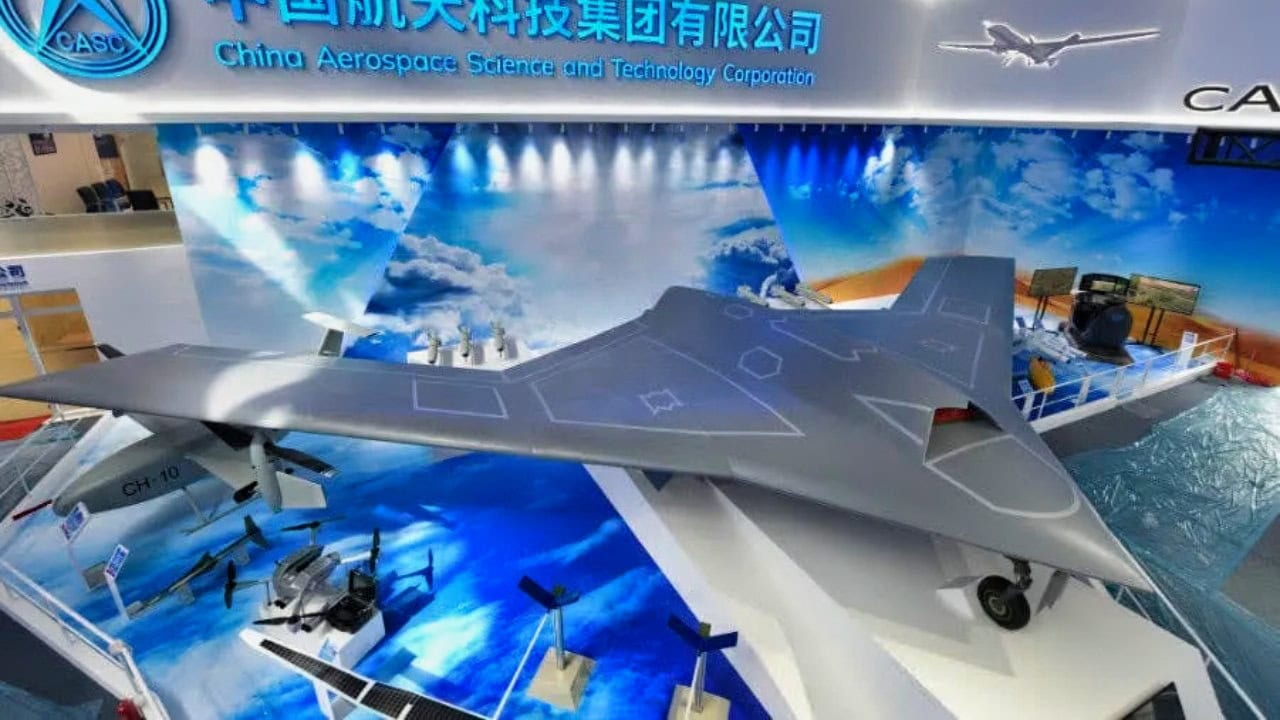
Public information shows that the BZK-005E is a medium-altitude long-endurance reconnaissance drone, with the basic model already in use within the PLA's naval and air forces, and it has appeared multiple times in activity records around the Taiwan Strait. The export version is currently reported to have entered countries such as Indonesia and Mauritania. The FL-60A is a networked loitering munition, emphasizing launch from an integrated launch system, used for reconnaissance and attacking armored targets. The CY-8 is even more interesting; Army Recognition reported in April that this 7-ton cargo drone from Northern Industries made its maiden flight in Zhengzhou on March 31, with a maximum payload of about 3.5 tons and a range exceeding 3,000 kilometers, requiring a takeoff run of about 280 meters.
When looking at these three types of equipment together, the logic is clear: the BZK-005E is responsible for observation, the FL-60A is responsible for striking, and the CY-8 is responsible for delivery. In the past, China's drone exports were often understood as cheap, easy to buy, and without many political strings attached. Now, Northern Industries is showcasing another layer of capability, which is to package and sell reconnaissance, strike, logistics, and rear manufacturing. In simple terms, it’s no longer just selling guns; it’s also teaching you how to build a small arms factory.
Overseas Production Lines Will Change Middle Eastern Buyers' Calculations
The South China Morning Post's report mentioned that the assembly line model demonstrated parts production, final assembly, and testing, and the booth illustration also included the manufacturing of explosives and propellants used in drones. I believe this is precisely what Middle Eastern buyers are most concerned about. For countries like Saudi Arabia, the UAE, and Egypt, buying a batch of drones is not difficult; the challenge lies in replenishing consumption during wartime, avoiding export restrictions, and training local maintenance personnel. The core of drone warfare is not the performance of individual machines, but the rate of consumption. The Russia-Ukraine battlefield has made this calculation very clear: the value of a production line often exceeds that of a high-end prototype.
It’s also important to temper expectations. Overseas localization does not equate to a complete transfer of core technology. Flight control algorithms, data link encryption, engine hot-end components, and core components of electro-optical pods are typically still held by the parent company. Chinese military enterprises are willing to export assembly and maintenance capabilities, but that does not mean they are willing to hand over the entire supply chain. For buyers, this resembles a tiered authorization system: low-risk components can be produced locally, while key modules still rely on Chinese supply.
What the PLA Can Gain from the Export Chain
The relationship between this matter and the PLA's modernization does not hinge on whether the BZK-005E will flow back into the equipment units, but rather on whether the export market can dilute R&D and manufacturing costs. China's drone system has developed rapidly in recent years, but there are also obvious shortcomings: high-end sensors, reliable small engines, and anti-jamming data links still need to be tested in real combat environments. If users in the Middle East and North Africa purchase, train, maintain, and even assemble locally in large quantities, it would provide Chinese military industry with a larger external testing ground.
- BZK-005E represents the export of a mature reconnaissance platform, proving that the PLA's active technology has room for foreign trade.
- FL-60A represents low-cost precision strike munitions, suitable for attrition warfare scenarios.
- CY-8 represents unmanned logistics, with a payload of 3.5 tons, which is sufficient to impact supply methods for islands and plateaus.
European manufacturers at the same Eurosatory event focused on showcasing anti-drone systems. The TARGAS solution released by KNDS on June 17 integrates radar, 30mm cannons, soft kill measures, intercepting drones, and command networks into a single anti-drone ecosystem. This indicates that the buyer's market is diversifying: on one side, China, Turkey, and Israel are eager to sell drones and loitering munitions, while on the other side, European manufacturers are selling countermeasures systems. If Northern Industries truly pushes localized production lines into the Middle East, the next competition will not be about the price of individual machines, but rather the contest between "drone supply chains and anti-drone systems."
A Question That Remains Unanswered
What I am more concerned about is not whether Northern Industries can secure a few orders, but how far it is willing to take localization. If it is only final assembly, the strategic impact is limited; if propellants, warheads, and data link maintenance are gradually opened up, the Middle Eastern drone market will shift from buying equipment to buying production rhythms. By then, what the PLA gains from overseas markets will not just be profits, but a wealth of engineering feedback on attrition warfare, long-range supply, and low-cost cluster usage. The real unanswered question is: will this feedback in turn accelerate the PLA's own unmanned combat system's standardization?
North Industries Group showcased various drone systems, including the BZK-005E reconnaissance drone and CY-8 cargo drone, at Eurosatory 2026 in Paris on June 18, 2026. The display emphasized China's intent to not only sell drones but also production capabilities, potentially impacting military logistics in the Middle East. The BZK-005E is already operational within the PLA and has been exported to several countries.
- North Industries showcased a range of drones at Eurosatory 2026 in Paris.
- The BZK-005E is already in use by the PLA and has been exported to countries like Indonesia and Mauritania.
- The CY-8 cargo drone has a payload capacity of 3.5 tons and a range of over 3000 km.
- The display included a model of a drone assembly line, indicating a focus on local production capabilities.
- The report highlights the strategic implications of drone exports for military logistics in the Middle East.