
2026 PLA Aerospace Equipment Enterprises Expose 4 Execution Gaps; 2030 Modernization Depends on Production Lines, Not Slogans
 Li Minghui
2026 PLA Aerospace Equipment Enterprises Expose 4 Execution Gaps; 2030 Modernization Depends on Production Lines, Not Slogans
On July 25, the South China Morning Post revealed an industry analysis that reads less like news but is worth a closer look: Researchers from Sichuan Tian'ao Aerospace Information Technology Co., Ltd., a subsidiary of China Electronics Technology Group, proposed in the May issue of "Defense Industry Transformation" that Chinese aerospace equipment enterprises may encounter four types of systemic bottlenecks when implementing the 2026-2030 national defense industrial plan. This topic may not be as eye-catching as the maiden flight of a new model, but I believe it is closer to the real challenges of PLA modernization than a photo of a new aircraft.
The key term mentioned in the article is "execution gap." In simple terms, it means that while the national level proposes building a strong aerospace nation and lists the aerospace industry as an emerging pillar industry, this does not automatically translate at the enterprise level into production line rhythms, R&D iterations, and delivery capabilities. The biggest fear in the defense industry is not the absence of goals, but rather having lofty goals and rigid targets while the processes, talent, and supply chains in enterprises are still slowly climbing.
Four Gaps Behind the Same Problem
Public reports did not list all the details of the paper, but several directions have been pointed out: there is a disconnect between national policy and enterprise actions, and there are conflicts between rigid planning and the rapidly changing market and technological environment. For aerospace and aviation equipment enterprises, this is not a simple management issue. Missiles, drone communication links, satellite payloads, and stealth aircraft avionics systems are not products that can be solved by simply having a workshop work overtime.
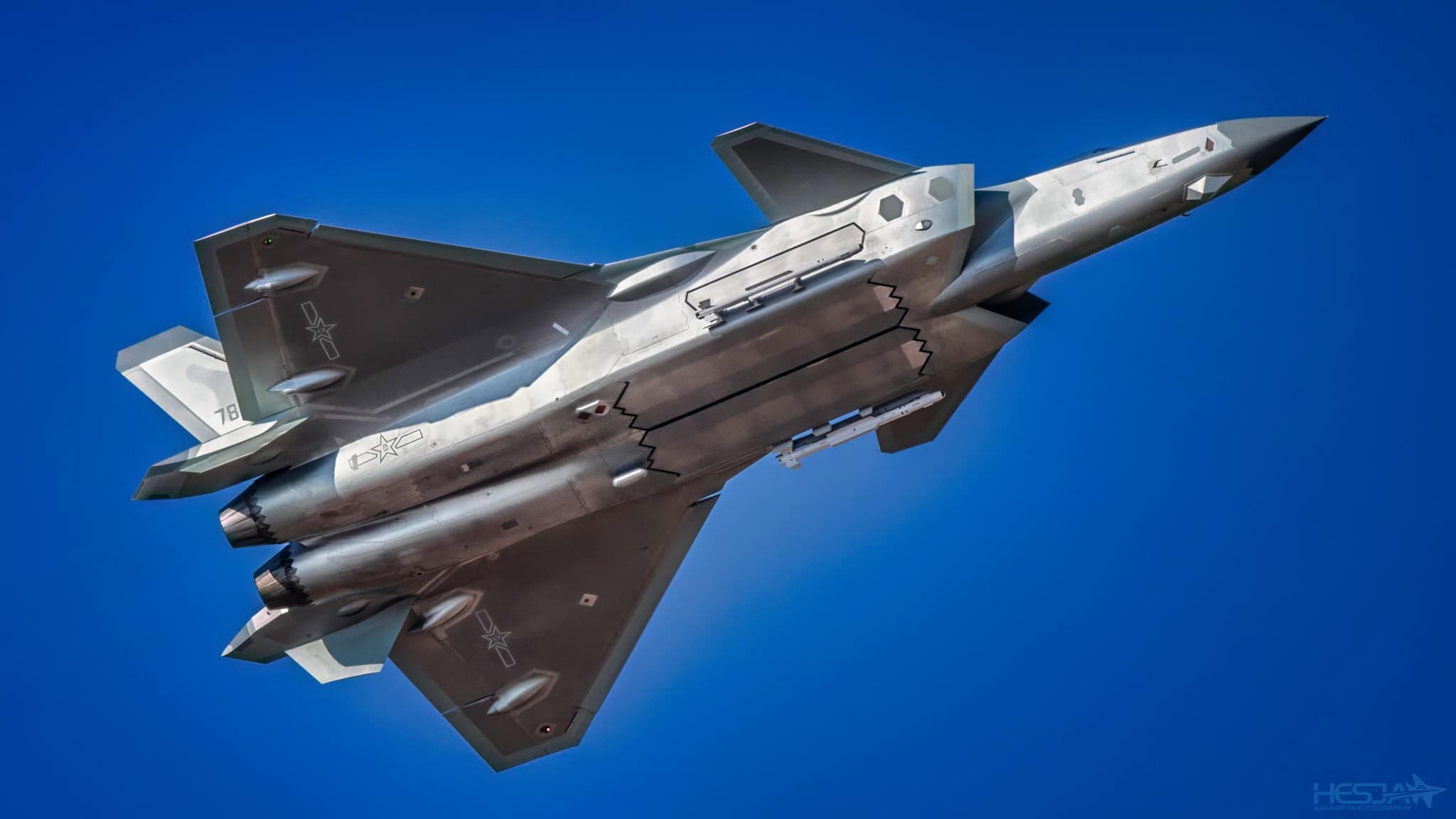
Taking the J-20 as an example, external discussions often focus on its annual production, the progress of the WS-15 engine, and its stealth capabilities. However, what truly determines the speed of combat power release are the engine lifespan, the stability of radar and electronic warfare components, the training cycles of pilots and maintenance personnel, spare parts supply, and wartime maintenance systems. Individual aircraft performance can be showcased at airshows, but systemic execution capabilities can only gradually emerge through years of continuous deliveries.
Why 2026-2030 is Particularly Critical
The period of 2026-2030 corresponds to China's 14th Five-Year Plan and is also a window for Beijing to elevate its defense and aerospace capabilities. By around 2030, the PLA will not only need more advanced platforms but also need to ensure that these platforms enter a state of sustainable use. If the Fujian aircraft carrier is to carry the J-35, KJ-600, and fixed-wing carrier-based aircraft systems in the future, the challenge will not only be on the shipyard but also whether the aviation industry, electronics industry, carrier-based training, and offshore support can keep up.
Earlier this month, the South China Morning Post cited a report from the International Institute for Strategic Studies stating that the PLA Navy has shifted from relying on experienced pilots to establishing a longer-term pipeline for carrier aviation talent aimed at college and high school graduates. This change is interesting: it indicates that the hardware issues of equipment platforms are being caught up by talent and organizational issues. Aircraft can be mass-produced, but qualified carrier-based pilots cannot be delivered like screws on a monthly basis.
Supply Chain is Not a Backdrop
The progress of China's military industry over the past decade has largely come from a complete industrial category and rapid engineering capabilities. However, as we move towards higher-end products, the shortcomings become concentrated in several areas that are difficult to cover with scale: high-end composite materials, long-life aviation engines, anti-jamming chips, military software verification, and the miniaturization and reliability of satellite communication terminals. Aerospace equipment enterprises are not facing the question of "are there parts," but rather "can we ensure consistent quality of the same batch of parts during mass delivery."
This is also why the "execution gap" deserves attention. Military enterprises are accustomed to breaking down tasks according to five-year plans, but fields such as unmanned systems, low-orbit satellite communications, and AI-assisted command are changing too rapidly. What seems advanced when the plan is written may already be half a generation behind when the project is truly finalized. Too rigid a process can lead enterprises to focus on meeting documentation targets rather than adjusting products to meet battlefield demands.
What This Means for the PLA
From a strategic perspective, the signals released by this industry paper are not pessimistic. On the contrary, the ability to openly discuss enterprise execution bottlenecks indicates that the issues have entered a stage of systematic improvement. The real danger lies in only discussing breakthroughs without addressing delivery; only discussing maiden flights without considering maintenance; only discussing models without discussing training. At least now, some industry insiders are bringing contradictions to the table.
My judgment is that in the coming years, observing PLA modernization cannot focus solely on "what new equipment has appeared." More important indicators include three aspects: first, whether the same model of equipment continues to appear in batches; second, whether new platforms are supported by training, logistics, and ammunition systems; third, whether enterprises can shorten modification cycles after demand changes. This figure may not be as stimulating as the tonnage of an aircraft carrier, but it better illustrates the problem.
This study in "Defense Industry Transformation" only analyzed a single enterprise case, and it is not appropriate for outsiders to overly extrapolate to the entire Chinese military industrial system. However, the questions it raises are common: before 2030, what the Chinese aerospace and aviation equipment industry truly needs to supplement is not slogans, but the most challenging path between planning tables and production lines. The next unanswered question is whether the PLA will allow enterprises to have enough space to quickly experiment and make mistakes beyond completing plans.
China's aerospace industry is facing systemic bottlenecks that could hinder its ability to meet defense modernization goals from 2026 to 2030. The disconnect between national policy and corporate execution poses challenges for the Chinese People's Liberation Army in achieving sustainable operational capabilities for advanced military platforms. The report emphasizes the need for improved training and supply chain consistency to support military readiness.
- China's aerospace industry faces four systemic bottlenecks in meeting 2026-2030 defense goals.
- There is a disconnect between national policy and corporate action in the aerospace sector.
- The report highlights the importance of sustainable operational capabilities for advanced military platforms by 2030.
- The Chinese military is shifting to a longer-term talent pipeline for naval aviation personnel.