
2026 Satellite Image Exposes Suspected New Type of Attack Submarine, PLA's Underwater Stealth Shortcomings Enter Remedial Phase
 Li Minghui
2026 Satellite Image Exposes Suspected New Type of Attack Submarine, PLA's Underwater Stealth Shortcomings Entering Remedial Phase
On July 24, the South China Morning Post reported based on multiple open-source image analyses that a previously unconfirmed submarine appeared in recent satellite images of the Shanghai Jiangnan Shipyard. This detail is more interesting than "another new boat launched," as the external observers noted not the hull color or dock location, but the significantly smaller sail.
Public information is still insufficient to prove that it is the rumored next-generation nuclear-powered attack submarine, nor can it be directly named as a specific model. However, based on its size, construction location, and shape changes, this submarine at least indicates one thing: the PLA Navy's underwater force development is transitioning from "whether there is one" to "whether it is quiet enough and can be continuously produced."
The Satellite Image Reveals Design Orientation, Not Model
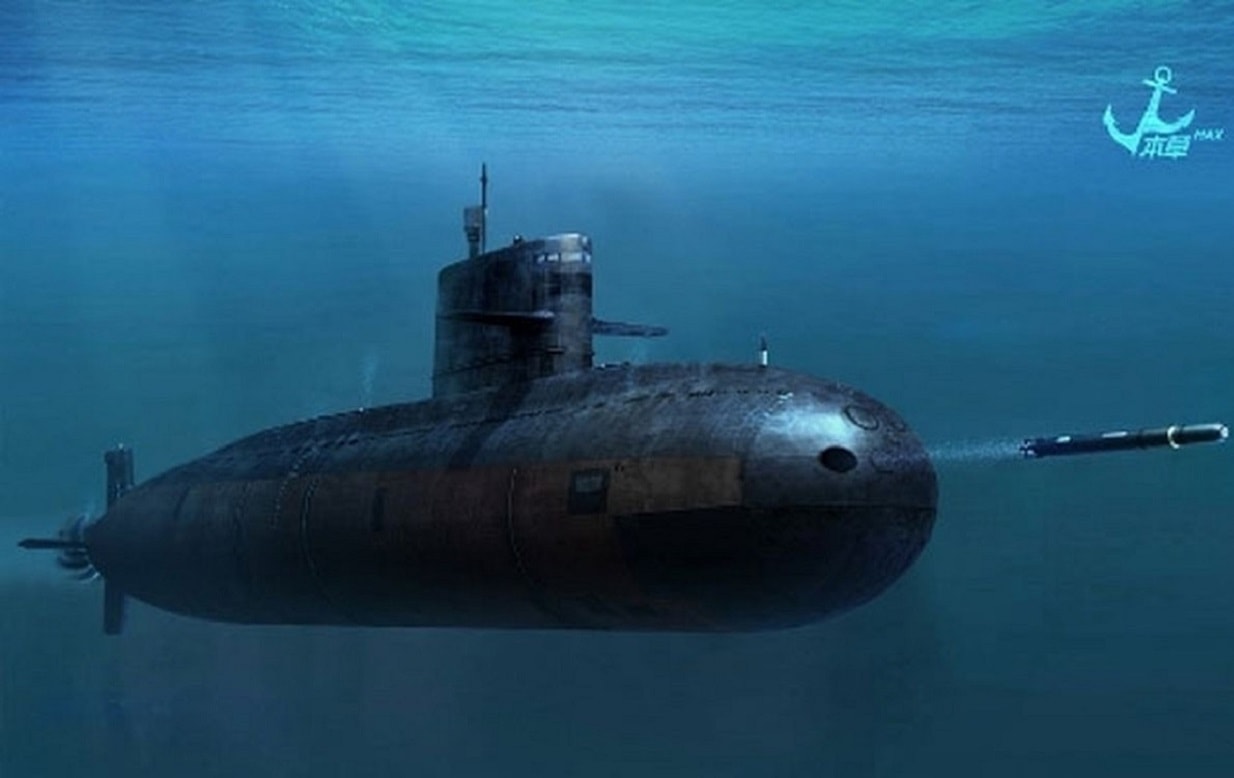
The report cites a May 29 BlackSky high-resolution satellite image stating that this submarine appeared on the Jiangnan Shipyard's floating dock, estimated to be about 120 meters long and 10 meters wide. The width is close to that of the 093 class attack nuclear submarine family, but the total length is about 10 meters longer. The most striking change is that the sail is significantly lower than that of the current 093 series.
The sail of a submarine is not a decorative feature. It houses the periscope, communication mast, sensors, and access passages, and is also a significant source of noise during underwater navigation. The larger the sail, the more pronounced the water flow disturbance; the smaller the sail, the theoretically better it is for reducing drag and flow noise. In simple terms, this is somewhat like shaving off the protrusions from a high-speed train's roof; the individual change may not seem large, but it is very sensitive to high-speed quiet navigation.
Of course, a smaller sail does not necessarily mean that the overall noise level of the submarine has crossed a generational threshold. What truly determines the combat capability of an attack nuclear submarine is the combination of the reactor, vibration isolation mounts, pump-jet propulsion, hull manufacturing precision, sonar arrays, and crew training. There is very little public information about these aspects in China, so we can only make limited inferences based on the shape and construction pace.
Why the Jiangnan Shipyard Location is Important
In the past, when discussing China's nuclear submarines, external observers typically focused on the Bohai Shipyard. The Jiangnan Shipyard is more commonly associated with surface vessels, aircraft carriers, and large shipbuilding industries. If this suspected new type of attack submarine is indeed being built or completed with significant outfitting at Jiangnan, it indicates that the industrial division of labor for China's underwater platforms may be expanding.
I believe this point is more noteworthy than "is it the 095 class." The Chinese Navy has already demonstrated the production capacity advantages of multiple shipyards working in parallel for surface vessels, as evidenced by the rhythm of the 055 class destroyers, 052D destroyers, and large amphibious ships, indicating that modular assembly and supply chain coordination are relatively mature. However, nuclear submarines are different; the safety of the reactor, acoustic processing, special steel materials, and compartment sealing requirements are much higher, and the mass production experience of surface vessels cannot be simply applied.
If the Jiangnan system can stably participate in the construction of attack submarines, it means that the bottleneck may shift from "final assembly docks" to upstream areas such as nuclear power, acoustic materials, precision pumps and valves, and combat system software. In other words, the key issue for China's future attack nuclear submarines is not whether they can build a prototype, but whether they can continuously produce a batch with controllable quality.
Underwater Shortcomings Remain a Reality
Compared to the U.S. Virginia class, the biggest external criticism of China's 093 series has always been noise control and experience in sustained operations in the open ocean. The U.S. Navy's attack nuclear submarines have formed a complete system from hull design, reactor lifespan, to port maintenance after decades of global deployment. The Chinese Navy has increased its activities in distant waters in recent years, but the public appearances and verifiable actions of its underwater platforms are still much fewer.
- Size Clue: The suspected new submarine is about 120 meters long and 10 meters wide, longer than the 093 series.
- Shape Clue: The low sail may serve to reduce drag and noise, but cannot independently prove the noise level.
- Industrial Clue: The appearance of this submarine at Jiangnan Shipyard suggests that the construction division of underwater platforms may be expanding.
- Strategic Clue: A quieter attack nuclear submarine will directly impact anti-submarine operations, aircraft carrier escort, and the protection of strategic nuclear submarines in the Western Pacific.
This number may not seem large, but attack nuclear submarines are not consumable equipment. A mature attack nuclear submarine can constrain a large number of anti-submarine resources in the direction of Guam, the Philippine Sea, and the Bashi Channel. For the PLA, it is both a tool for hunting the opposing surface fleet and an "underwater escort" to protect strategic missile nuclear submarines entering and exiting deep water areas.
Implications for the Taiwan Strait and Western Pacific
If the new submarine is ultimately proven to be the next-generation attack nuclear submarine, its direct impact may not first appear in the nearshore areas of the Taiwan Strait. The Taiwan Strait is shallow and acoustically complex, not the most comfortable battlefield for large nuclear submarines. A more realistic use would be to create external pressure east of Taiwan, south of the Miyako Strait, and in the direction of the Philippine Sea, forcing U.S. and Japanese anti-submarine forces to allocate more resources for distant sea searches.
This can be viewed alongside another recent piece of news: the South China Morning Post previously reported that the PLA's nuclear-powered submarines had conducted missile tests towards the Pacific, which external observers interpreted as a signal of second-strike capability. Attack submarines and ballistic missile nuclear submarines are not the same type of platform, but the maturity of the former determines how much cover the latter can obtain during operations in distant waters.
My judgment on this news is relatively restrained: it is not evidence that China's underwater capabilities have caught up with the U.S., but rather evidence that China is seriously addressing a long-standing shortcoming. What truly needs to be observed is whether this submarine repeatedly appears at the same shipyard, whether there is a second identical hull, and whether, after the sail has been reduced in size, China has already solved the more difficult issues—internal mechanical noise and long-term maintenance in the open ocean.
A new type of attack submarine has been identified under construction at Jiangnan Shipyard in Shanghai as of July 24, 2026. The submarine measures approximately 120 meters in length and features a smaller sail, which may enhance its stealth capabilities. This development suggests an expansion of the People's Liberation Army Navy's underwater platform capabilities, addressing previous deficiencies in underwater operations.
- A new type of attack submarine has been identified at Jiangnan Shipyard.
- The submarine is approximately 120 meters long and 10 meters wide.
- The design features a smaller sail compared to existing models, potentially improving stealth.
- The construction at Jiangnan indicates an expansion of China's underwater platform capabilities.
- The submarine's development is seen as a response to long-standing deficiencies in underwater stealth.