
2026 Suspected New Type Attack Submarine Emerges at Jiangnan Shipyard, 120-Meter Hull Reflects PLA's Silent Attack Research
 Li Minghui
Suspected New Type of Attack Nuclear Submarine Emerges at Jiangnan Shipyard, 120-Meter Hull Reflects PLA's Silent Warfare Efforts
On the evening of July 24, the South China Morning Post brought a set of commercial satellite images back into the spotlight: on the floating dock of Shanghai Jiangnan Shipyard, a hull appeared that is different in shape from the currently active Type 093 attack nuclear submarine. This detail is more noteworthy than the usual launch of a new ship, as submarines are not equipment that generates buzz through public appearances; the less they want to be seen, the more it indicates they are in a phase of genuine capability enhancement.
The Small Hull is Not a Simple Modification
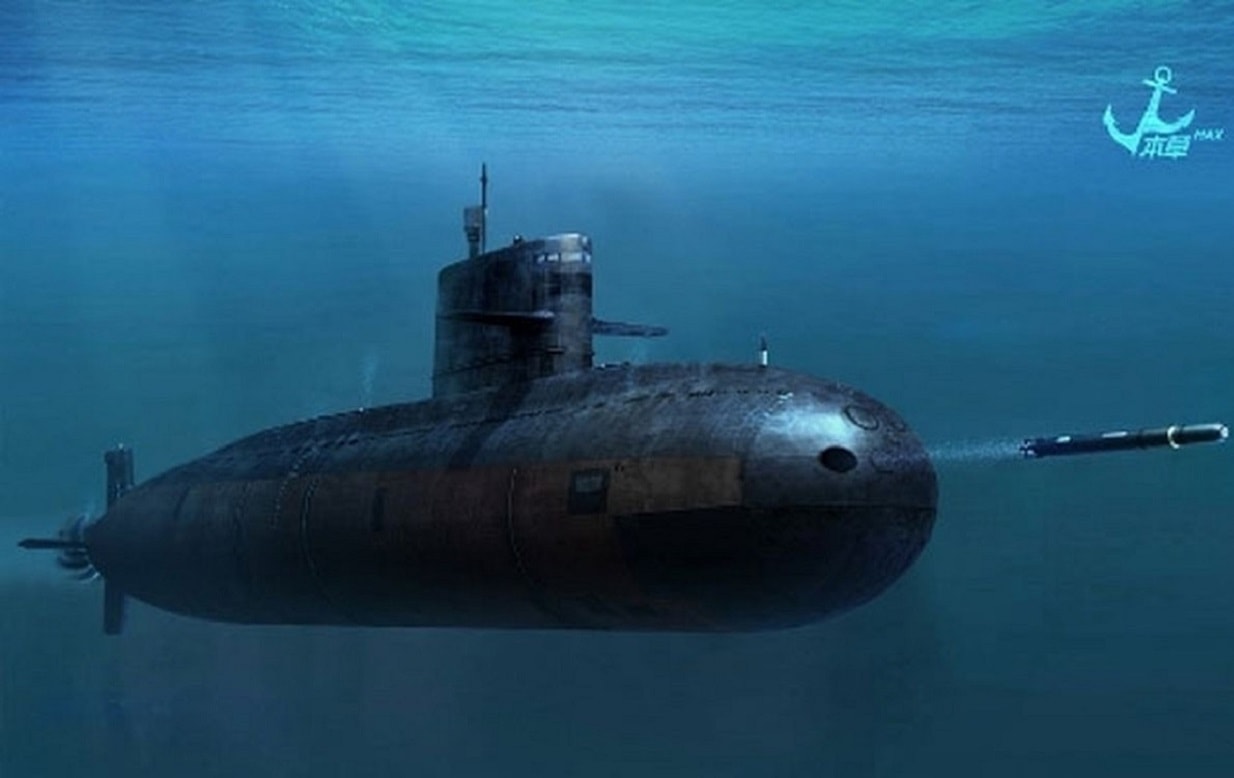
The South China Morning Post cited high-resolution images from BlackSky on May 29, stating that the submarine is located in the floating dock at Jiangnan Shipyard. Analysts estimate the submarine to be approximately 120 meters long and about 10 meters wide, with a width close to the Type 093 series, but a total length about 10 meters longer than the common Type 093. The most striking change is the noticeably smaller hull. The hull appears to be just a bulge on the back of the submarine, but it will affect fluid noise, resistance, the arrangement of upper-level equipment, and maneuvering stability at high speeds.
Therefore, this is not just a simple change in appearance. China's attack nuclear submarines have long been considered to have shortcomings in stealth, reactor natural circulation capability, and hull processing consistency. If the new submarine indeed adopts a smaller hull, it indicates that the designers are willing to sacrifice some internal layout convenience in exchange for lower hydrodynamic noise and better high-speed concealment. In simple terms, the PLA Navy now cares more about "hearing others first, and being heard by others a little later."
After 093, It May Not Be a Straight Line
Public information is still insufficient to confirm that this submarine is officially the Type 095. In SCMP's report, Western submarine analysts also admit that its power type remains uncertain; observers like Timothy Heath only judge it to possibly be a new class based on the increased length and reduced hull size. I believe the most prudent judgment here is not to rush to assign it a number, but to view it as a verification platform between the improved Type 093 and the next generation of attack nuclear submarines.
- An approximate length of 120 meters suggests that internal space may be used for a quieter propulsion system, a larger weapon bay, or more advanced mission modules.
- An approximate width of 10 meters close to the Type 093 series indicates that it may not be a complete redesign, and could still utilize some mature manufacturing boundaries.
- A smaller hull corresponds to stealth optimization, but also tests the compactness of sensors, communication masts, and escape systems.
This judgment is relatively conservative, but more in line with China's military industry's practices. Submarines are not suitable for cross-generation leaps; any instability in welding, vibration reduction, pump jets, or reactor components can turn paper performance into issues during sea trials. Chinese surface ships can rapidly iterate through large-scale production, but nuclear submarines cannot; their trial-and-error costs are much higher.
Signals from Jiangnan Shipyard Regarding Production Capacity
Interestingly, the location is Jiangnan Shipyard. The outside world usually associates China's nuclear submarine production with Huludao, while Jiangnan is more commonly mentioned in relation to aircraft carriers, large surface ships, and conventional submarine capabilities. If this submarine indeed involves nuclear-powered attack submarines, even if it is just for construction, segmentation, floating dock transportation, or non-nuclear system integration, it indicates that China is breaking down the underwater equipment manufacturing chain into finer segments.
This has more significance for production capacity than for the performance of a single submarine. The U.S. Navy's current anxiety is not that the Virginia class is not advanced, but that shipyards, skilled workers, nuclear-grade supply chains, and maintenance dry-docking periods are all bottlenecked. If China can distribute non-sensitive segments across multiple large shipyards, it could shorten the overall assembly cycle. Of course, segments like nuclear reactors, main engine vibration reduction, and hull degaussing cannot be casually expanded, and public information does not indicate that China has resolved all bottlenecks.
The Real Variable in the Western Pacific
The value of attack nuclear submarines lies not in parades, but in sustained presence in distant seas. In the Taiwan Strait, surface ships and rocket forces create visible pressure; attack nuclear submarines create invisible uncertainty. They can track aircraft carrier strike groups, threaten supply lines, clear the way for strategic nuclear submarines, and can also form long-term ambush points beyond the first island chain. For U.S. military bases in the direction of Japan, Guam, and the Philippines, every slight improvement in stealth levels increases the pressure on anti-submarine patrol aircraft and fixed sonar arrays.
However, I do not agree with interpreting this submarine as evidence that China's underwater capabilities have caught up with the U.S. A more realistic statement is that the PLA is turning its previously weakest link into a sustainable investment project. Underwater combat relies on materials, processes, crew training, and maintenance systems on a ten-year scale, not just a single satellite image.
The South China Morning Post reported that this submarine was first brought to attention by H.I. Sutton in Naval News, and TWZ and Japan's Asahi Shimbun subsequently released more images and analyses. Multiple sources point to the same issue: what has appeared at Jiangnan Shipyard is not an ordinary modified submarine, but a new design that requires serious attention.
The real unanswered question is whether the next time commercial satellites capture it, it will be docked for further outfitting or already undergoing sea trials. If it is the latter, what the outside world will be looking at is no longer the size of the hull, but how long it takes to transition from the first unit to stable mass production.
A new type of attack nuclear submarine, approximately 120 meters long, was spotted at Jiangnan Shipyard on July 24, 2026. This submarine features a smaller hull design aimed at enhancing stealth capabilities, indicating advancements in the People's Liberation Army Navy's technology. The development suggests a shift towards quieter submarines, potentially serving as a verification platform for future designs. The construction location also reflects a diversification in China's submarine manufacturing capabilities.
- A new type of attack nuclear submarine, approximately 120 meters long, has been identified at Jiangnan Shipyard.
- The submarine features a smaller hull design aimed at reducing noise and improving stealth capabilities.
- This development suggests a shift in China's naval capabilities, focusing on quieter submarines.
- The submarine's design may serve as a verification platform between the 093 class and the next generation of attack submarines.
- The location of the submarine's construction indicates a diversification of China's submarine manufacturing capabilities.