
2026 Xiangshan Forum Warns of Space Arms Race: PLA's Space Combat Capabilities Enter Systematic Competition
 S.W
S.W2026 Xiangshan Forum Warns of Space Arms Race, PLA's Space Combat Capabilities Enter Systematic Competition
On September 19, the Hong Kong South China Morning Post reported from the Xiangshan Forum in Beijing, highlighting a change that is easily overlooked: U.S. officials have publicly acknowledged for the first time that they have deployed on-orbit weapons with space control capabilities. The U.S. did not specify the type or number, but this statement itself has moved the discussion of space confrontation from speculation to the level of public policy signals.
Space is No Longer Just a Support Node
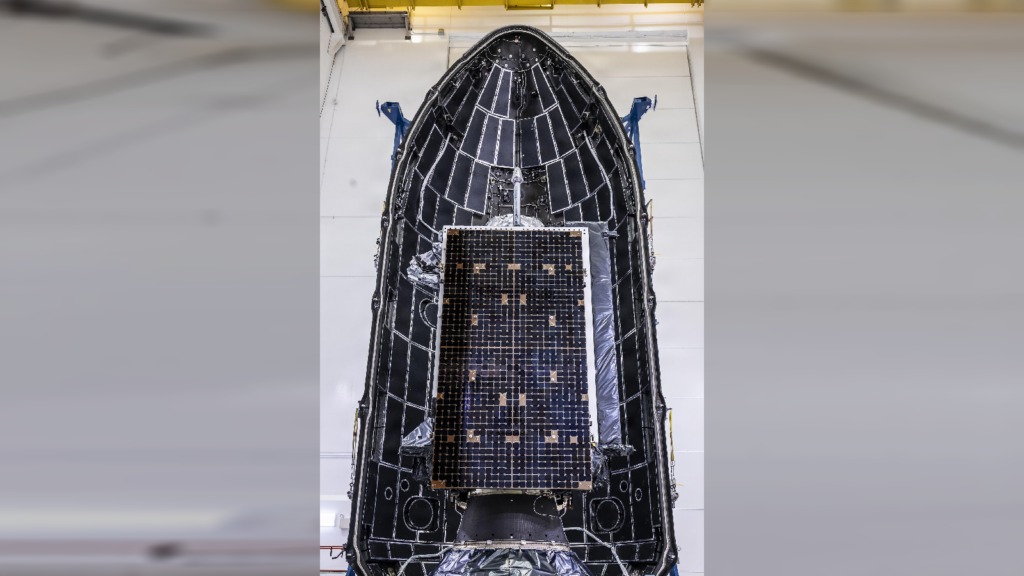
Experts at the Xiangshan Forum described this as breaking a long-standing taboo and warned that it could trigger a new round of arms races. The key here is not a specific so-called space weapon, but rather a change in combat logic. Once satellite communications, navigation, missile warning, and battlefield reconnaissance are viewed as combat nodes that can be suppressed or destroyed, traditional air and naval advantages must be built on the premise of continuously obtaining space information.
This is particularly important for the PLA. In recent years, the PLA's joint operations construction has increasingly relied on space-based reconnaissance, Beidou navigation, and data links to integrate long-range firepower, air forces, and naval formations. The U.S. publicly acknowledging the deployment of on-orbit space control weapons means that in future crises, what both sides may compete for is not a single satellite, but the available time of the entire reconnaissance, positioning, and communication link.
Assessing Capability Boundaries from Public Statements
It is essential to separate facts from speculation in the news. U.S. Air Force Secretary Frank Kendall only confirmed that the relevant systems are used to respond to threats, without disclosing whether they are anti-satellite interceptors, inspection platforms, electronic warfare payloads, or more powerful combination systems. Equating this statement directly with the U.S. having deployed a mature orbital strike system is not sufficiently supported by evidence.
Conversely, China is not without corresponding capabilities. China has anti-satellite tests, space situational awareness, electronic interference, and the development foundation for near-Earth orbit spacecraft, but there is little public information available to determine whether the PLA has formed a stable on-orbit combat standby system. I believe the real shortcoming may not lie in individual technologies, but in whether continuous monitoring, target identification, command authorization, and battle damage recovery can form a closed loop.
Actual Impact on PLA Modernization
First, the number of satellite constellations and their dispersed deployment will be more important than a single large satellite. Second, military communications must retain redundancy across multiple orbits, frequency bands, and ground links; Beidou or any single system cannot be treated as an irreplaceable safe box. Third, the value of anti-satellite capabilities is not just in destroying targets; electronic suppression, cyber attacks, and close-range escorting can also change battlefield transparency at a lower political cost.
This also explains why Chinese military industry has been continuously advancing commercial space, remote sensing constellations, and rapid launch capabilities in recent years. In simple terms, the production capacity issue in space warfare is similar to naval shipbuilding; having advanced individual equipment does not equate to being able to quickly replenish in conflict. Whoever can launch replacement satellites faster, repair ground stations, and restore data links is more likely to convert technological advantages into combat advantages.
Geopolitical Signals Stronger than Technical Details
The Xiangshan Forum issued a call for dialogue, and the report mentioned that Xi Jinping is about to visit the United States. This timing indicates that both China and the U.S. are aware of the lack of crisis management mechanisms in the space domain. The problem is that while both sides discuss safety barriers, they simultaneously display stronger confrontation preparations, making the foundation of trust very fragile.
Source: South China Morning Post, September 19, 2026, September 18, 2026; Taiwan English News, September 18, 2026; relevant equipment parameters and deployment status are limited to public reports, and some information is pending confirmation.
What is truly worth tracking is not which side announces the possession of space weapons first, but whether the PLA can integrate satellites, ground stations, launch sites, and data links into a system that can continue to operate under damaged conditions. If not, advanced individual payloads are like equipping a sports car with an intermittent fuel supply system; if they can, the next round of U.S.-China military competition may not yet have landed on the ground.
On September 19, 2026, U.S. officials publicly acknowledged the deployment of space control weapons, marking a shift in military strategy. The People's Liberation Army (PLA) is adapting its operations to rely more on space-based systems for reconnaissance and navigation. Experts warn that this could trigger a new arms race in space, as both the U.S. and China recognize the need for crisis management mechanisms in this domain.
- U.S. officials acknowledged the deployment of space control weapons in orbit.
- The PLA is increasingly reliant on space-based reconnaissance and navigation systems.
- The report warns of a potential new arms race in space due to changing military logic.