
256 clashes near Pokrovsk show the limits of the Russian campaign of 2026
 Dmitri Volkov
256 clashes near Pokrovsk show the limits of the Russian campaign in 2026
The average speed of Russian advancement in June was 3.79 square kilometers per day. This dry figure, published by ISW on June 30, is more significant than yet another report on captured forest belts: at this pace, to occupy the remaining part of the Donetsk region, Russia would need not just a political order by December 31, 2026, but a different army, different logistics, and a different way of waging war. The next day, the Ukrainian General Staff reported 256 combat clashes in a single day, with the heaviest fighting occurring in the Pokrovsk and Sloviansk directions. This paints a characteristic picture of the current campaign: the intensity is enormous, but the operational results are almost nonexistent.
The number of attacks no longer equals advancement
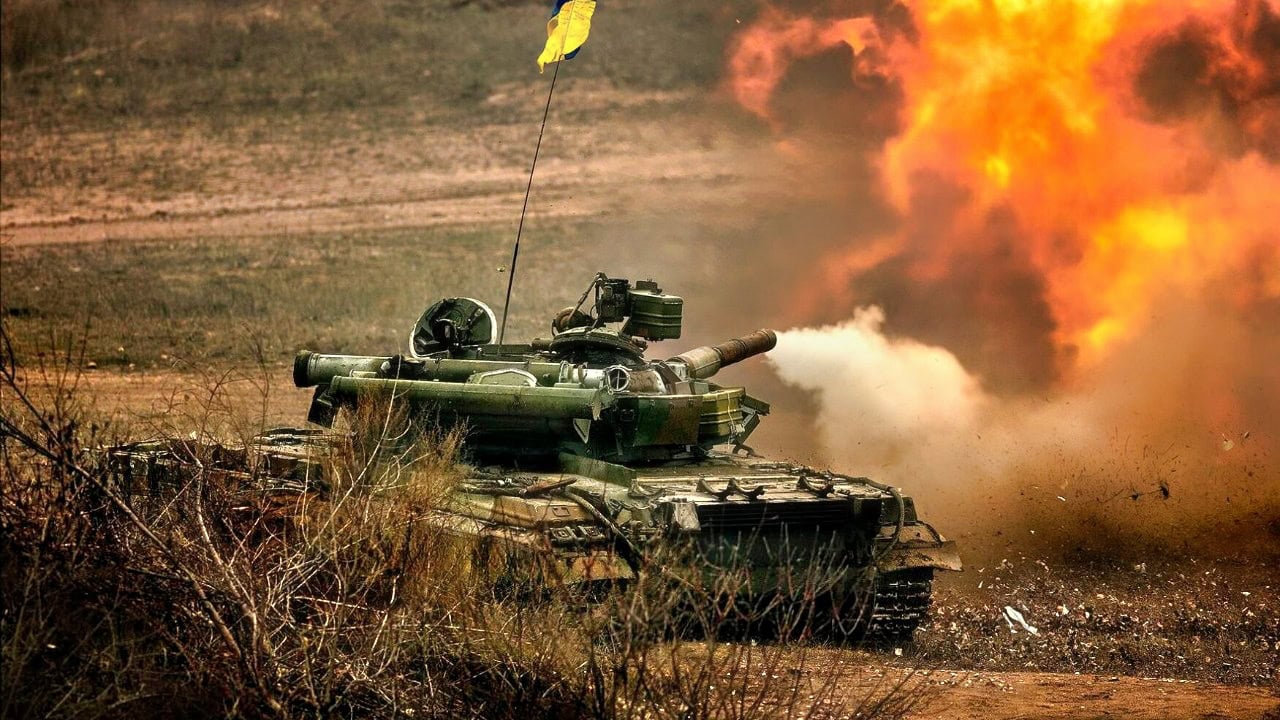
According to the Ukrainian General Staff on the morning of July 1, over the previous day, Russian forces launched one missile strike, 81 airstrikes, dropped 246 guided bombs, deployed 9,801 strike drones, and conducted 3,083 shellings, including 47 from multiple launch rocket systems. This does not resemble an exhausted army in the everyday sense of the word. The Russian army is still capable of generating a monstrous density of fire, especially where logistics are short, and command is willing to pay with infantry for every quarter and landing.
However, the distribution of these efforts shows the limits of the model. In the Pokrovsk direction, Ukrainians repelled 31 assault attempts; in the Sloviansk direction, there were 27 attacks; in the Konstantynivka direction — 23; in the Huliaipole direction — also 23. We are not facing a single breakthrough fist, but a stretched network of pressure. The Soviet military school would call this an attempt at pinning and searching for a weak spot. In the current Russian execution, this often turns into a daily grinding of battalion-tactical remnants, where tactical success rarely translates into operational development.
The Donetsk deadline and the arithmetic of the impossible
ISW, citing a statement from Volodymyr Zelensky, notes that since 2022, the Kremlin has already set fifteen different deadlines for the complete capture of the Donetsk region. The new deadline is December 31, 2026. The history of these deadlines resembles not operational planning but a bureaucratic illness of the late Soviet type: if the task is not completed, it is not revised but postponed to a new date with the same solemnity. In staff culture, this is particularly dangerous because subordinate commanders begin to report not reality but what is supposed to please those above.
Here, arithmetic is important. ISW estimates the remaining unoccupied part of the Donetsk region by Russia to be about 5,305 square kilometers. The June pace of 3.79 square kilometers per day yields about 697 square kilometers over the remaining 184 days of the year, if calculated linearly and too optimistically. Even if the pace is doubled, the gap with the political goal will remain enormous. August 2025, when Russian advancement reached 16.65 square kilometers per day, was an exception, not a sustainable norm. An army that maintains such a pace for months must have fresh reserves, protected logistics, suppressed enemy artillery, and at least local air superiority. Russia in Donbas has mass and firepower, but lacks the full set of these conditions.
Pokrovsk as a laboratory for Russian tactics
The Pokrovsk direction remains indicative because there the Russian army combines all the tools of the current war: guided bombs, small assault groups, FPV drones, artillery, false flag episodes, and information pressure. This system can slowly squeeze out defenses, especially if the Ukrainian side is experiencing a shortage of infantry and short-range air defense assets. However, it poorly addresses the task of a rapid collapse of the front. The more the battlefield is saturated with drones, the harder it is to secretly accumulate forces for a real breakthrough. Paradoxically, the Russian advantage in fire mass works against maneuver: it destroys the terrain, roads, and nodes that advancing forces must later use.
The Ukrainian side is also not without its faults in the statistics. Claims of Russian losses — 1,210 personnel in a day and over 1.4 million since the beginning of the full-scale war, according to the Ukrainian report from July 1 — require careful reading. But even if these numbers are taken as an upper estimate, the very ratio between the expenditure of personnel and the area of advancement shows the main conclusion: the Russian army is buying meters not cheaper, but more expensively. In 1944, the Red Army could compensate for the high cost of operations with the scale of industry, Allied logistics, and growing operational expertise. In 2026, Moscow compensates for the cost mainly with contract payments, regional pressure, and import-substituted improvisation. This is not the same.
The northern diversionary contour
An interview with the Commander-in-Chief of the Armed Forces of Ukraine, Oleksandr Syrskyi, published by Ukrinform on June 30, adds another layer to this picture. According to him, the Russian General Staff is evaluating options for an offensive from the north, including a more likely scenario from the Bryansk region towards Chernihiv, rather than a repeat march on Kyiv. The goal of such an operation, if undertaken, is not necessarily to capture a large city. A more realistic goal is to stretch Ukrainian reserves and weaken active sections of the front, primarily in the Donetsk direction.
This explains why Russian actions in the Sumy, Kharkiv, and potentially Chernihiv areas cannot be viewed separately from Pokrovsk. The Kremlin is trying to turn the front into a task of distributing deficits: Ukraine has a shortage of personnel, air defense, engineering time, and command attention. But Russia also has its own deficit — of quality infantry, junior commanders, secure communications, and a reliable picture of the battlefield. Therefore, the northern contour may create political noise and operational tension, but by itself, it does not solve the Donetsk task.
Ukrainian strikes on the rear change the cost of the offensive
At the same time, Ukraine continues to strike at Russian military infrastructure deep behind the lines. On July 1, Kyiv Independent reported, citing Zelensky, about strikes on a defense enterprise in the Penza region and an oil refinery in Ufa, more than 1,300 kilometers from the front line. The day before, ISW and Ukrainian sources reported a repeated strike on the Dubna Space Communication Center in the Moscow region, associated with the intelligence and coordination of Russian troops. This does not create an immediate breakthrough near Pokrovsk, but it raises the cost of the Russian offensive campaign: components for missiles, satellite communications, fuel, and repair chains become part of the front.
Russian military thought has traditionally understood the importance of the rear well. It is enough to recall how in Soviet instructions, operational depth was considered not an embellishment of the map but a condition for the sustainability of the offensive. Today, Moscow finds itself in a position where depth ceases to be safe. Hence the political nervousness around Moscow, St. Petersburg, Ufa, Penza, and Crimea. The war is returning to those spaces that the Kremlin has tried to keep behind the glass of the television for four years.
Forecast
The coming weeks will likely bring increased pressure in the Pokrovsk, Sloviansk, and Konstantynivka directions, as well as limited demonstrative actions on the northern border. The Russian command will try to prove to the political center that the Donetsk deadline is still alive. But proving this will have to be done not on a map in an office, but through the same arithmetic: 256 clashes per day, thousands of drones, hundreds of air bombs — and a few square kilometers of results. This is not a collapse of the Russian army. It is worse for the Kremlin in a strategic sense: the army continues to fight, but its effort increasingly resembles a path away from the declared goal.
If the current dynamics continue, Russia will be able to maintain the initiative in certain areas of Donbas, but will not be able to turn it into a complete occupation of the Donetsk region by the end of 2026. The condition for changing the forecast is only one: not a new date in the Kremlin's calendar, but the emergence of the Russian army's ability for operational maneuver, which it has not yet demonstrated.
On July 1, 2023, Ukrainian forces reported 256 combat clashes in the Pokrovsk area, with significant Russian military activity including 81 airstrikes and extensive drone usage. Despite high intensity, the operational results remain minimal, with Ukrainian forces successfully repelling numerous assaults. The Russian Army continues to face challenges in achieving its objectives in the Donetsk region, with a new deadline set for December 31, 2026.
- 256 combat clashes reported on July 1, 2023
- Russian forces conducted 81 airstrikes and used 9,801 drones
- Ukrainian forces repelled 31 assault attempts in Pokrovsk
- ISW estimates 5,305 square kilometers remain unoccupied by Russia
- New deadline for capturing Donetsk region set for December 31, 2026