
300 Patriot Interceptor Missiles for Ukraine 2026 — Europe's Security Shift Without Washington
 Dr. Klaus Weber
300 Patriot Interceptor Missiles for Ukraine 2026 — Europe's Security Shift Without Washington
Berlin, October 20, 2026. Chancellor Friedrich Merz has made a statement that is greater in its strategic significance than in its diplomatic form: The United States is no longer participating in the defense of Ukraine. At the same time, Kyiv is requesting 300 Patriot interceptor missiles for the winter, and the EU is seeking around 70 billion euros to close the Ukrainian funding gap for 2027. These three numbers — zero, 300, and 70 — describe Europe's new security situation more accurately than any summit communiqué.
The statement is initially a political diagnosis, not a formal withdrawal from NATO. Washington remains a coalition power; American intelligence, logistics, and deterrence do not disappear overnight. However, for Ukraine, it is not the legal membership of the United States that matters, but whether American capabilities are available at the crucial moment. This is precisely where the difference lies between alliance membership and defense participation.
The 300 Patriot Missiles Are Europe's Stress Test
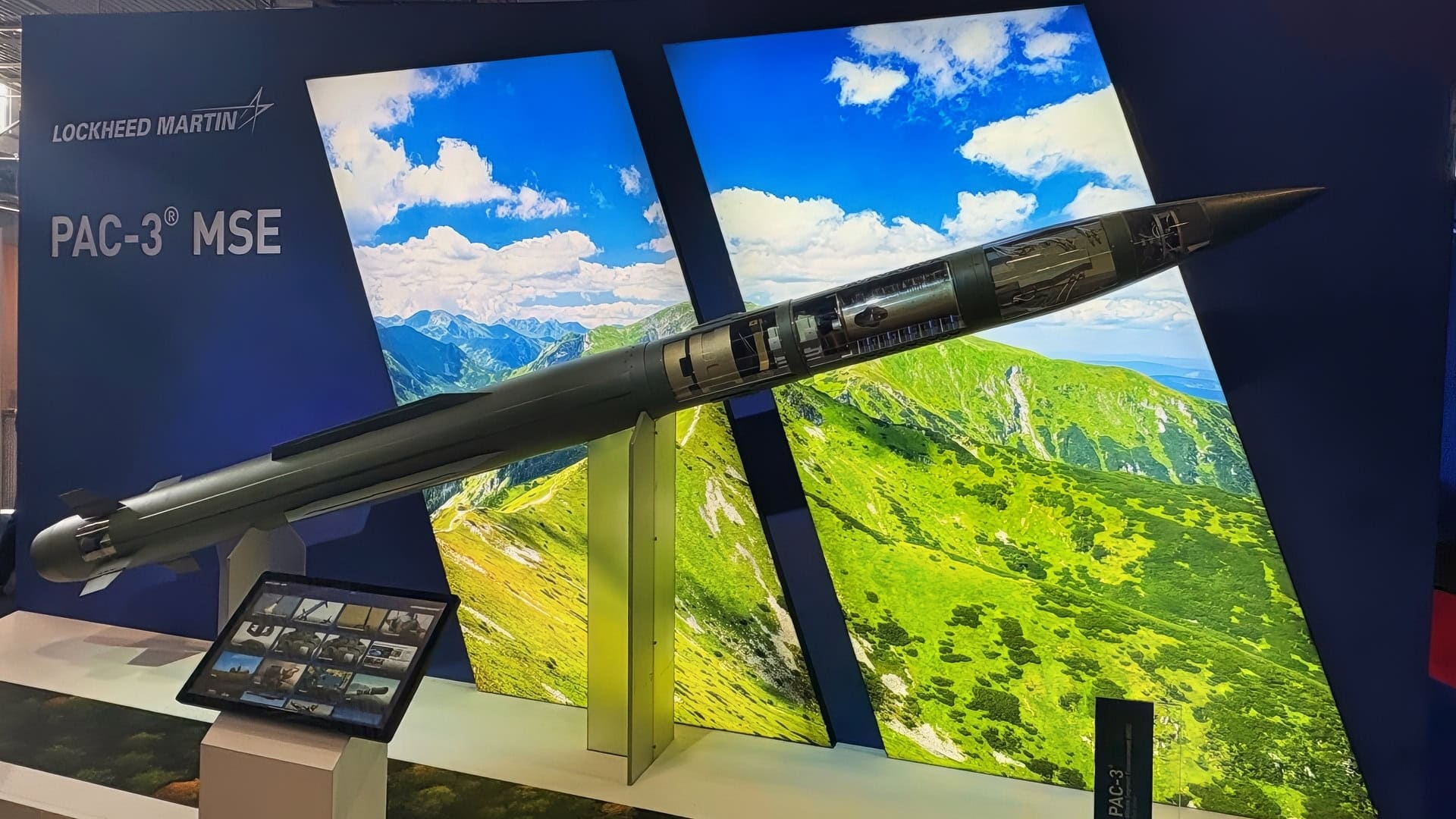
The Ukrainian request for 300 Patriot interceptor missiles is not an ordinary requirement. Patriot is an integrated system consisting of radar, command post, launcher, software, spare parts, and trained personnel. A missile alone does not create air defense. It must be integrated into a network whose sensors detect targets and whose command structure decides within seconds. The PAC-3 MSE missiles are also not arbitrarily scalable ammunition. Their production competes with American and European orders, while stockpiles are limited after years of war.
This creates an uncomfortable conflict of objectives for Europe. If it delivers the 300 missiles, it may weaken its own air defense readiness. If it does not deliver them, Ukrainian infrastructure remains exposed to the Russian missile and drone war — and Europe will pay later for an even greater security crisis. The question is therefore not whether Europe should help. It is whether Europe has the industrial and operational capability to implement its political decision.
70 Billion Euros Do Not Solve an Air Defense Problem
The EU is discussing around 70 billion euros to cover the Ukrainian budget deficit for 2027, according to reports from October 19. This is financially significant, but strategically not the same as 70 billion euros for ammunition, sensors, or air defense. The Ukraine Support Tracker from the Kiel Institute has distinguished between pledges, allocations, and actual delivered capabilities for years. This distinction is uncomfortable but remains crucial.
A loan program can keep the Ukrainian state solvent. It can secure salaries, energy imports, and basic administration. However, it does not replace a PAC-3 missile, a radar, or the American satellite intelligence that enables an interception decision at all. Europe continues to confuse financial capability with military availability. Debt only builds factories when complemented by long-term orders, common standards, and reliable production plans.
The Transatlantic Break is Institutional
Recent reports of disputes between Washington and Kyiv regarding Starshield, as well as discussions on early warning and ballistic missile defense, show what is actually at stake. The critical dependency lies not only on American weapons but on American knowledge: satellite data, target intelligence, communication architecture, and the ability to translate scattered information into military effect. No European special fund can close this gap in the short term.
If Washington is no longer involved in the defense of Ukraine, Berlin must explain which European institution will take its place. The EU has financial instruments but lacks a unified operational command chain. NATO has the military structure but remains dependent on the United States for strategic intelligence, nuclear deterrence, and many high-value capabilities. Thus, there is an institutional gap between EU ambition and NATO reality that European defense policy has been covering with summit declarations for years.
What Germany Would Need to Decide
Germany cannot respond to this situation with another general increase in the defense budget. Three concrete decisions are required. First, Berlin must treat air defense as a joint capability and not as a one-off purchase of launchers. Second, the European industry needs multi-year purchase guarantees for interceptor missiles, radars, and spare parts — with common priorities between national alliance defense and Ukraine assistance. Third, Germany must disclose which American capabilities it can replace and in what timeframe. A list of political intentions is not a capability balance.
The European Commission describes its support for the Ukrainian armed forces as a long-term security task. This is correct, but not yet a strategy. A strategy would need to specify who decides in a crisis, who pays, who delivers, and who bears the risk. As long as these four questions are distributed among different capitals, institutions, and procurement agencies, Europe's security shift remains an accounting exercise with military vocabulary.
The New European Dilemma
Europe faces a dilemma that cannot be resolved through optimism. 300 Patriot interceptor missiles can protect Ukraine in the short term, but they make Europe's own stockpiles visibly vulnerable. 70 billion euros can stabilize the Ukrainian state, but they do not yet create European war capability. And the political statement that Washington is no longer involved in defense can either awaken Europe — or merely confirm that dependency is already a reality.
More money remains necessary. However, money is the entry ticket to the debate, not its outcome. Europe's real test begins where the press conference ends: at the question of whether an American capability can become a European one before the next wave of missiles arrives.
Sources
- Ukrainian National News, 20.10.2026 — Merz's statement and discussions on air defense.
- UA.NEWS with Bloomberg, 20.10.2026 — Report on the American role.
- Kiel Institute, Ukraine Support Tracker — Pledges, allocations, and deliveries.
- European Commission, EU military support to Ukraine — Official framework of EU support.
- NATO, 2026 — Alliance structure and transatlantic capability framework.
Ukraine requested 300 Patriot missiles for winter defense on October 20, 2026, amid concerns over U.S. withdrawal from its defense. The EU is also seeking 70 billion euros to address Ukraine's budget deficit for 2027. This situation highlights Europe's challenges in balancing its defense capabilities with the need to support Ukraine against Russian aggression.
- Ukraine requests 300 Patriot missiles for winter defense.
- The EU seeks 70 billion euros to cover Ukraine's budget deficit for 2027.
- The U.S. is no longer participating in Ukraine's defense.
- The production of PAC-3-MSE missiles is limited due to competing orders.
- Europe faces a dilemma regarding its own defense readiness versus aiding Ukraine.