

The MBT-70 Tank, Explained: Though in the civilian consumer product world, the acronym “MBT” stands for “Masai Barefoot Technology,” a brand of orthopedic running shoe, the acronym is primarily used in the military context, i.e., main battle tank, which Defense Tech Global defines as “a mobile, heavily armored ground combat system that is intended to win in direct, front-line combat.
MBTs integrate mobility, robust protection, and heavy firepower into a single system.
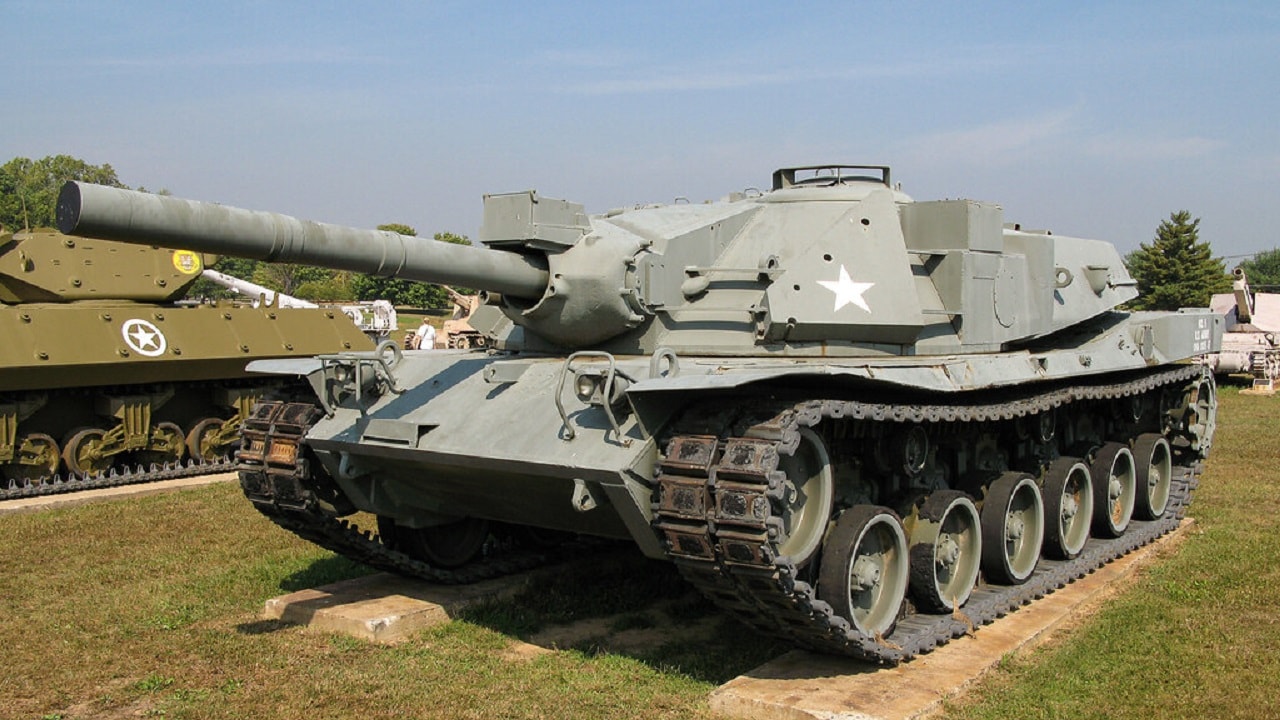
MBT-70 Tank. Image Credit: Creative Commons.
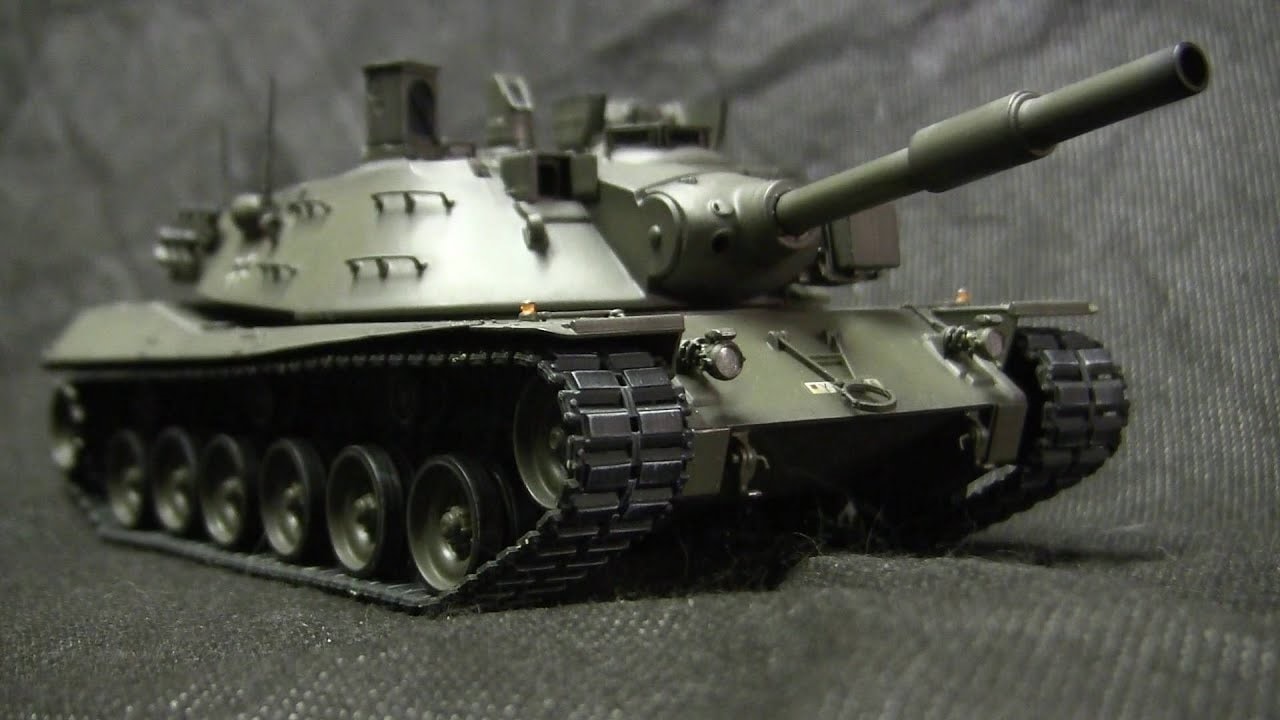
MBT-70. Image Credit: YouTube Screenshot.
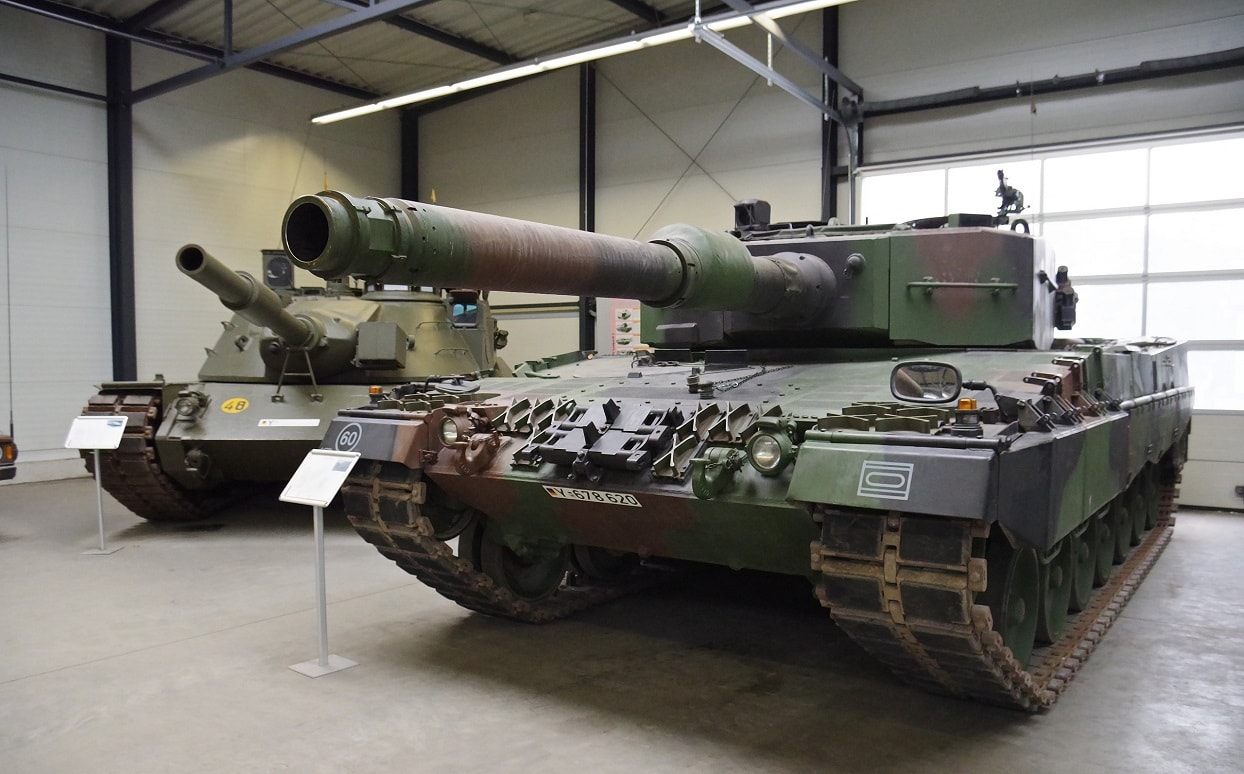
MBT-70. Image: Creative Commons.
As the backbone of most contemporary land forces, their tasks vary from leading offensives and supporting infantry to engaging enemy armor.”
“MBT” hasn’t typically been used as part of the alphanumeric designations of individual makes & models of main battle tanks.
For example, American MBTs are typically just plain “M,” e.g., the M48 Patton, M1 Abrams, etc., whilst Soviet/Russian MBTs are just plain “T,” e.g., the T-62, T-72, etc. However, back in the heady days of the Cold War, there was a short-lived exception to this rule.
Say “Guten Tag” to the MBT-70, aka the Kampfpanzer-70 (Kpf-70).
MBT-70 Initial History and Premise
The MBT-70 was a joint U.S.-West German venture, a reflection of a time when there were two separate Germanies—one a free-market democracy, the other a communist dictatorship—instead of just one.
The notion was to replace the M60 MBT—*unofficially* also known as the “Patton”—and develop a technologically viable counter to the advanced Soviet armored vehicles then under development.
The roots can be traced to 1961, when then-U.S. Secretary of Defense Robert McNamara—who would later gain infamy for his mismanagement of the Vietnam War, his lone long-term legacy success with the F-111 Aardvark fighter-bomber notwithstanding—approached his West German counterpart, Minister of Defence Franz Josef Strauss—the man who oversaw the build-up of the post-World War II Bundeswehr—about a collaborative MBT venture.
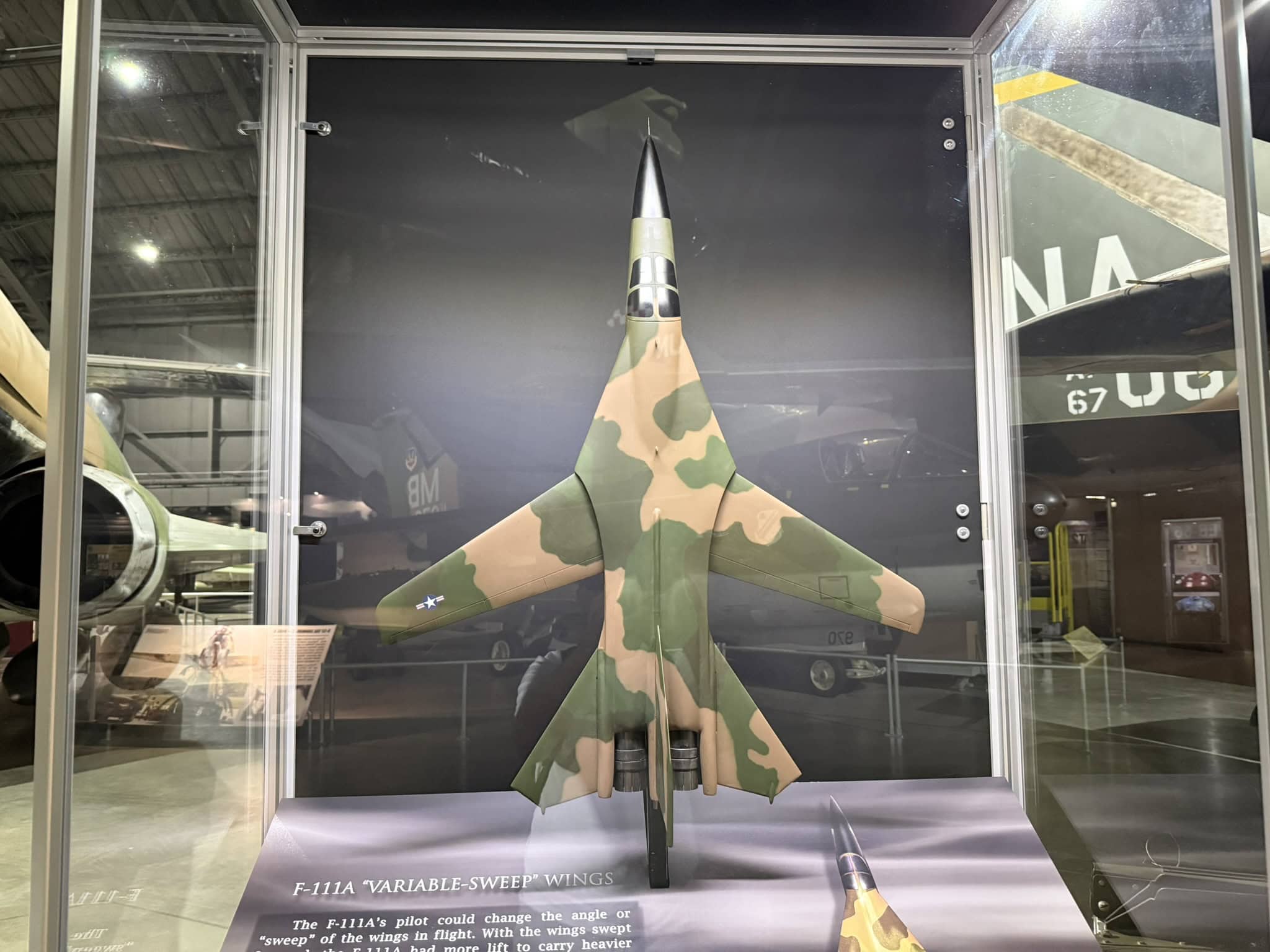
F-111 On Display at the National Museum of the U.S. Air Force. Take on July 19, 2025 by Harry J. Kazianis for 19FortyFive.com
McNamara was motivated by his admiration for German engineering, which presumably began during his WWII service in the U.S. Army Air Forces (USAAF) and continued during his tenure as President of the Ford Motor Company.
Mr. McNamara’s and Herr Strauss’s brain trust eventually came up with a technically ambitious war machine that boasted state-of-the-art features such as “kneeling” hydropneumatic suspension—a suspension system that uses a combination of high‑pressure nitrogen gas and hydraulic damping to allow the vehicle’s chassis to lower significantly when the main gun is elevated—plus housing the entire crew in the turret.
A total of 14 prototypes/pilots were built.
MBT-70 Tech Specs and Vital Stats
That turret housed a crew of three, with the American version sporting the 152mm XM150E5 main gun, which could also double as a launch platform for Shillelagh anti-armor missiles, while the Germans opted for the 120mm Rheinmetall main gun. Secondary armament suite consisting of a 20mm Rh-202 autocannon and a 7.62 mm M73/MG3 coaxial machine gun.
The frontal area was 127 mm thick; the armor also had a plastic polyethylene layer to protect from radiation, and for good measure, the tank could filter radioactive particles and chemical agents from the air entering the crew compartment.
The tank had a length of 29 feet 10 inches, a width of 11 feet 6 inches, a height of 8 feet 6 inches, and a mass of 55.6 short tons. The 1,500-horsepower engine drove the Kpf-70 at a maximum speed of 42.7 mph and a max range of 400 miles.
So, What Went Wrong?
Although they were NATO allies with a shared desire to defend the Fulda Gap, the United States and West Germany weren’t on the same metaphorical sheet of music when it came to the MBT-70.
The two countries’ armies had different tactical philosophies and logistical and engineering standards.
They failed to see eye to eye on little things such as the use of imperial vs. metric units of measurement, as well as bigger things such as the aforementioned differences in armament preferences.
The West Germans pulled out of the project in 1969, but the Americans stuck it out a bit longer in the guise of the XM803 tank program, finally withdrawing in 1971.
However, with 20/20 hindsight, the MBT-70 wasn’t a total failure: after its cancellation, its funding was redirected to plant the seeds for two highly successful MBTs: the aforementioned M1 Abrams, as well as the German-made Leopard 2.
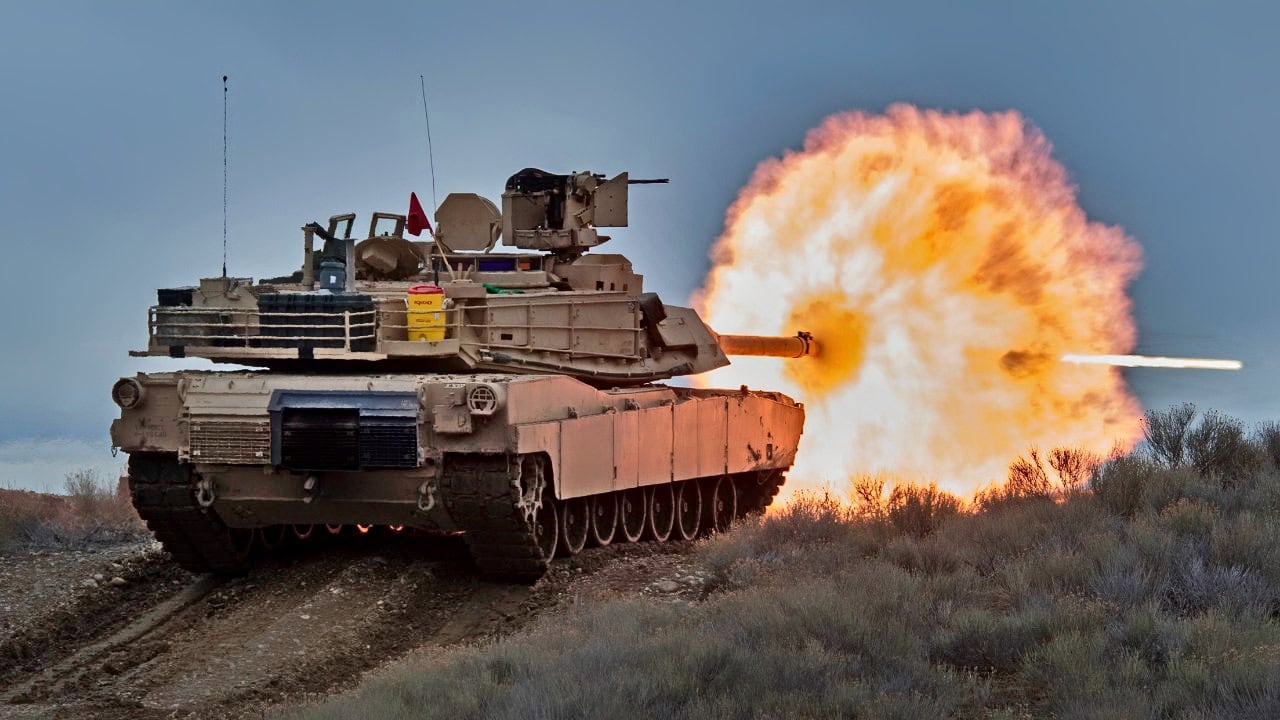
M1A2 Abrams Tanks from A Company, 2-116th Cavalry Brigade Combat Team (CBCT), Idaho Army National Guard run through field exercises on Orchard Combat Training Center (OCTC).
Where Are They Now?
Amazingly, despite the MBT-70’s failure to reach full production, five of the 14 specimens built have been preserved for posterity, for a survival rate of 35.7 percent. Three are located Stateside, whilst the other two are in Deutschland:
-The Ordnance Facility at Fort Lee in Prince George’s County, Virginia; it had previously been at Aberdeen Proving Ground in Maryland
-The Anniston Army Depot in Anniston, Alabama
-The Armor and Cavalry Restoration Facility at Fort Benning, Georgia
-The Deutsches Panzermuseum (German Tank Museum) Münster
-The Wehrtechnische Studiensammlung (Defense Technology Study Collection) Koblenz
A sixth survivor sat at the Military Museum of Southern New England in Danbury, Connecticut (aka the Military Museum in Danbury), until October 2019. Sadly, however, that museum shut down in 2025, and meanwhile, the museum’s MBT-70 fell into such a sad state of disrepair—yes, even worse than the Boeing X-32 that’s struggling to survive the elements at the Patuxent River Naval Air Museum (PRNAM) in Maryland—that it was eventually sold for scrap metal, with only the turret remaining.
About the Author: Christian D. Orr
Christian D. Orr is a Senior Defense Editor. He is a former Air Force Security Forces officer, Federal law enforcement officer, and private military contractor (with assignments worked in Iraq, the United Arab Emirates, Kosovo, Japan, Germany, and the Pentagon). Chris holds a B.A. in International Relations from the University of Southern California (USC) and an M.A. in Intelligence Studies (with a concentration in Terrorism Studies) from American Military University (AMU). He is also the author of the book “Five Decades of a Fabulous Firearm: Celebrating the 50th Anniversary of the Beretta 92 Pistol Series,” the second edition of which was recently published.