
5 ballistic missiles and 169 drones over Kyiv show Russia's last trump card in 2026
 Dmitri Volkov
5 ballistic missiles and 169 drones over Kyiv show Russia's last trump card in 2026
Five ballistic missiles, two anti-radiation X-31Ps, and 169 drones in one night — this is not a demonstration of Russian strength in the classical sense. It is more of a war accounting statement, where Moscow increasingly pays for the lack of operational success on the ground with expensive means of air pressure. The strike on Kyiv on July 8 became the third ballistic strike on the capital in six days. According to the Ukrainian Air Force, 139 drones were shot down, two X-31Ps did not reach their targets, but all five ballistic missiles hit four districts, and another 20 drones reached 11 targets. In this ratio lies the main military significance of the event: the cheap mass layer can be thinned out, but the fast ballistic layer remains the tool against which Ukraine and Europe currently have too few ready responses.
The mathematics of the strike
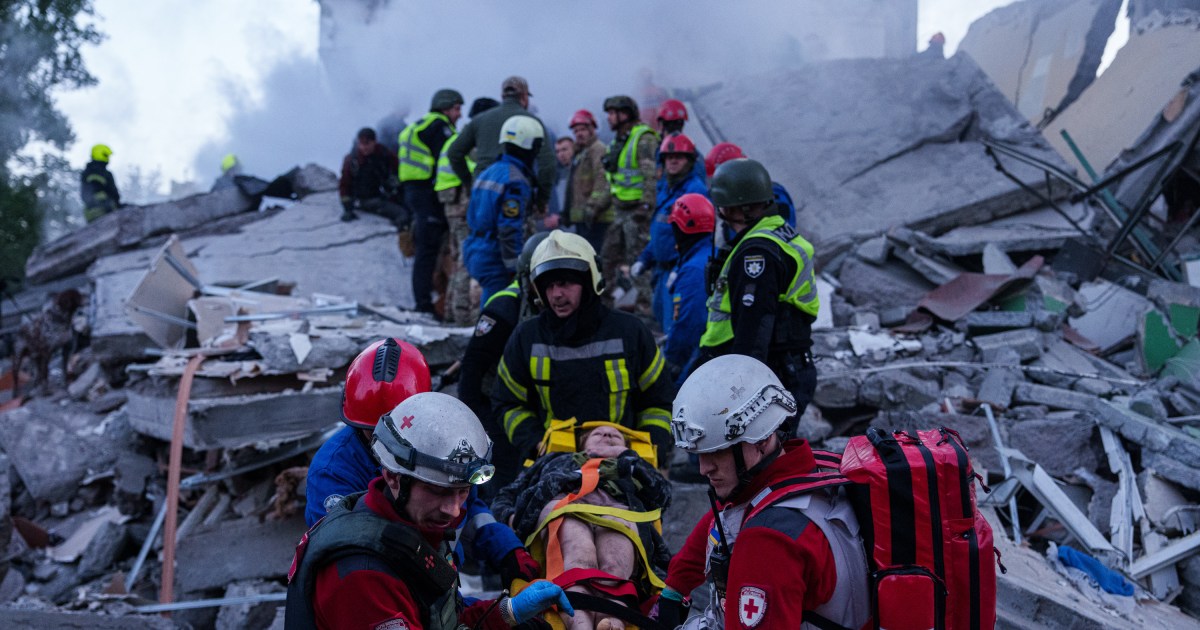
The Russian strike scheme on July 8 was quite transparent. Drones of the "Shahed" type and their Russian modifications served the roles of saturation, reconnaissance of response, and exhausting air defense calculations; X-31Ps, supersonic anti-radiation missiles of Soviet origin, were meant to complicate the work of radar stations; ballistic missiles delivered the main blow. This order is not a technical novelty. In the Soviet operational school, it would not be called "terror from the air," but rather a calculation of forces and means to suppress the enemy's system. The difference is that the Soviet staff calculated this mechanism for breaking through the front, while the Russian staff of 2026 applies it for political pressure on the city when the front does not yield quick results.
The statistics from Kyiv are particularly important because they show the gap between the two layers of war. Regarding drones, Ukraine maintains a high, though not absolute, interception efficiency: 139 out of 169 — about 82 percent. But ballistic missiles remain a different task. To intercept the "Iskander-M," North Korean KN-23s, or other quasi-ballistic targets, systems at the Patriot level with PAC-3 MSE missiles or comparable anti-missile complexes are needed. Ordinary medium-range air defense systems, effective against aircraft, cruise missiles, and some drones, only work on the periphery of the problem here. The ballistic target appears late, travels at high speed, maneuvers in the final segment, and leaves the calculation seconds, not minutes.
Why Moscow bets on ballistics
President Volodymyr Zelensky at a forum in Ankara called ballistic missiles "the last major advantage" of Russia and demanded European anti-ballistic systems not after 2030, but now (Kyiv Independent, July 8, 2026). There is political hyperbole in this statement, but there is also military accuracy. The Russian army no longer demonstrates the dynamics of ground offensives that the Kremlin hoped for in the spring. According to aggregate assessments from GlobalSecurity and ISW, Russian advances in June were measured in tens of square kilometers, not operational breakthroughs; pressure was maintained in the areas of Pokrovsk and Konstantinovka, but the cost of advancement grew faster than its depth. When the ground campaign does not yield a visual result, a strike on the capital becomes a surrogate for an offensive.
It is important not to overestimate Russian rationality here. Ballistic missiles are not cheap weapons. Even if some components are produced in Russia, the cost, the burden on the machine park, dependence on microelectronics, and competition with frontline needs remain high. But Moscow uses them where one successful breakthrough through air defense has a greater political effect than dozens of downed drones. In terms of military economics, this exchange is not "missile for target," but "missile for psychological and diplomatic signal." The signal is addressed not only to Ukraine. It is addressed to Europe: if you do not have a mass cheap anti-missile solution, your industrial base still lives in a comfortable post-Cold War era.
X-31P as an old part of a new scheme
The two X-31Ps in the night package deserve special attention, although they, according to Ukrainian data, did not reach their targets. This missile was created in the Soviet logic of hunting for NATO radars: high speed, passive guidance on radiation, the task — to force the calculation to turn off the station or risk losing it. In the current war, the X-31P rarely determines the outcome of a strike on its own, but it creates a dilemma for air defense. If the radar is operational, it sees drones and ballistic targets but becomes an object of attack. If it is silent, the window for the main strike is wider. This is not an elegant technology of the 21st century, but a crude, yet quite understandable Soviet mechanics placed in a digital environment.
The irony is that Russia simultaneously demonstrates the ability for complex combined strikes and the vulnerability of its own depth. On the same night, Ukrainian drones struck the Saratov Oil Refinery and a petrochemical facility in Tatarstan, about hundreds of kilometers from the Ukrainian border; the day before and during the same period, strikes were recorded in the Belgorod region, against ships and energy facilities in the Sea of Azov and Crimea (Kyiv Independent, July 7–8, 2026; ISW, July 7, 2026). This results in a characteristic asymmetry of this war: Russia strikes cities with expensive high-speed means, while Ukraine strikes fuel, logistics, and industrial nodes with cheaper long-range means. One type of pressure works through fear, the other — through costs.
The European production problem
The main conclusion for Europe is unpleasant. Anti-missile defense cannot be built like a museum of rare expensive systems. Patriot remains irreplaceable, but its missiles cannot be the only answer to a campaign where the enemy combines hundreds of cheap drones with a few fast ballistic targets. A layered architecture is needed: cheap interceptors and mobile fire groups against drones, a middle layer against cruise missiles, and a limited but constantly replenished layer against ballistics. Otherwise, Russia will impose on Ukraine and Europe not a battlefield, but a warehouse statement: how many missiles are left, how many can be ordered, when factories will go into series.
Russian military thought has always respected arithmetic. Even Marshal Ogarkov wrote about a qualitative leap in means of destruction, but behind this phrase stood a very simple question: can industry produce enough for quality to become mass? In 2026, this question is directed not only at Moscow but also at Berlin, Paris, Warsaw, and Ankara. If Europe truly considers the ballistic threat to be Russia's "last advantage," it must turn anti-ballistic defense from a diplomatic slogan into a production program.
The cold forecast is this: Russia will not be able to indefinitely increase ballistic strikes without an industrial price, but even a limited stock of such missiles will maintain a strategic effect until Europe and Ukraine create a mass, multi-layered, and replenishable anti-missile framework.
Sources
- Kyiv Independent, July 8, 2026 — data on five ballistic missiles, two X-31Ps, and 169 drones over Ukraine.
- Kyiv Independent, July 8, 2026 — confirmation of strikes on the Saratov Oil Refinery and a petrochemical facility in Tatarstan.
- ISW Russian Offensive Campaign Assessment, July 7, 2026 — context of the Ukrainian campaign of long strikes and the slowdown of the Russian offensive.
- GlobalSecurity, July 2026 Russo-Ukraine War update — aggregate data on the front and limited Russian advances.
On July 8, 2026, Russian Armed Forces launched five ballistic missiles and 169 drones at Kyiv, marking the third such strike in six days. Ukrainian Air Forces reported intercepting 139 drones, while all five ballistic missiles successfully hit four districts. The operation reflects Russia's strategy of using high-cost missile strikes to exert political pressure amid limited ground success.
- Five ballistic missiles struck four districts in Kyiv.
- Two Kh-31P missiles failed to hit their targets.
- 139 out of 169 drones were intercepted by Ukrainian forces.
- This was the third ballistic strike on Kyiv in six days.
- The strikes are part of a strategy to exert political pressure on Ukraine.