
656 Russian Drones Expose NATO's Patriot Problem
 Alexandra Reeves
656 Russian Drones Expose NATO's Patriot Problem
Russia just made Ukraine's air-defense shortage impossible to treat as a Ukrainian problem. The overnight June 2 strike was not just another grim entry in the war's daily ledger. It was a stress test of the entire Western approach to defending cities, air bases, logistics nodes, and political decision-makers against massed cheap drones backed by expensive missiles.
The Strike Was Built to Exhaust Defenders
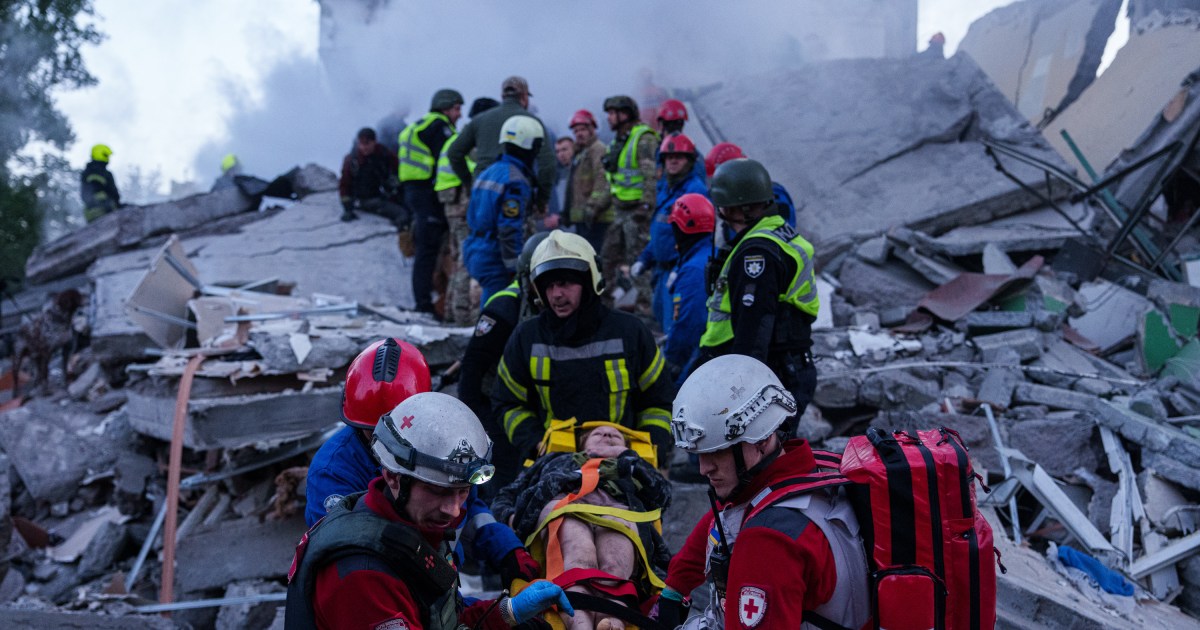
According to Ukraine's air force figures reported by Al Jazeera and CBS, Russia launched 656 drones and 73 missiles overnight into Tuesday. Ukrainian defenders destroyed or neutralized 602 drones and 40 missiles, but 38 sites were still hit. AP reported at least 18 civilians killed and 131 wounded across Ukraine, including deaths in Kyiv and Dnipro. Reuters described fires in Kyiv's Podil and Obolon districts, with debris striking residential and civilian areas as residents took shelter in metro stations.
The headline interception rate looks impressive. It is also the wrong number to focus on. A defender can shoot down 90 percent of a raid and still lose if the remaining 10 percent lands on apartment blocks, substations, railway hubs, or Patriot components that cannot be replaced quickly. Russia understands this arithmetic. The point of launching hundreds of Shahed-type one-way attack drones, decoys, and missiles in one night is not only to destroy targets. It is to force Ukraine to spend scarce interceptors, keep crews awake, expose radar patterns, and make every Western capital answer the same awkward question: who is going to refill the magazines?
Cheap Drones Are Forcing Expensive Choices
The Shahed/Geran family is not sophisticated in the way a Kh-47M2 Kinzhal or Iskander ballistic missile is sophisticated. It is slow, loud, and comparatively cheap. That is exactly why it is dangerous. These drones can be launched in large numbers from multiple axes, mixed with decoys and cruise missiles, and routed to force Ukrainian air-defense commanders to decide which tracks deserve missiles and which can be left to mobile guns, electronic warfare, or luck.
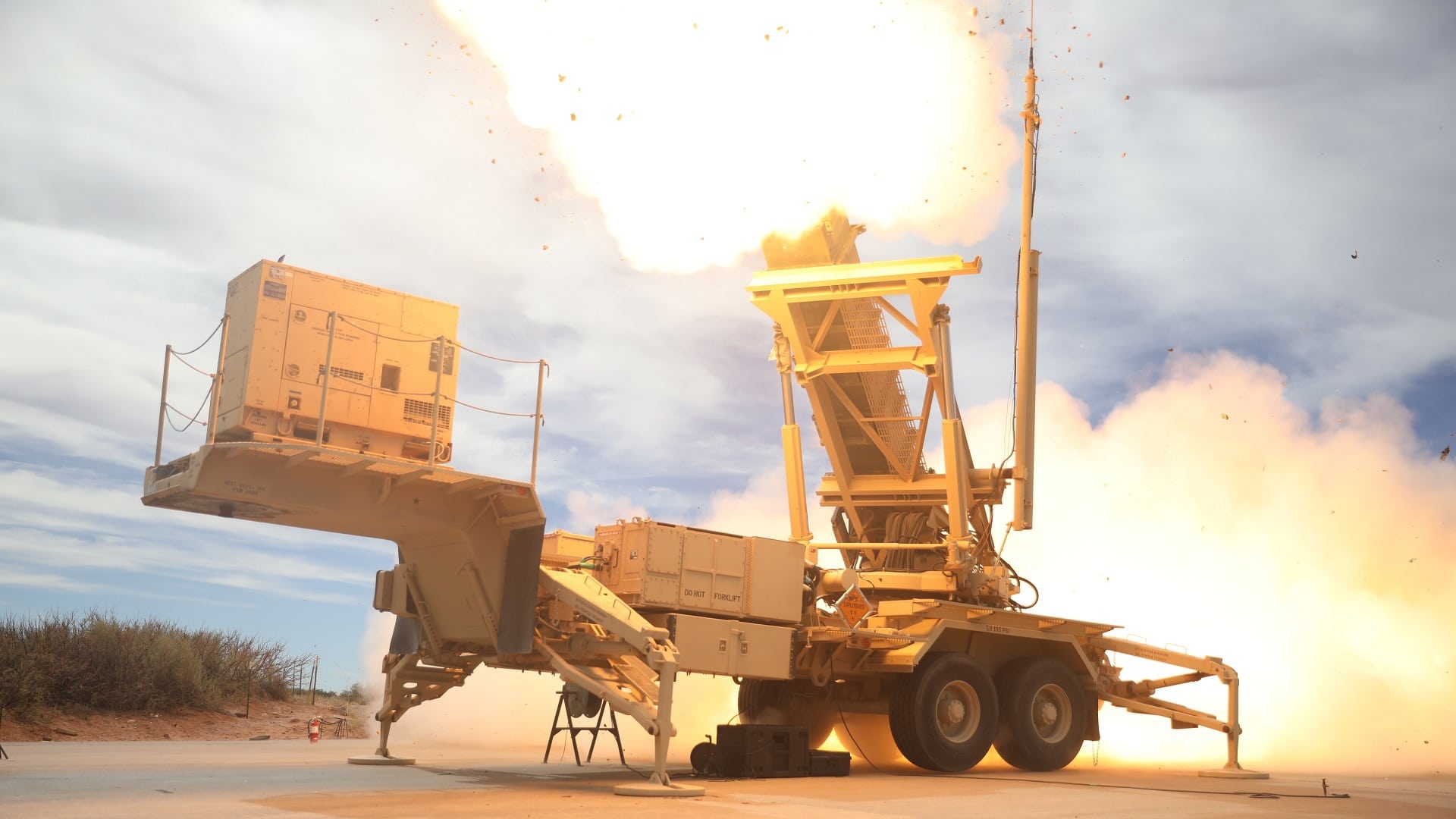
Ukraine's layered defense now depends on a mix of systems with very different economics. Patriot batteries and PAC-3 interceptors are vital against ballistic missiles. NASAMS, IRIS-T SLM, SAMP/T, Gepard guns, mobile fire teams, and electronic warfare cover other parts of the threat envelope. The problem is that Russia is not offering Ukraine neat target categories. A raid can include Shahed-type drones, Gerber and other decoys, Kh-101 cruise missiles, Iskander-M ballistic missiles, S-300 or S-400 ground-attack launches, and occasional Kinzhal aeroballistic weapons. The defender does not always know which track is cheap until it is too late to ignore it.
That makes this a procurement problem, not merely a battlefield problem. NATO countries have spent decades buying exquisite air-defense systems in small numbers, assuming limited missile salvos rather than nightly industrial-scale drone raids. Ukraine is now showing what happens when the threat model changes faster than allied production lines.
NATO Territory Is Already Part of the Air War
There is a comforting line often heard in Brussels and Washington: Ukraine is fighting the air war so NATO does not have to. The short answer is no. NATO is already being touched by it, just not on terms the alliance controls.
Defense News reported on May 29 that Lithuania says Russia has used GPS spoofing to push Ukrainian strike drones off course and toward NATO airspace. The same report noted that interference reached Vilnius on May 20, forcing the airport to shut and parliament to clear during a drone alert. Days later, a drone hit an apartment block in Galati, Romania, near the Ukrainian border, wounding civilians. Reuters reported that NATO accused Moscow of reckless behavior after Romania said a Russian drone had struck the building, while Putin denied certainty over the drone's origin.
This is the uncomfortable bit: NATO's eastern flank does not need a deliberate Russian strike to face real air-defense pressure. Jamming, spoofing, debris, misdirected drones, and saturation raids near borders can create Article 4 politics without a clean Article 5 moment. That grey zone is useful to Moscow precisely because it forces NATO to manage risk in public while Russia keeps escalating the technical problem in private.
The Patriot Question Is Political
AP framed the June 2 attack in the context of Ukraine's shortage of U.S.-made air-defense systems. That shortage is not mysterious. Patriot batteries are scarce, interceptors are expensive, and the United States remains the central supplier even as European governments talk about taking greater responsibility for their own continent. NATO officials can announce aid packages, and European states can fund purchases through mechanisms such as the Ukraine Defence Contact Group and the Prioritised Ukraine Requirements List. But Ukraine cannot intercept a missile with a communique.
The real issue is allocation. Every Patriot launcher sent to Ukraine is a launcher not sitting in Poland, Germany, Romania, the Gulf, or the Indo-Pacific. Every PAC-3 interceptor fired over Kyiv is one that must be replaced from a production base that was never designed for this rate of consumption. That does not mean Ukraine should receive fewer systems. It means allied capitals need to stop pretending that donations alone solve a structural shortage.
Europe's recent defense-spending surge matters, but air defense is one of the slowest gaps to close. Buying a tank is not simple. Building an integrated air and missile defense architecture is worse: radars, command systems, launchers, missiles, trained crews, maintenance pipelines, rules of engagement, and shared air pictures all have to work together. The June 2 raid is a reminder that Russia is not waiting for NATO's procurement cycle to become less embarrassing.
What Comes Next
The next phase of this contest will be less about whether Ukraine can achieve heroic interception percentages and more about whether it can keep doing so without burning through the systems that defend its cities. Watch three things: the pace of Patriot and SAMP/T interceptor deliveries, European investment in cheaper counter-drone kill chains, and Russian experimentation with routing attacks near NATO borders to stretch allied warning systems.
The key finding is simple. Russia's mass strike did not prove that Ukrainian air defense is failing. It proved that successful air defense can still be strategically losing if the defender's stocks shrink faster than the attacker's drones. NATO's problem is that Ukraine is revealing the bill before the alliance has decided who pays it.
Sources: AP, Reuters, Al Jazeera, CBS News, and Defense News reporting from May 29 to June 2, 2026.
On June 2, 2026, Russian Armed Forces launched a mass strike involving 656 drones and 73 missiles against Ukraine, resulting in significant civilian casualties and damage. Ukrainian defenders managed to intercept a large number of the drones and missiles, but 38 sites were still hit, leading to at least 18 civilian deaths and 131 injuries. The attack underscored the challenges faced by Ukraine's air defense systems and raised questions about NATO's ability to support Ukraine amid ongoing procurement issues.
- Russia launched 656 drones and 73 missiles in a single night strike.
- Ukrainian forces destroyed 602 drones and 40 missiles but still suffered casualties and damage.
- At least 18 civilians were killed and 131 wounded in the attacks across Ukraine.
- The strike tested Ukraine's air defense capabilities and highlighted NATO's procurement challenges.
- Debris from the attacks affected civilian areas in Kyiv and Dnipro.