
73 missiles and 656 drones in one night show the new economy of Russian strikes after Putin's operation
 Dmitri Volkov
73 missiles and 656 drones in one night show the new economy of Russian strikes after Operation Web
73 missiles and 656 drones in one night — this is no longer just a "massive strike," but an industrial schedule transferred into military statistics. According to the Ukrainian Air Force, on the night of June 2, Russia used 729 air attack means against Ukraine, including air-launched ballistic "Kinzhal" missiles, X-101 cruise missiles, "Iskanders," and hundreds of strike UAVs; the Ukrainian side reported intercepting or suppressing 40 missiles and 602 drones (Associated Press, June 2, 2026). The figure is significant not only in scale. It emerged a year after the SBU's Operation Web, when Ukrainian long-range drones reportedly struck 41 Russian long-range and strategic bombers. The Russian long-range strike system was supposed to become more cautious. Instead, it has become more voluminous.
Strike as a production cycle
In the Soviet military school, there is an unpleasantly precise expression — "accumulation of means of destruction." In textbooks, it sounded almost like accounting, but in practice, it means a simple thing: a strike is prepared not at the moment of a political decision, but over weeks of stockpiling, routing, repairing launch platforms, and deploying decoys. Therefore, the night attack on June 2 is not an emotional "response" to one Ukrainian raid or one diplomatic phrase. It is the result of an already functioning conveyor, in which air-launched missiles, "Iskanders," naval platforms, and cheap drones like "Geran" are combined into one saturation package.
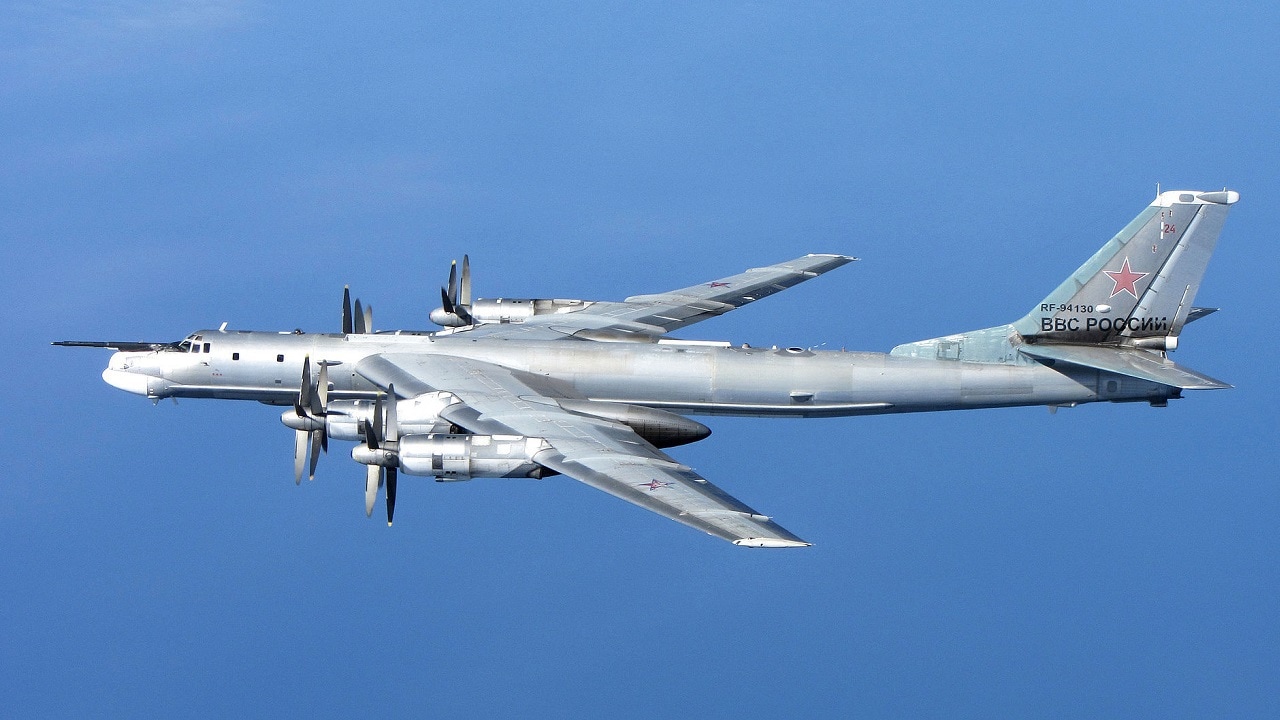
Here lies the main lesson after "Web." The strike on long-range bombers was painful for Russia both symbolically and materially: Tu-95MS and Tu-22M3 are not produced in quick series, their repair base is limited, and trained crews are more expensive than the propaganda image itself. But the destruction or damage of some carriers does not equal the disappearance of the entire strike function. Russia compensates for the vulnerability of expensive platforms in three ways: by dispersing aviation across airfields, increasing the share of drones in the overall mass of the attack, and stretching Ukrainian air defense over false and cheap targets. In other words, the strategic bomber is increasingly becoming not the sole center of the strike, but an expensive node in a cheaper network.
Why 656 drones are more important than 73 missiles
Missiles provide military and political effects, but drones provide economics. One X-101 or "Kinzhal" remains a complex product with limited production capacity, expensive components, and a noticeable footprint in logistics. A kamikaze drone is cheaper, more repairable in a production sense, and allows for rough serial production. This is why the Russian strike model of 2025-2026 increasingly resembles not a classic missile campaign but a system of coercion through interception costs. Even if Ukraine shoots down or suppresses 602 out of 656 drones, it has to expend air defense missiles, mobile groups, electronic warfare, fuel, radar resources, and command attention. The war becomes a dispute not only about interception percentages but also about the cost of each percentage.
Ukrainian data on the night attack show a characteristic ratio: most targets were destroyed or suppressed, but hits still occurred, and some ballistic means reached their targets. This is the normal logic of saturation. The Russian side is not obliged to completely break through air defense. It is enough to create such a volume of air situation in which several expensive or fast means of destruction pass through an overloaded system. In this sense, 656 drones act as "engineering preparation" for the strike, only in the air. First, they uncover routes, overload calculations, and force radars to be activated, then missiles use the opened windows.
Limitations of the Russian model
However, the increase in scale does not mean the absence of limits. The Russian defense industry can increase the production of simple drones faster than the production of high-precision missiles, but there are still bottlenecks: engines, navigation modules, radio components, production discipline, transportation to launch areas, and crew training. After sanctions, Moscow learned to bypass shortages through gray supply chains, but gray chains do not create Soviet redundancy. They create dependence on intermediaries, currency payments, and the quality of batches. Reports on Russian strikes often lose this detail: the quantity increases, but technological uniformity decreases. This is not a collapse. This is degradation through mass.
From a military point of view, Russia's bet on volume also has a downside. The more drones are launched, the more launch areas, supply routes, and operator groups need to be serviced. This expands the surface for Ukrainian intelligence and long-range strikes. Operation "Web" was important not only because it struck at aircraft. It showed that the Russian rear has ceased to be a rear in the old Soviet sense. If strategic aviation airbases become reachable for Ukrainian systems, then UAV warehouses, railway hubs, fuel bases, and repair sites cannot be considered safe either. The Russian army is trying to address this problem through dispersion, but dispersion always raises the management cost.
Political meaning of the night attack
There is another layer that cannot be reduced to an interception table. The strike on June 2 came at a time when the memory of Operation "Web" became part of Ukrainian public policy again: President Volodymyr Zelensky marked the anniversary of the operation by honoring SBU officers involved in the defeat of Russian long-range aviation (Kyiv Post, June 1, 2026). For Moscow, this is an inconvenient symbol. Russian propaganda can deny the scale of losses, but it cannot cancel the fact that strategic aviation now needs protection from cheap long-range drones. Therefore, the mass night strike serves a dual function: military — to exhaust Ukrainian air defense, and psychological — to show that even after strikes on airbases, Russia retains the capability for large-scale coercion.
But here the weakness of Russian logic manifests itself. The more often Moscow proves its ability to strike with hundreds of drones, the more it acknowledges its dependence on quantitative pressure. This resembles the late Soviet habit of measuring strength in tons of metal and the number of divisions when the quality of management was already beginning to lag behind. Russia in 2026 is not the USSR of the 1980s: it has a smaller industrial base, already limited technological connections, more expensive skilled labor, and a higher political cost of mobilizing resources. Therefore, the current model may be sustainable for months and even a year, but it is not free. It buys operational effect at the cost of accelerated wear and tear on the system.
What this changes for Ukraine and NATO
For Ukraine, the main conclusion is unpleasant but practical: the interception percentage is no longer a sufficient indicator of success. An interception economy is needed, where cheap targets are hit by cheap means, and expensive air defense missiles are preserved for ballistic missiles, cruise missiles, and air carriers. This requires more mobile fire groups, denser electronic warfare, local detection systems, and the production of their own UAV interceptors. Western assistance, if limited to expensive batteries and rare missiles, only addresses the upper layer of the problem. The lower layer — hundreds of "Gerans" and decoys — requires an industrial response, not just diplomatic sympathy.
For NATO, the conclusion is even broader. The Russian long-range strike campaign has become a laboratory of war, where a country with medium technological limitations learns to compensate for quality with quantity, and the vulnerability of strategic platforms with a distributed mass of cheap means of destruction. This does not make Russia invincible. On the contrary, it shows where it is vulnerable: in logistics, rear protection, component quality, and dependence on a regular production pace. But as long as these bottlenecks are not systematically targeted, each subsequent night can again turn into an accounting line of hundreds of targets.
My forecast is cautious: Russia will retain the ability to conduct attacks on the scale of 600-700 air means, but will be forced to increasingly replace expensive missiles with cheap drones and decoys. This will prolong the coercion campaign but reduce its technological quality. The Russian military machine will not stop from one strike on airfields; it will only stop when the cost of maintaining the pace becomes higher than the political benefit of demonstrating strength.
Main sources: Associated Press, June 2, 2026; Kyiv Post, June 1, 2026; Ukrainian Air Force; open data on Russian long-range aviation and strike UAVs.
On June 2, 2026, the Russian Armed Forces launched a large-scale aerial attack against Ukraine, deploying 729 aerial attack vehicles, including 73 missiles and 656 drones. Ukrainian forces reported intercepting or suppressing 40 missiles and 602 drones. This operation reflects a shift in Russian military strategy, emphasizing the use of drones to overwhelm Ukrainian air defenses.
- Russia launched 729 aerial attack vehicles including missiles and drones against Ukraine on June 2, 2026.
- Ukrainian forces intercepted or suppressed 40 missiles and 602 drones during the attack.
- The attack is part of a new strategy following the 'Web' operation, indicating a shift in Russian military tactics.
- The use of drones is emphasized as a cost-effective method for Russia, allowing for saturation attacks against Ukrainian air defenses.
- The report highlights the logistical challenges and vulnerabilities faced by the Russian military despite the scale of the attack.