

Summary and Key Points: Berlin-based journalist Caleb Larson recounts how the Royal Australian Navy’s Collins-class diesel-electric submarines, noisy and troubled when they replaced the Oberon-class in the late 1990s, earned respect in early-2000s exercises when HMAS Waller penetrated a carrier group’s screens, evaded US, Japanese, Canadian, Chilean, Korean, and British forces, and photographed aircraft carrier USS Abraham Lincoln (CVN-72) within torpedo range. Australia then scrapped a 12-boat Naval Group deal for AUKUS nuclear submarines; the Collins boats serve into the 2030s.
Yes, Australia Proved Aircraft Carriers Can Be Defeated
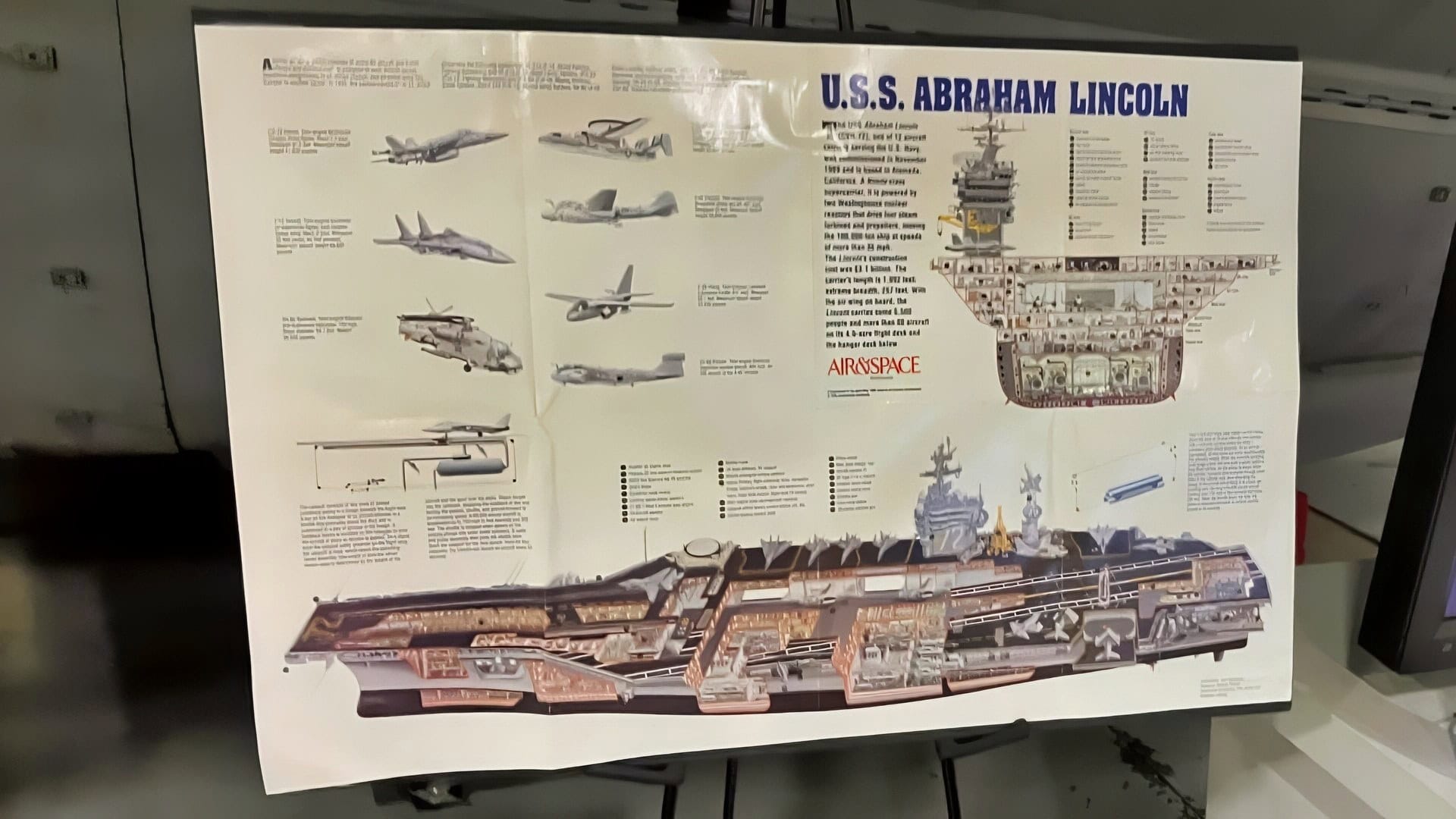
Aviation Museum of Kentucky USS Abraham Lincoln Carrier Photo. 19FortyFive.com Image.
The Royal Australian Navy’s Collins-class of diesel-electric submarines entered Australian service in the late 1990s.
It replaced the Oberon-class, which was less capable than its Royal Navy and U.S. Navy counterparts.
The new class was controversial from the start. It was very noisy while underway, suffered mechanical issues, and faced operational problems.
Over time, however, Canberra upgraded the submarines and improved its submariner training pipeline, giving the class credibility within the Australian military.
It also earned respect abroad thanks to its performance during multinational exercises.
The Collins-class’ peak moment came in the early 2000s, during an exercise with the most capable navy in existence: the U.S. Navy.
Australia’s Collins-class submarines notched several simulated “kills” against U.S. Navy vessels during the course of several multinational exercises in the early 2000s—including simulated torpedo strikes against an aircraft carrier, as well as nuclear attack submarines.
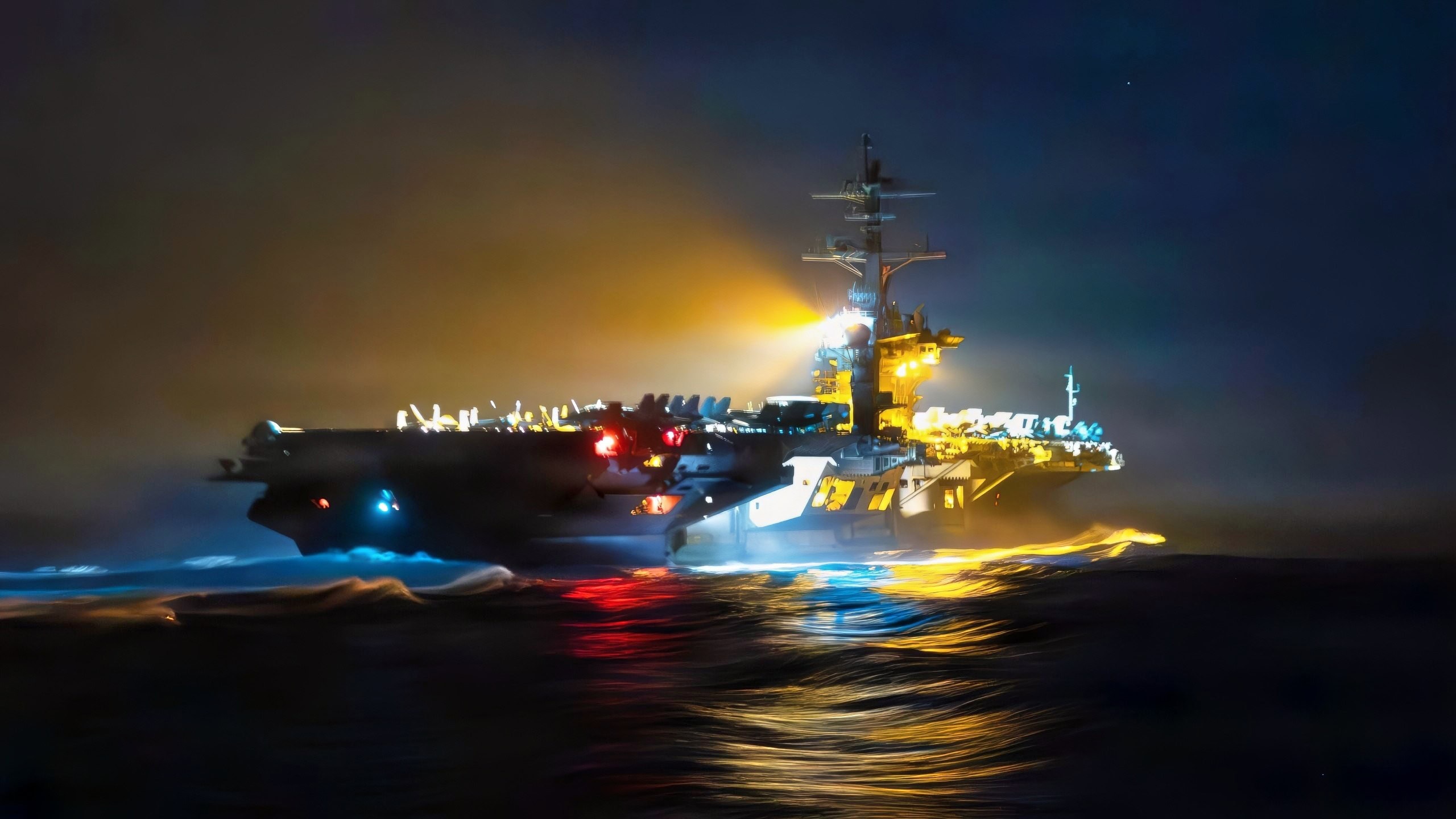
Nimitz-class aircraft carrier USS Abraham Lincoln (CVN 72) departs following a replenishment-at-sea with fleet replenishment oiler USNS Henry J. Kaiser (T-AO-187) during Operation Epic Fury, March 18, 2026. (U.S. Navy photo)
One noteworthy incident involved the HMAS Waller. The Collins-class submarine participated in U.S.-led war games around Hawaii and in waters north of Australia. Although the Waller initially integrated with a U.S. carrier battle group, it also played an opposing enemy submarine.
While playing the adversarial role, the Waller reportedly penetrated the carrier group’s submarine screens and made close-in observations of the aircraft carrier USS Abraham Lincoln (CVN-72).
Australian media lauded the submarine’s effort, though reporting at the time stressed that the feat may not reflect the submarine’s capabilities in a real conflict.
“Neither achievement is a useful guide to performance unless you understand the full context,” a naval source told the Australian Financial Review.
“Photographing aircraft carriers is a submarine pastime,” a former officer added, explaining, “exercises are designed so that everybody goes home happy.”
But, at the very least, “under controlled exercise conditions,” the Australian submarine “evaded US, Japanese, Canadian, Chilean, Korean and British forces and provided photographic proof that it was well within torpedo firing range of a major and heavily defended U.S. prize.”
Out with the Old, in with the New
Fast forward to today, and the Royal Australian Navy is more than ready to ditch its Collins-class submarines.
In 2021, Australia turned heads by revealing a trilateral defense partnership with the United Kingdom and the United States.
The agreement, known as AUKUS, marked the second time the United States has shared the crown jewel of its nuclear deterrence: the nuclear propulsion technology that powers America’s submarines.
Australia’s decision to join the grouping was also a significant snub to France.
In 2016, Canberra had forged a deal with France’s Naval Group for a 12-boat diesel-electric submarine fleet, a modified variant of France’s Barracuda-class submarines. However, overtures by the United Kingdom and the United States proved too attractive to pass up. Once realized, the deal will offer Australia a superior submarine fleet with unlimited endurance.
The decision sparked consternation in Paris. French President Emmanuel Macron went so far as to accuse Australia of deception and betrayal, saying Canberra negotiated the deal in parallel to the deal with Naval Group, and in bad faith.
He added that the deal was tantamount to a “stab in the back.”
If reporting is accurate, Naval Group learned that its deal with Australia fell through just hours before the public announcement of AUKUS.
Postscript: Australia Can Indeed Sink Aircraft Carriers and the Future Is Coming
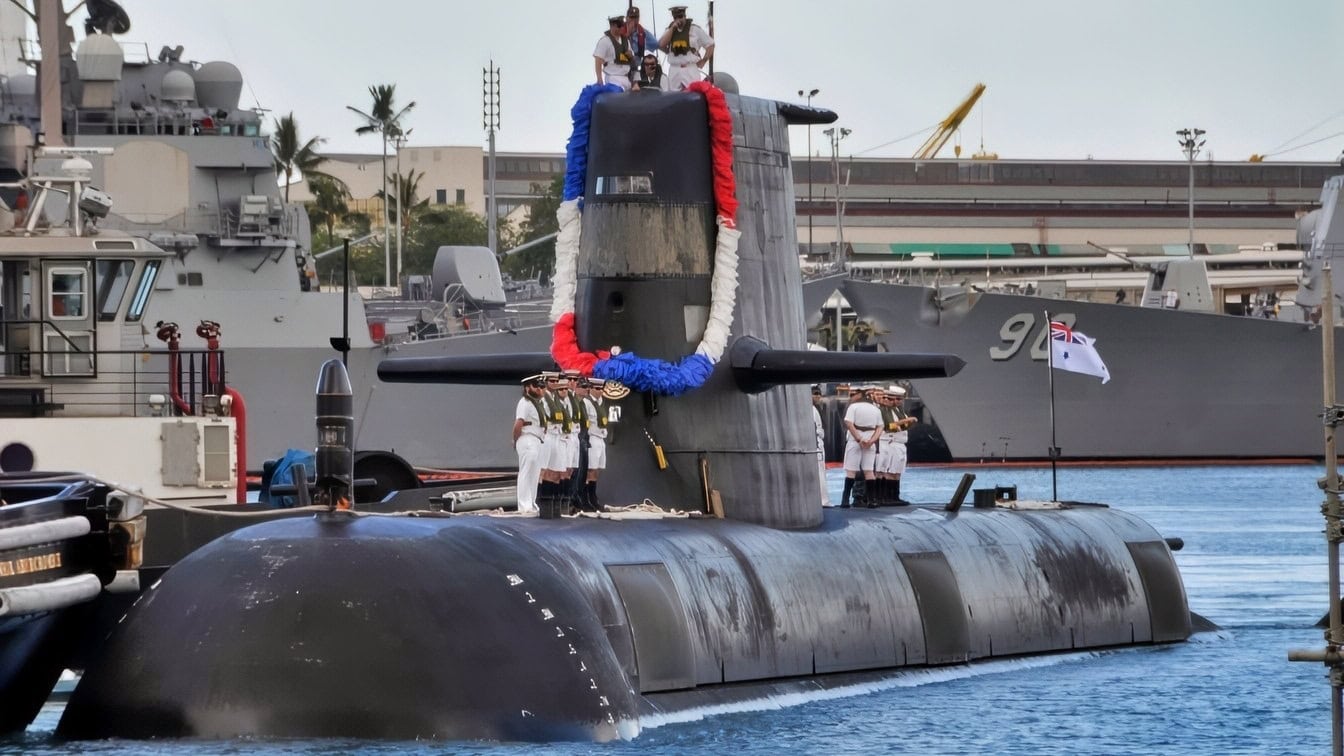
JOINT BASE PEARL HARBOR-HICKAM, Hawaii – (June 30, 2012) – Her Majesty’s Australian Ship, HMAS Farncomb (SSG 74), a Collins class submarine operated by the Royal Australian Navy, arrived at Joint Base Pearl Harbor-Hickam to participate in the Rim of the Pacific (RIMPAC) exercise, June 30. Twenty-two nations, more than 40 ships and submarines, more than 200 aircraft and 25,000 personnel will participate in the biennial RIMPAC exercise scheduled June 29 to Aug. 3, in and around the Hawaiian Islands. The world’s largest international maritime exercise, RIMPAC provides a unique training opportunity that helps participants foster and sustain the cooperative relationships that are critical to ensuring the safety of sea lanes and security on the world’s oceans. RIMPAC 2012 is the 23rd exercise in the series that began in 1971. (U.S. Navy photo by Mass Communication Specialist 1st Class Ronald Gutridge / Released)
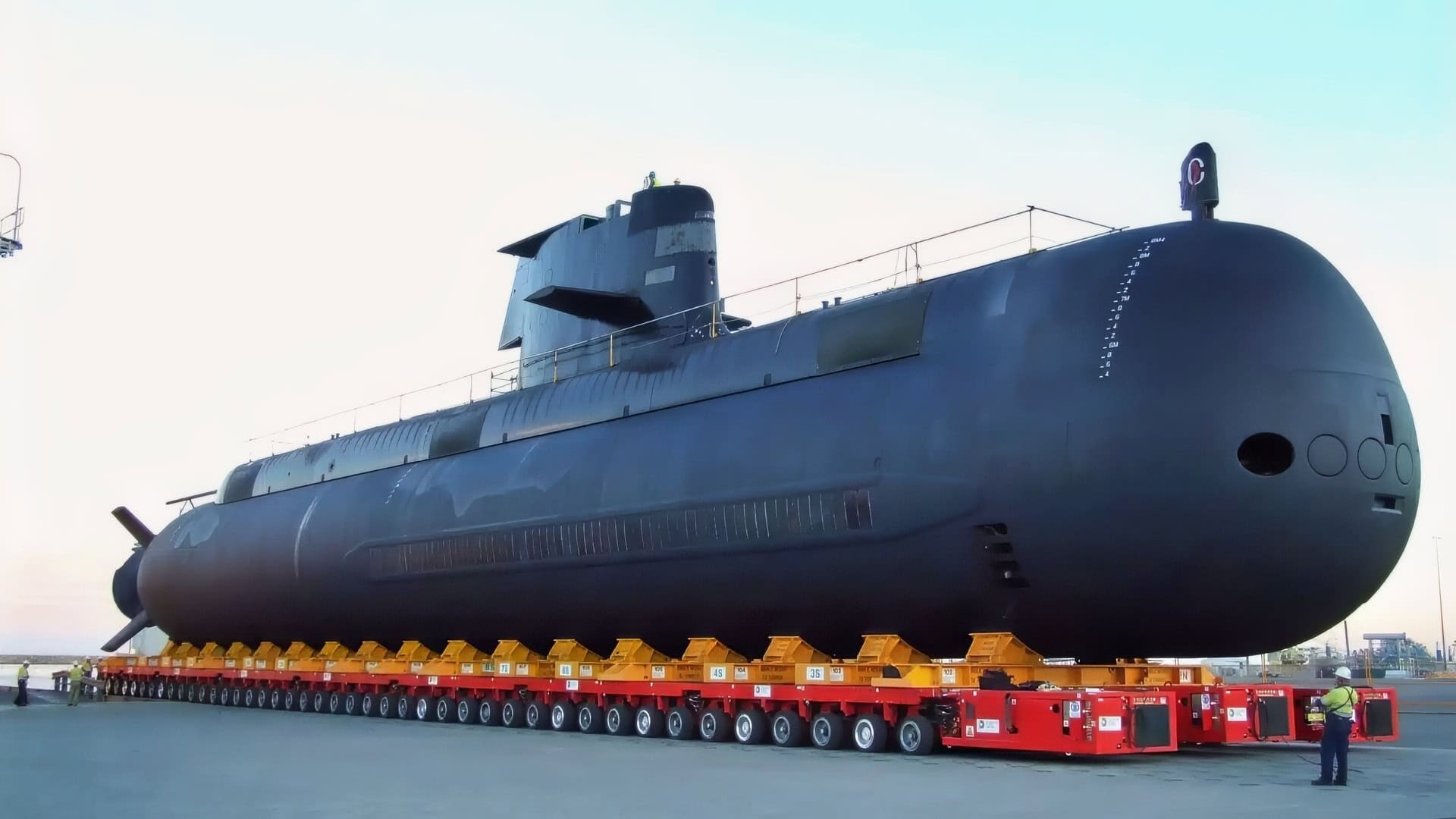
Collins-Class Submarine Australian Government
Australia justified scrapping the deal with the French as strategically necessary.
AUKUS, meanwhile, is not quite the end of the line for the Collins-class.
Before Australia can bring nuclear-powered submarines into service, Canberra needs to broaden its defense industrial base to sustain them.
Its sailors must also become familiar with nuclear submarine safety, technology, and operations.
Meanwhile, the Collins-class will remain in service until the late 2030s thanks to a comprehensive life extension program.
They probably won’t score any hits, real or simulated, until then.
Still, the submarines have had a pretty good voyage, all things considered.
About the Author: Caleb Larson
Caleb Larson is an American multiformat journalist based in Berlin, Germany. His work covers the intersection of conflict and society, focusing on American foreign policy and European security. He has reported from Germany, Russia, and the United States. Most recently, he covered the war in Ukraine, reporting extensively on the shifting battle lines in Donbas and the war’s civilian and humanitarian toll. Previously, he worked as a Defense Reporter for POLITICO Europe.