

Summary and Key Points: Lockheed test pilot Bill Weaver was flying SR-71 Blackbird 61-7952 at Mach 3.18 and 78,800 feet when an engine unstart sent the jet into violent yawing, and it broke apart. Weaver never ejected; he blacked out, woke up falling, and survived thanks to his pressure suit and parachute, landing in New Mexico. His crewmate, flight-test specialist Jim Zwayer, was killed. The Blackbird had not yet entered operational service.
The SR-71 Blackbird History Files: How A Blackbird Broke Apart
On January 26, 1966, Lockheed test pilot Bill Weaver flew an SR-71 Blackbird over the American Southwest when the aircraft suddenly broke apart at about Mach 3.18—more than three times the speed of sound—at 78,800 feet, nearly 15 miles above Earth.
Weaver miraculously survived the breakup despite exposure to extreme aerodynamic forces.
His crewmate, Jim Zwayer, was killed, however, in an incident that became one of the most remarkable survival stories in military aviation history, exposing the extraordinary challenges of operating the SR-71 at the absolute limits of its flight envelope.
The SR-71
Lockheed’s Skunk Works developed the SR-71 under the leadership of legendary aircraft designer Kelly Johnson. Designed for high-altitude strategic reconnaissance during the Cold War, the SR-71 first flew on December 22, 1964.
Powered by two Pratt & Whitney J58 afterburning turbojet engines, each producing 32,500 pounds of thrust, the SR-71’s maximum operational speed exceeded Mach 3.2, or 2,200 miles per hour at altitude.
The operational ceiling exceeded 80,000 feet.
The combination of extreme speed and altitude was intended to make intercepting the aircraft, often tasked with operating behind enemy lines, difficult, if not impossible, with the technology of the era.
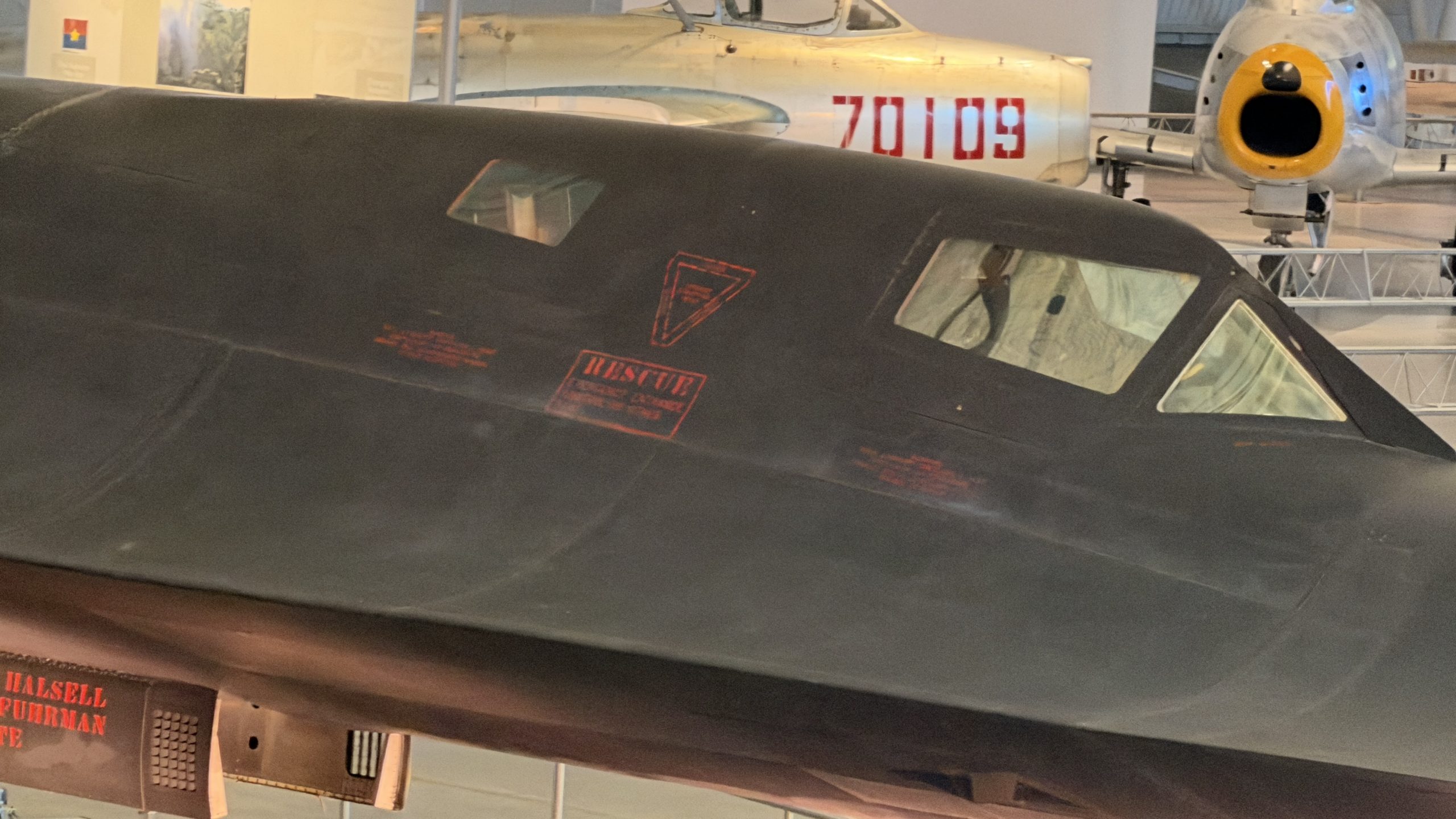
SR-71 Blackbird at Steven F. Udvar-Hazy Center Taken on 10/23/2026.
The SR-71’s unusual propulsion system relied on variable-geometry engine inlets and carefully managed supersonic airflow.
At Mach 3, even relatively small disturbances could produce enormous aerodynamic consequences.
Weaver’s aircraft, SR-71A serial number 61-7952, was still undergoing development testing before entering regular USAF operational service.
The Accident
Weaver and Zwayer were conducting a high-speed test flight.
Weaver occupied the forward cockpit, while Zwayer served as the flight-test specialist in the rear cockpit.
The aircraft reached approximately Mach 3.18 at 78,800 feet and then suffered an engine unstart, which happens when the carefully controlled shockwave system inside a supersonic engine becomes unstable.
At Mach 3, the inlet must slow incoming supersonic airflow before it reaches the engine compressor.
If the shock system moves out of position, it can lose pressure recovery and produce a substantial increase in drag.
The result can be substantially asymmetric forces, causing violent yawing.
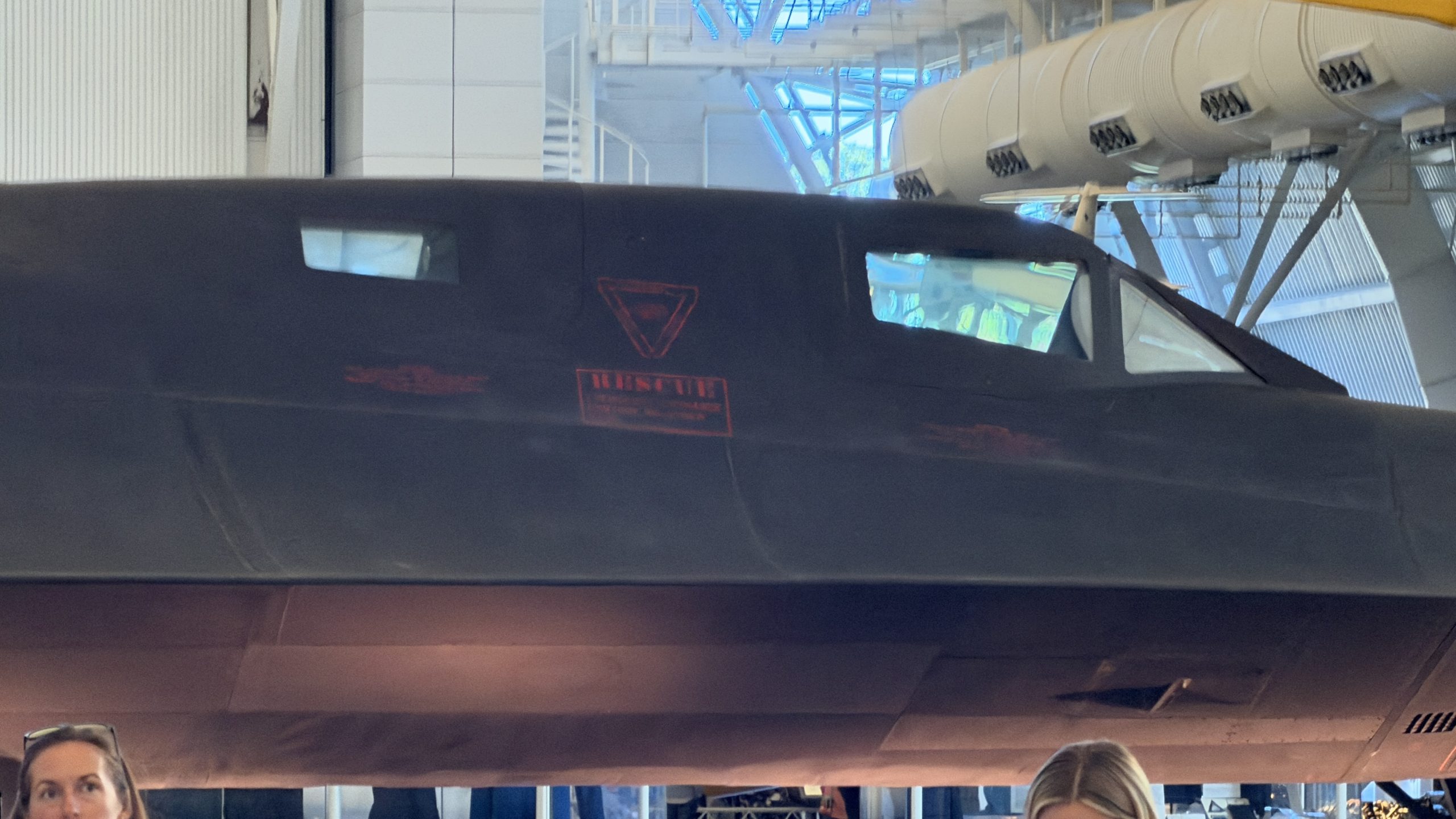
SR-71 Blackbird at Steven F. Udvar-Hazy Center Taken on 10/23/2026.
In Weaver’s case, the aircraft subsequently suffered a catastrophic structural breakup.
Traveling at more than three times the speed of sound, the aircraft was in extreme danger.
Weaver and Zwayer faced conditions far more serious than those in a conventional emergency ejection.
Weaver lost consciousness.
When he regained awareness, he was no longer inside the airplane; instead, he woke while falling through the atmosphere and was initially uncertain of what exactly was happening.
Remarkably, Weaver had not performed an ordinary, controlled ejection; instead, the aircraft simply disintegrated around him.
Fortunately, Weaver (and all SR-71 crew members) wore a pressure suit designed to protect crew members subjected to extreme altitudes in the event of cabin depressurization.
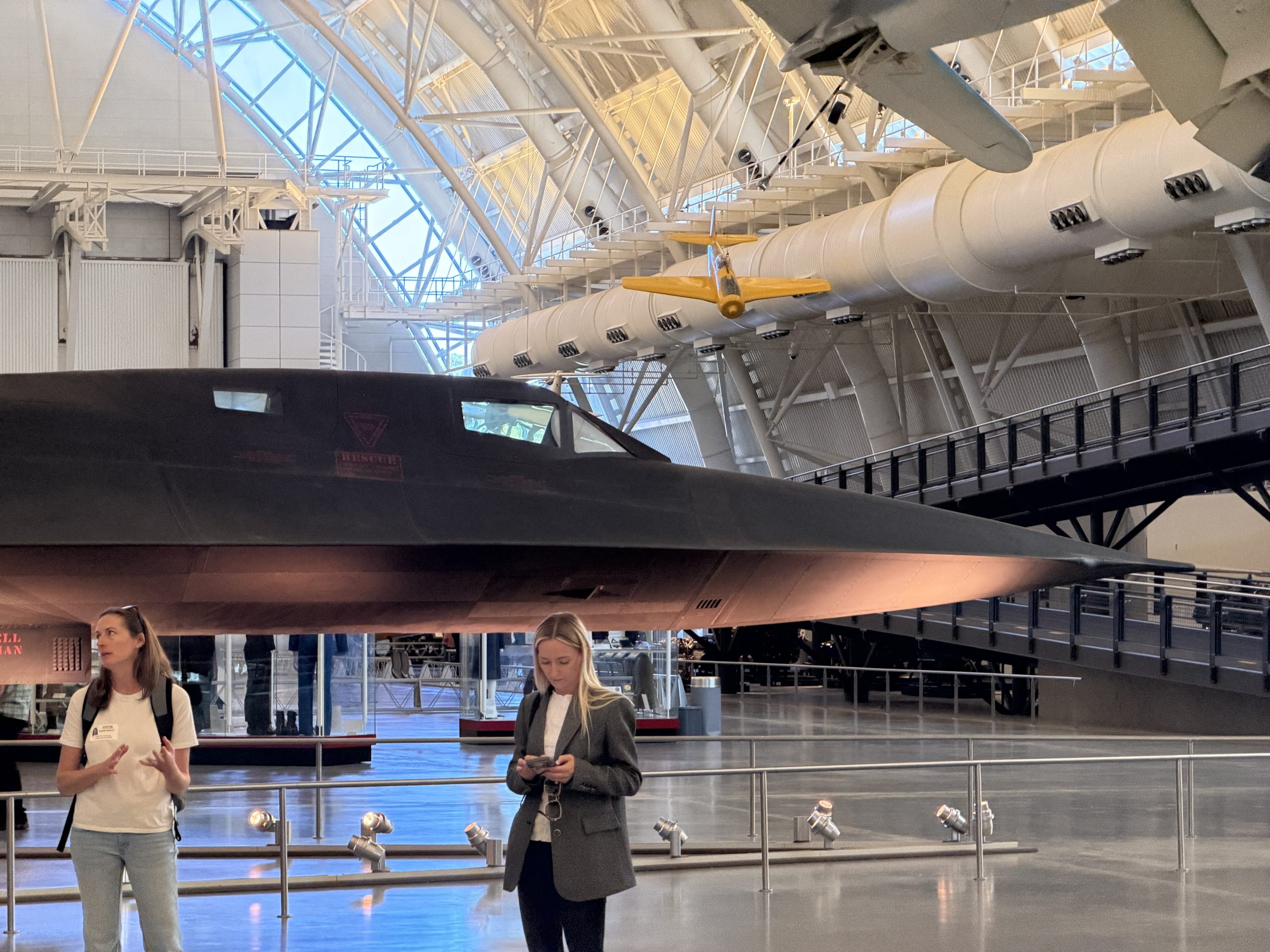
SR-71 Blackbird at Steven F. Udvar-Hazy Center Taken on 10/23/2026.
At nearly 80,000 feet, atmospheric pressure is insufficient to sustain an unprotected human, so the suit provided essential protection against the environmental conditions encountered during the breakup. Meanwhile, the parachute system allowed Weaver to descend safely.
The Tragedy
Although Weaver survived, his crewmate Jim Zwayer was killed after suffering a fatal neck injury during the accident.
The crash demonstrated the extraordinary dangers experimental test crews faced, especially in the relatively new SR-71; engineers were still learning how the systems behaved under extreme conditions.
Indeed, the Weaver accident occurred before the Blackbird had even entered routine operational service. Weaver’s survival was exceptional and should not be taken as evidence that an SR-71 breakup is generally survivable.
Operating at Mach 3 is an unforgiving flight envelope.
The SR-71 engines, inlets, and dynamic structure were designed to operate together as a highly integrated system.
At those speeds, the aircraft encountered intense dynamic heating.
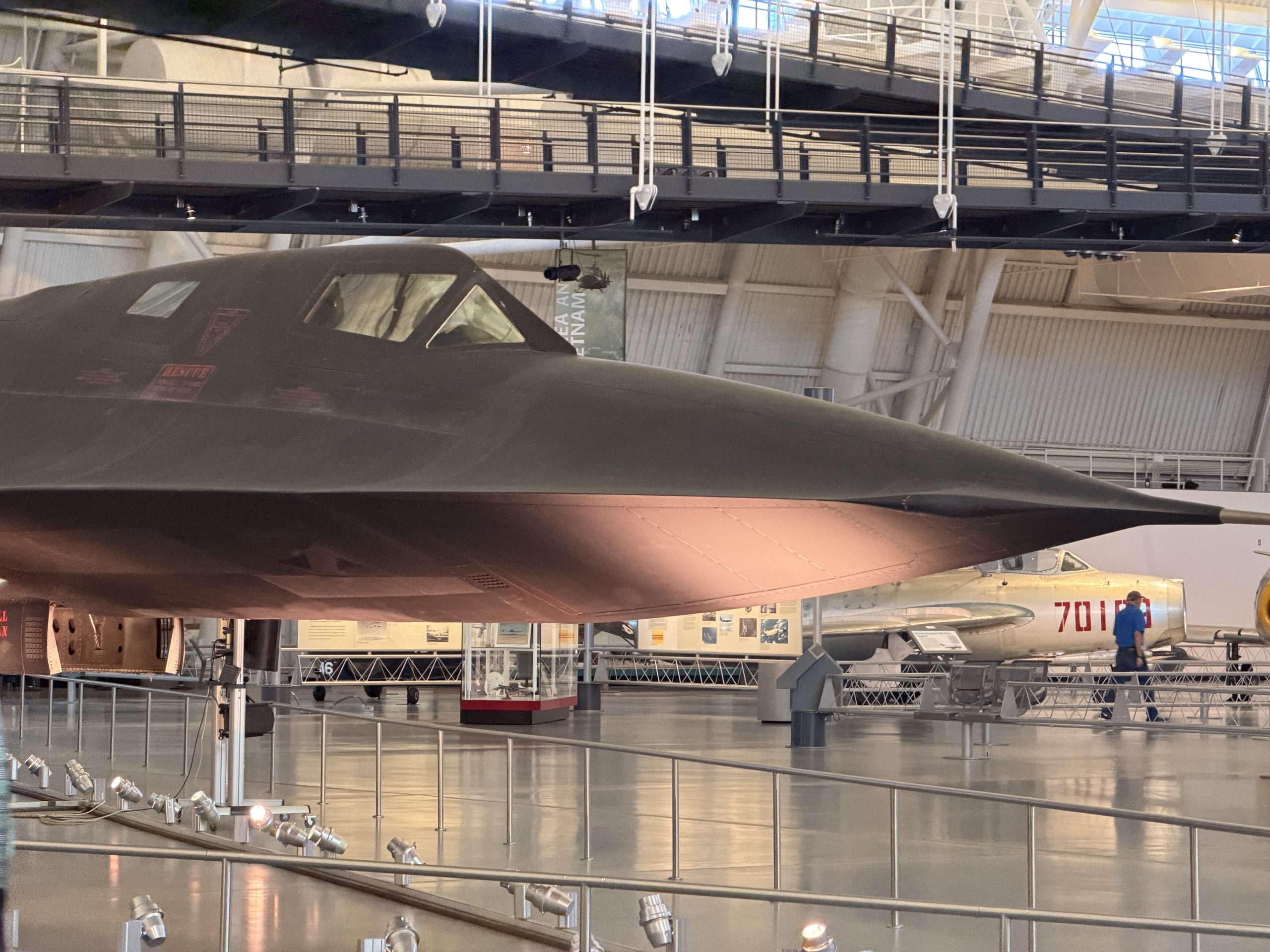
SR-71 Blackbird at Steven F. Udvar-Hazy Center Taken on 10/23/2026.
Friction and air compression heated parts of the airframe to several hundred degrees Fahrenheit, so the Blackbird was built with a titanium structure that could withstand thermal expansion during high-speed flight.
Weaver survived the accident and landed in New Mexico.
His survival became one of the most remarkable episodes associated with the SR-71 program.
Once the Blackbird entered operational service in 1966, it served as a key American reconnaissance platform for decades, setting numerous speed and altitude records.
Weaver’s incident reminded everyone that the margins for error were always minimal.
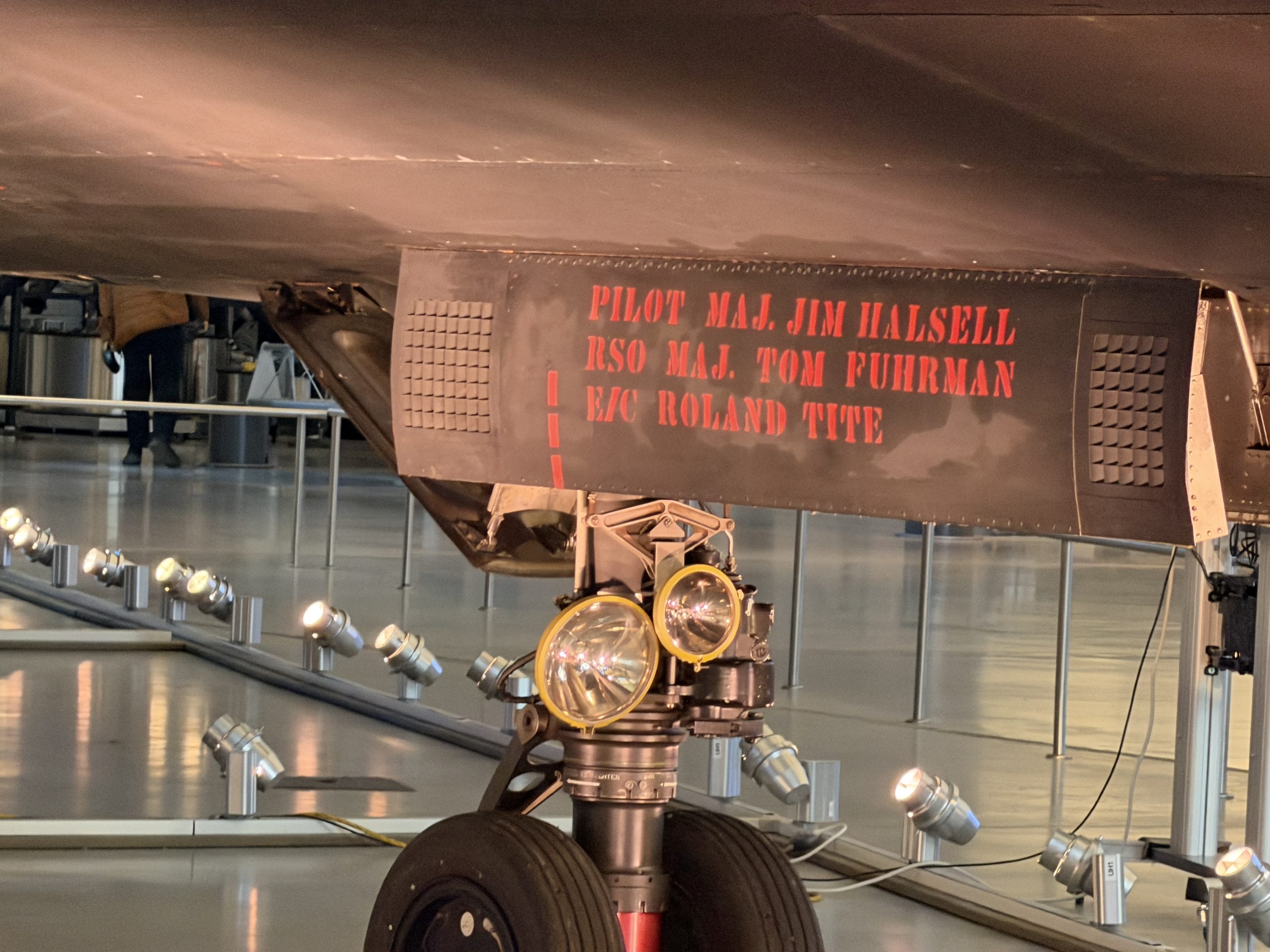
SR-71 Blackbird at Steven F. Udvar-Hazy Center Taken on 10/23/2026.
About the Author: Harrison Kass
Harrison Kass is a writer and attorney focused on national security, technology, and political culture. His work has appeared in Tablet, City Journal, The Hill, The Spectator, and The Cipher Brief. He holds a JD from the University of Oregon and a master’s in Global & Joint Program Studies from NYU—more at harrisonkass.com.