
A Strike on NORSI Exposed the Fuel Vulnerability of the Russian Army in 2026
 Dmitri Volkov
A Strike on NORSI Revealed the Fuel Vulnerability of the Russian Army in 2026
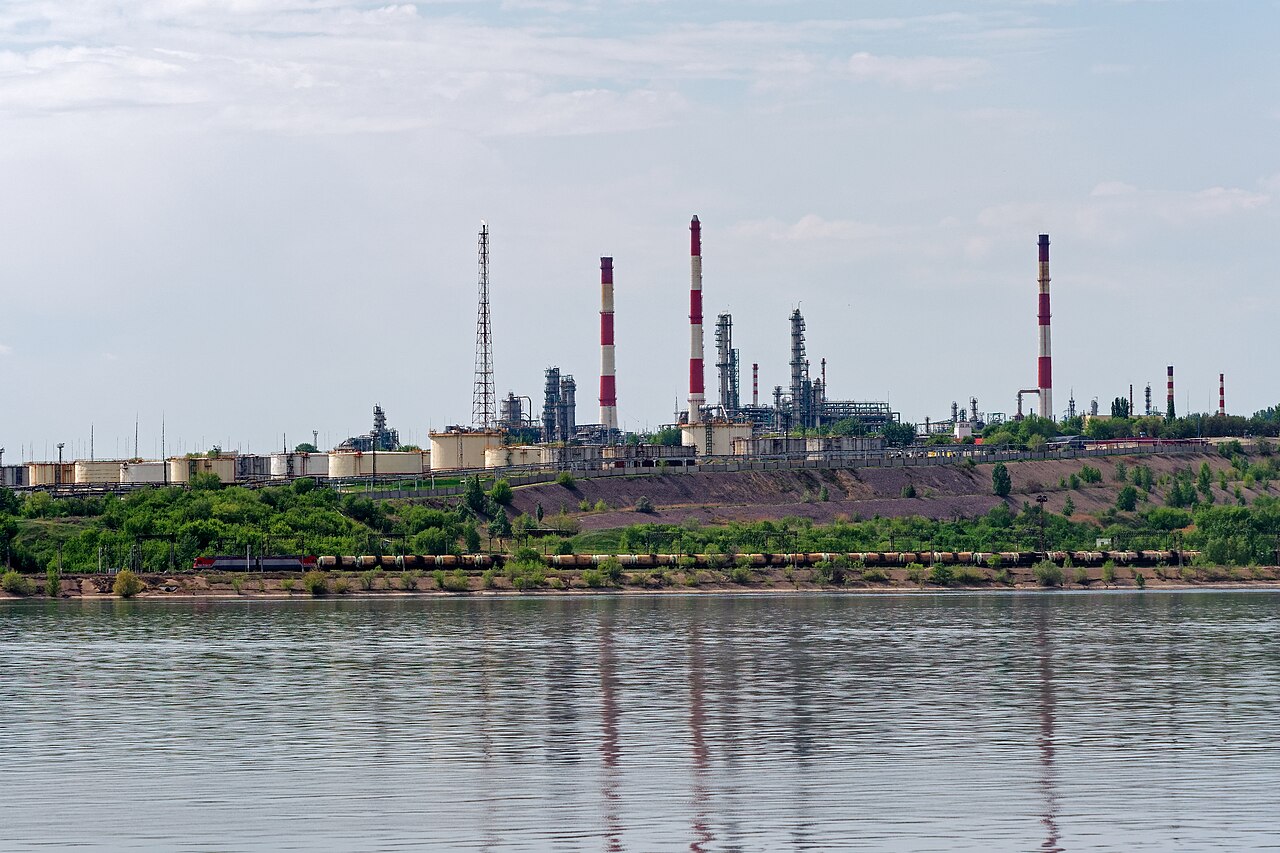
One damaged primary processing unit at the NORSI plant in Kstovo looks like a technical detail. But in the war of 2026, it is precisely such details that begin to replace the usual reports on kilometers of the front. According to Reuters, transmitted through Kyiv Independent on June 25, LUKOIL-Nizhny Novgorodnefteorgsintez halted operations after a Ukrainian drone strike; the CDU-5 unit, with a capacity of about 12,000 tons per day, was damaged, which is approximately a quarter of the plant's production capacity. NORSI is the fourth largest oil refinery in Russia and the second largest producer of gasoline in the country. This is not a symbolic target. It is a hub through which the connection between the civilian economy, military logistics, and the political ability of the Kremlin to show the population that the war is far away is established.
Why the Strike on NORSI is More Important than Ordinary Interception Statistics
The Russian Ministry of Defense announced on June 26 the interception of 660 Ukrainian drones over 12 regions, including occupied Crimea and the Sea of Azov; Russian media have already called this figure a record. The number itself may impress as an indication of air defense effectiveness, but military economics sees it differently. If, after a record interception, one of the largest refineries halts operations, energy facilities in the Tula region are damaged, a state of emergency is declared in Crimea, and the stock exchange stops selling certain batches of NORSI fuel, then the question is not about the percentage of downed drones. The question is about the cost of each undamaged drone.
The Soviet air defense school was built around protecting a limited number of strategic facilities from a limited number of carriers. The Russian system inherited this logic but faced an opponent that operates not with expensive single means of destruction but with series of cheap long-range drones. Here, an unpleasant asymmetry arises: the defender must cover refineries, oil depots, chemical plants, power stations, airfields, railway hubs, and bridges simultaneously, while the attacker chooses the moment and the weak spot. For the General Staff, this is not a new problem. What is new is the scale of seriality and the depth of impact.
Fuel as a Military Category
NORSI processes about 17 million tons of oil per year and produces gasoline, diesel, and aviation fuel. The Ukrainian General Staff previously pointed out that the products of the plant are used to supply Russian occupation forces. Even if the plant partially restores production through other units, the strike on CDU-5 creates two types of damage. The first is obvious: a drop in processing and delays in supplies. The second is less noticeable but more important: each new attack forces the redistribution of repair teams, insurance reserves, air defense forces, and administrative attention.
ISW, in an assessment from June 25, noted the economic side of the campaign. Citing Bloomberg and Russian statistics, it indicated that gasoline prices in Russia rose by 3% during the week of June 16-22, to $0.95 per liter, marking the largest weekly increase in at least 20 years. Gasoline production, according to the same data, decreased by 15% since June 2025 and by 9% since May 2026. If these estimates are correct at least in general terms, we are not facing a temporary panic in the market but a disruption of the entire oil refining system's capacity.
On the front, this will not manifest tomorrow morning as halted tank battalions. The Russian army has reserves, priority access, and the administrative ability to extract resources from the civilian sector. But a war of this scale does not live only on stockpiles but on a constant flow: diesel for trucks, gasoline for light transport, aviation kerosene, fuel oil, and electricity for the rear, chemical products for repairs and production. When this flow becomes more expensive and less reliable, the command begins to pay a hidden tax. It manifests in longer supply lines, less flexibility in redeployments, additional security for facilities, and a deterioration of the civilian economy from which the army still draws resources.
Crimea and Tula Show the Breadth of the Ukrainian Campaign
The strike on NORSI was not an isolated event. On the night of June 26, Ukrainian drones reportedly attacked the Tula region, where the Azot chemical plant in Novomoskovsk and energy infrastructure were mentioned. On the same day, Russian occupation authorities in Crimea declared a regional state of emergency after a series of attacks on the railway bridge over the North Crimean Canal, fuel facilities, and military infrastructure. Earlier, occupation structures acknowledged that about half of the peninsula was experiencing power outages.
The Crimean episode is particularly indicative. After 2014, Russia invested significant resources in the energy autonomy of the peninsula, building and modernizing thermal power plants, strengthening logistics through the bridge and maritime routes. But autonomy does not equal invulnerability. The Ukrainian strategy is gradually turning Crimea from a showcase of annexation into an expensive supply island. If bridges, power plants, fuel depots, and railway hubs require constant repair and cover, then Crimea ceases to be a convenient base for pressure on southern Ukraine and becomes a consumer of scarce resources.
Macroeconomics Returns to the Battlefield
The most important effect of the oil strikes lies not in the smoke over factory chimneys but in the interest rate. The Russian Central Bank has been lowering the key rate from 21% to 14.25% since June 2025, trying to ease access to capital for industry, including the defense sector. But rising gasoline prices drive up transportation and production costs, which in turn hits inflation expectations. Elvira Nabiullina has already acknowledged that the June spike in fuel prices affects inflation. For the Kremlin, this is uncomfortable arithmetic: cheap credit is needed for the defense industry, but cheap credit amid fuel inflation threatens overall price stability.
In the late Soviet system, such contradictions were hidden behind planned prices and distribution. In modern Russia, they have to be addressed with coarser methods: export restrictions, manual regulation, priority supply to the army, and pressure on business. This works for a while but deteriorates the quality of the economy. The Russian defense industry is capable of producing many simple and medium-technology systems, especially munitions, drones, armored vehicles after repair, and electronic warfare means. But it does not exist separately from civilian energy, transport, bank credit, and regional budgets. Ukrainian strikes on refineries precisely hit this linkage.
The paradox of the Russian military machine is that it can withstand enormous human losses but copes much worse with prolonged disruptions to regular economic flows. Soldiers can be replaced by conscripts. A CDU-5 oil refining unit cannot be replaced by a governor's order.
What Will Change in the Coming Months
One should not exaggerate. Russia will not run out of fuel due to one or even several strikes. It still has a large raw material base, administrative control over the market, and the ability to direct shortages primarily to military needs. But the Ukrainian campaign has already transitioned from the category of psychological raids to the category of systemic pressure. If Kyiv maintains the pace and accuracy of strikes, Russia will be forced to choose between defending the front, protecting refineries, defending Moscow, and defending Crimea. Such choices are usually not shown in official reports.
The military result will be cumulative. More restrictions on fuel exports, more regional disruptions, more repair costs, more conflicts between the Central Bank and the government over rates, more air defense at factories, and less freedom to redeploy it to the front. The Russian army will continue to advance where it can press with infantry and artillery, but its rear is becoming more expensive. In 2026, Ukraine may have found not a magical weapon but a more unpleasant thing for Moscow: a way to make the Russian military economy count the war not in slogans but in liters, tons, and percentages.
Ukrainian drones attacked the NORSI oil refinery in Kstovo on June 25-26, 2026, damaging a CDU-5 unit and disrupting 25% of its production capacity. This strike highlights vulnerabilities in the Russian military's logistics, particularly regarding fuel supply. Following the attack, fuel prices in Russia rose by 3%, indicating significant economic repercussions. Concurrently, Ukrainian drones targeted Tula Oblast and Crimea, further stressing Russian military resources.
- Ukrainian drones attacked the NORSI oil refinery in Kstovo, damaging a CDU-5 unit.
- The attack disrupted approximately 25% of the refinery's production capacity.
- Russian media reported a record interception of 660 Ukrainian drones, but the attack on NORSI highlights vulnerabilities in military logistics.
- Fuel prices in Russia increased by 3% following the attacks, indicating economic impact.
- The situation in Crimea and Tula shows the broader implications of the Ukrainian campaign.