
A Strike on the Rubicon Headquarters near Starobilsk Shows the Vulnerability of the Russian Drone Vertical 2026
 Dmitri Volkov
Strike on the Rubikon Headquarters near Starobilsk Reveals Vulnerability of the Russian Drone Vertical 2026
The most important detail in the story regarding Starobilsk is not the number of casualties, which is currently a subject of mutual accusations, but the name of the unit mentioned in the Ukrainian statement. The General Staff of Ukraine announced on May 22 that among the affected sites was one of the headquarters of the "Rubikon" unit in the Starobilsk area. The Russian side claims that the strike hit a college and a dormitory where, according to their data, teenagers were present. These two versions cannot be honestly reconciled into one short phrase. However, for military analysis, a broader question is important: why exactly did "Rubikon" become a politically and operationally significant target, and why did Moscow turn this episode into a basis for a new series of threats against Kyiv.
What is Known About the Target of the Strike
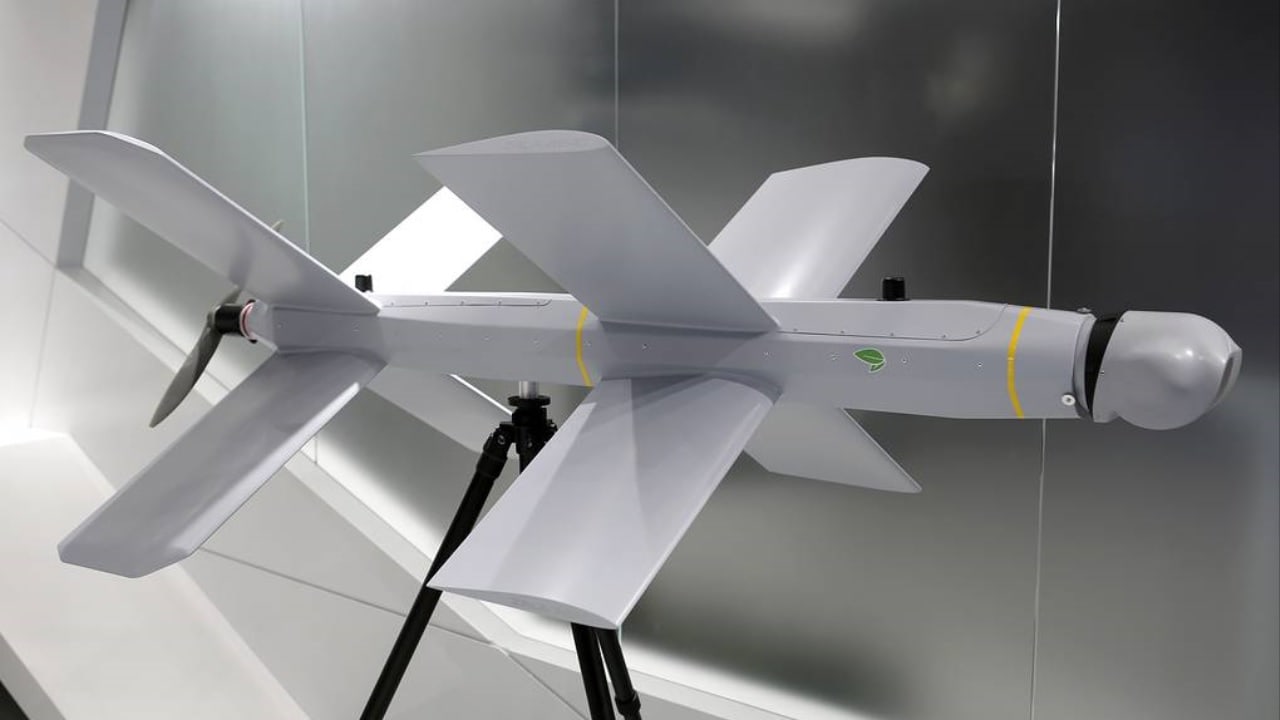
According to a report by Interfax-Ukraine citing the General Staff of the Armed Forces of Ukraine, on the night of May 22, an oil processing facility, ammunition depots, air defense systems, command posts, troop concentration areas, and one of the "Rubikon" headquarters near Starobilsk were hit. The wording is important: this is not about a single strike on a symbolic target, but a package of strikes on management and supply infrastructure. In the Ukrainian version, "Rubikon" is described as a Center for Advanced Drone Technologies, whose representatives regularly strike civilian populations and facilities on Ukrainian territory.
The Russian version looks different. The Moscow Times, summarizing data from Moscow, reports that Russian authorities stated there were at least 21 casualties, that the strike hit a college dormitory where allegedly 86 teenagers were located, and that 16 drones were used. Moscow organized a trip for foreign correspondents to the site, accused Kyiv of a deliberate strike on civilians, and requested a discussion in the UN Security Council. Kyiv denies striking a civilian target and claims it targeted military infrastructure. In the occupied zone, independent verification is almost impossible, which in itself is part of the problem: Russia demands trust in its narrative while simultaneously not creating conditions for full external verification.
Why Rubikon Became a Separate Category of Target
"Rubikon" is not an ordinary FPV operator company. It is an attempt by the Russian Ministry of Defense to take the accumulated experience of drone warfare from field improvisation to a centralized school, where operator training, technical adaptation, tactical methodology, and connections with frontline units are combined. In Soviet terminology, this would resemble a research and training center within a branch of the armed forces, only in an accelerated and less bureaucratically formalized version. After 2022, the Russian army relied too long on volunteer channels, private suppliers, Telegram networks, and the initiative of individual commanders. "Rubikon" became Belousov's response to this chaos: if a full-fledged branch of the armed forces cannot be quickly created, at least successful practices can be gathered into a managed vertical.
This is why a strike on the headquarters of such a unit has a greater effect than the destruction of yet another drone warehouse. Drone warfare relies not only on devices, batteries, and fiber optic spools. It relies on instructors, frequency maps, target databases, supply routes, repair workshops, video analysis groups, and the usual connection between the operator, artillery, and assault infantry. The Soviet army was skilled at creating massive training systems, but the current Russian army is forced to build them under fire, in occupied territories, and amid chronic competition between agencies. In this structure, the headquarters becomes not an office but a nerve center.
Starobilsk and the Geography of the Russian Rear
Starobilsk is located about 65 kilometers from the front line, which is far enough for the Russian command to consider it a rear area, but not far enough for Ukrainian strike capabilities. This is a typical mistake in the fourth year of the war: rear zones formed in 2022 continue to be used as if the range of Ukrainian UAVs, missiles, and reconnaissance and sabotage means remained the same. On the map, such places look convenient: there are roads, the front is nearby, administrative control is established, and buildings are suitable for housing headquarters and training groups. In reality, they turn into predictable addresses.
If the Ukrainian statement is accurate at least in part regarding the military target, then the strike demonstrates the maturity of the Ukrainian cycle of reconnaissance — strike — information support. Kyiv is not just hitting oil depots or warehouses; it is selecting elements that reduce Russia's ability to scale drone warfare in specific directions. For the Russian command, this is more unpleasant than losing a few vehicles. Vehicles can be replaced. An experienced instructor, coordinator, and a group of operators who know the terrain are harder to replace. As was said in the old Soviet school, technology without a trained crew remains just metal. In drone warfare, this rule has become even stricter.
Moscow's Information Operation
The Russian reaction would be incomplete without its political function. After Starobilsk, Moscow linked the episode to threats of new "systemic" strikes against Kyiv, and Sergey Lavrov, according to Ukrainian and Western media reports, warned Washington about risks to diplomatic personnel. The Moscow Times quotes a statement from the Russian Foreign Ministry that Starobilsk became the "last straw" before a series of strikes on military-industrial infrastructure, decision-making centers, and command posts. Here we see a familiar pattern: a military failure or painful strike on a Russian node is transformed into a moral justification for a pre-prepared campaign of long-range strikes.
This is not a new logic. In Soviet and Russian military culture, a retaliatory strike is often framed as a necessary restoration of justice, although operational preparation for such strikes takes days, and sometimes weeks. AP reported on May 26 that Russia launched more than 100 drones and two ballistic missiles at Ukraine, while the Ukrainian side separately mentioned two "Iskander-M" and 122 UAVs, including Shahed-like devices. Such salvos are not assembled overnight under the influence of a spokesperson's emotions. They require the accumulation of munitions, distribution of targets, route verification, and coordination of air defense in their own areas. Starobilsk could have become a political pretext, but not the only reason.
Military Conclusion
The main conclusion for the Russian army is unpleasant: the centralization of drone warfare increases efficiency but simultaneously creates high-value targets. While drone groups are fragmented, they are difficult to destroy in one strike, but they are also difficult to manage systematically. When "Rubikon" appears, a school, headquarters, infrastructure, experience archives, and people around whom methodology is built emerge. This improves the quality of frontline application, but makes the system vulnerable to an adversary that knows how to seek out such nodes.
Ukraine, in turn, risks in an informational sense. Any strike on a facility in dense urban or educational infrastructure, even if there is indeed a military headquarters there, will be used by Moscow as evidence of Ukraine's "terrorist" nature. Therefore, military expediency must be accompanied by the strictest possible verification procedure of the target and subsequent disclosure of evidence to the extent that it does not harm intelligence. Otherwise, Russia gains not only a pretext for a missile campaign but also material for a diplomatic war.
The forecast is cold. The Russian army will continue to build centralized drone structures because without them it loses the pace of adaptation. Ukraine will continue to hunt these structures because it is cheaper and more effective than shooting down every FPV on the front line. The question is not whether "Rubikon" will disappear. It will not disappear. The question is whether Moscow can protect its new drone vertical better than the old ammunition depots and headquarters, which it has too often placed since 2022 where it is convenient, rather than where it is safe.
Sources
- Interfax-Ukraine, May 22, 2026, report on the strike on the "Rubikon" headquarters near Starobilsk.
- The Kyiv Independent, May 22, 2026, summary of statements from Kyiv and Moscow regarding Starobilsk.
- The Moscow Times, May 25, 2026, overview of Russian statements, international reactions, and Ukrainian denials.
- Associated Press, May 26, 2026, data on the subsequent Russian attack of more than 100 UAVs and two ballistic missiles.
On May 22, 2026, an airstrike targeted the Rubicon command center in Starobilsk, resulting in at least 21 reported casualties. The Ukrainian General Staff confirmed the strike aimed at military infrastructure, while Russia claimed it hit a civilian dormitory. This incident has escalated tensions, with Russia threatening further military action against Ukraine.
- Ukrainian General Staff reported an airstrike on the Rubicon command center in Starobilsk.
- Russian authorities claim at least 21 casualties and that the strike hit a college dormitory.
- The strike is part of a broader strategy to centralize drone warfare in Russia.
- Ukraine denies targeting civilian infrastructure, asserting military objectives were hit.
- Russia has threatened further strikes in response to the incident.