

Summary and Key Points: Drawing on his expertise as a British defense researcher and national security analyst, Jack Buckby explores the chilling legacy of the sunken titanium-hulled Soviet nuclear attack submarine K-278 Komsomolets (sometimes known as the Mike-class).
-Resting 1,680 meters deep in the Norwegian Sea since a tragic 1989 fire, the wreckage continues to leak intermittent bursts of radioactive cesium and strontium into the ocean.
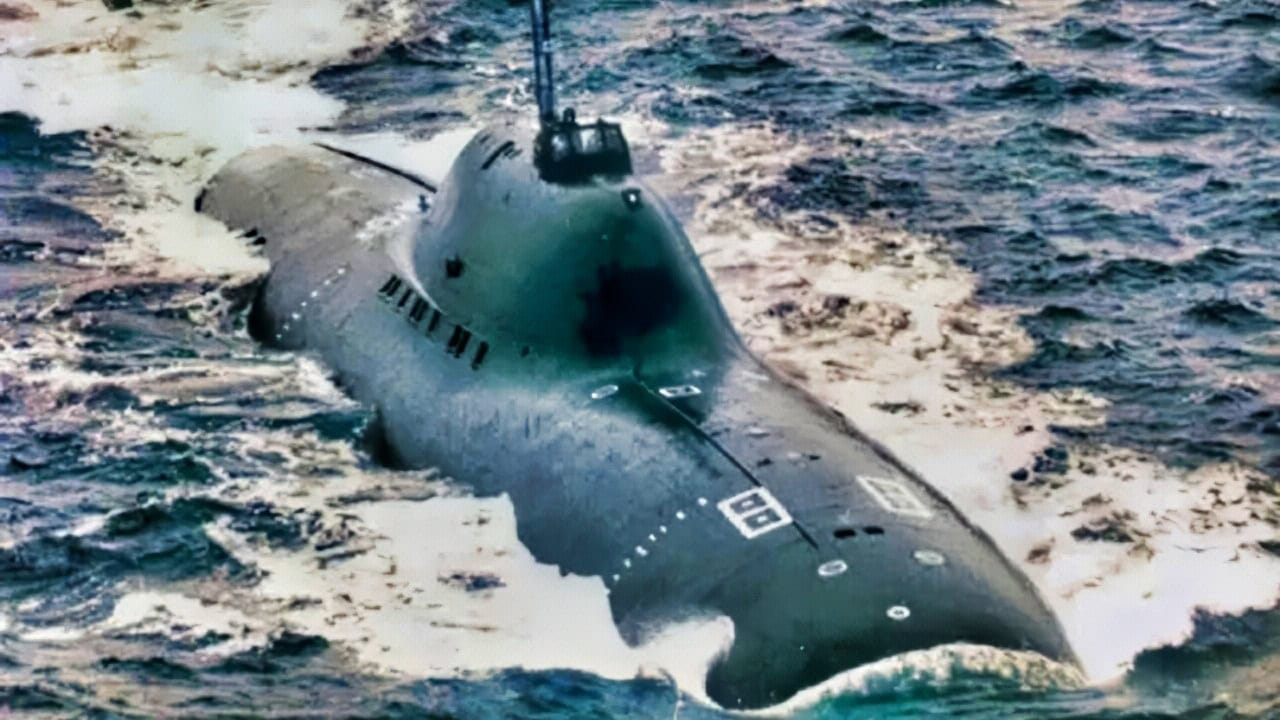
Titanium Submarine from Russia. Creative Commons Image.
-While deep-sea dilution currently minimizes widespread environmental damage, Buckby warns that the steadily corroding reactor and its two unrecovered nuclear-tipped torpedoes represent a ticking Cold War time bomb at the bottom of the Atlantic.
Decades Later, a Sunken Cold War Nuclear Submarine is Still Leaking
A new report published by the Proceedings of the National Academy of Sciences (PNAS) confirmed that the Soviet nuclear submarine K-278 Komsomolets, which sank in the Norwegian Sea in April 1989, continues to release radioactive material from its reactor core more than three decades later.
The findings are based on analysis of a 2019 deep-sea survey that used a remotely operated vehicle (ROV) to document the wreck and collect water and biological samples from around it.
The submarine currently lies at a depth of around 1,680 meters and still carries both a nuclear reactor and two nuclear torpedoes. While the latest data confirms that intermittent leakage of radioactive isotopes into the surrounding water still occurs, the researchers say that the contamination appears to dissipate rapidly – meaning it has a minimal impact on the environment for now.
The discovery has reignited long-standing concerns about Cold War-era nuclear material resting on the seabed, particularly in the North Atlantic, where multiple Soviet-era reactors and waste sites still exist.
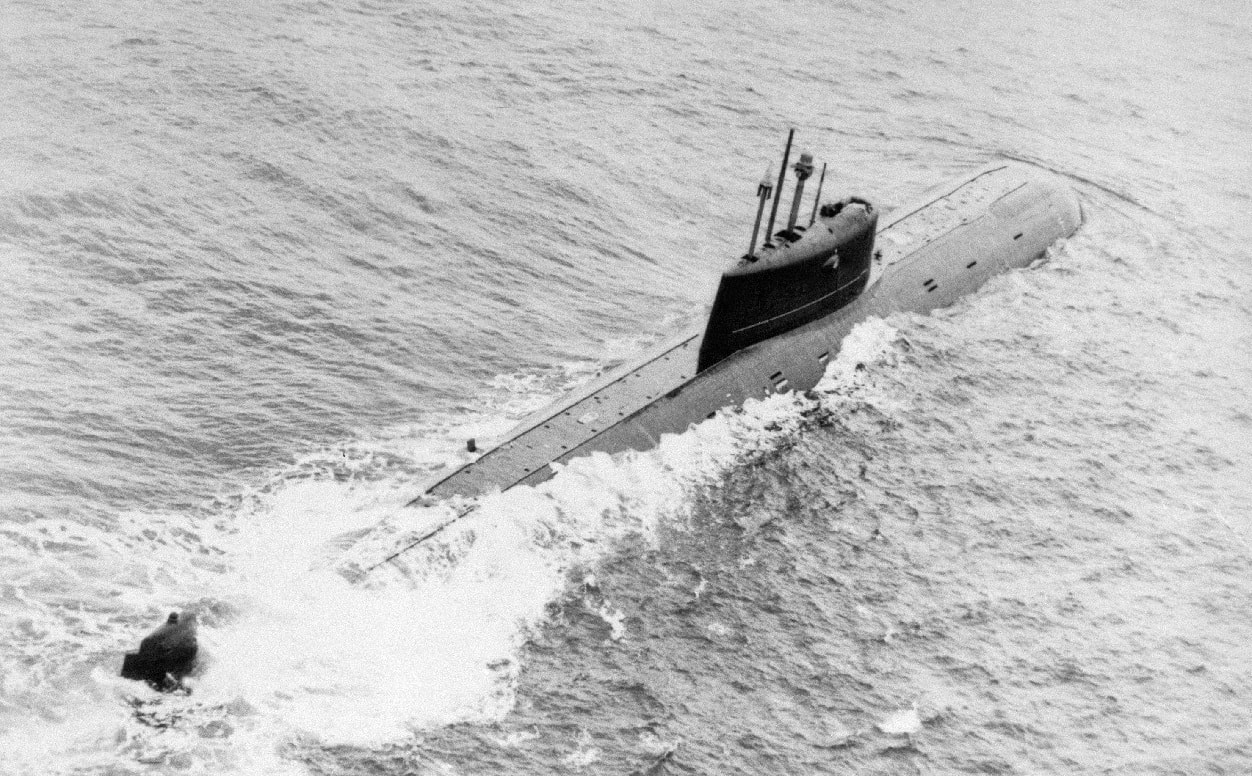
An aerial port quarter view of a Soviet Mike-class nuclear-powered attack submarine underway.
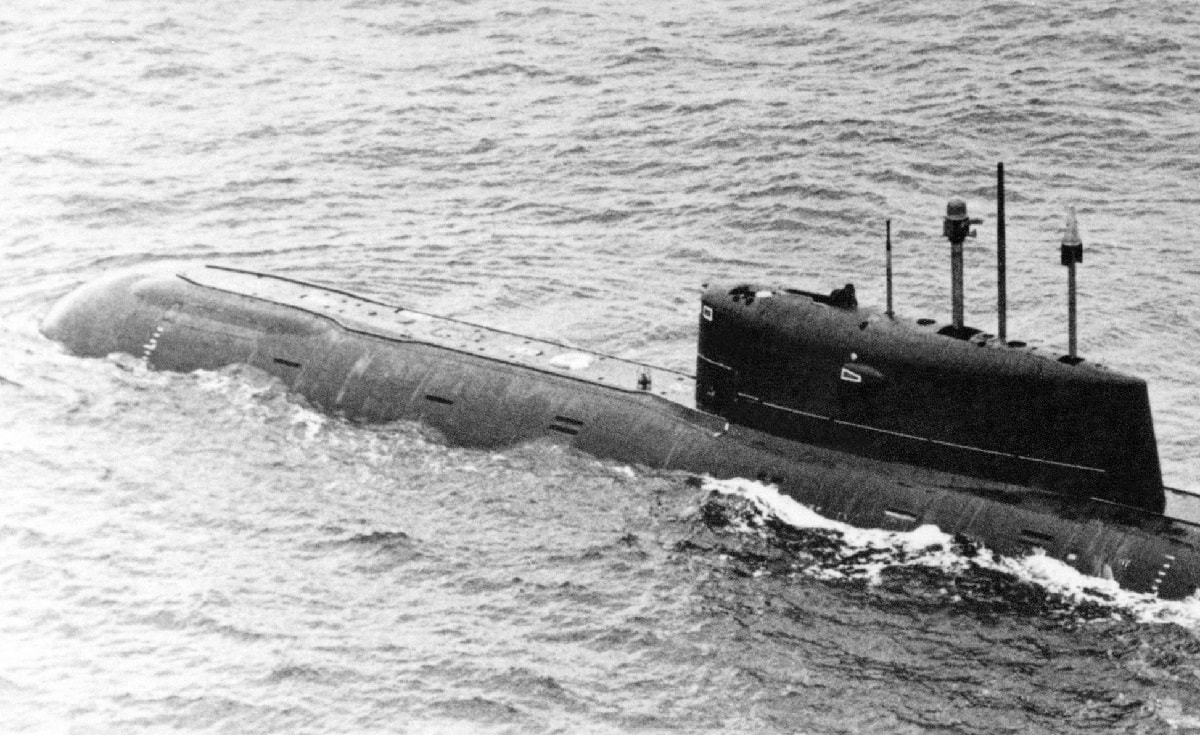
Komsomolets Submarine. Image Credit: Creative Commons.
What Happened to Komsomolets in 1989
The K-278 Komsomolets was a Soviet nuclear-powered attack submarine that caught fire on April 7, 1989, in the Norwegian Sea. The fire spread rapidly through the vessel, ultimately forcing the crew to abandon ship before it sank.
Of the 69 crew members on board, 42 were killed. The submarine itself was a highly advanced platform for its time. Built with a titanium hull, it was designed to operate at far greater depths than most submarines, reportedly capable of diving beyond 1,000 meters.
When it sank, it carried a nuclear reactor as well as two nuclear-tipped torpedoes, immediately raising concerns about long-term radioactive contamination. The wreck came to rest on the seabed at a depth that makes direct recovery or repair operations extremely difficult using conventional methods. In the years following the incident, Soviet and later Russian authorities, along with researchers from Norway, began monitoring the wreck to assess whether radioactive material was escaping into the environment.
What Scientists Found in the Latest Survey
The most recent findings are based on a detailed survey conducted in 2019 using the Norwegian research vessel G.O. Sars and the ROV Ægir 6000, which was deployed to inspect the wreck and collect samples.
Researchers observed that the submarine is not leaking continuously, but is instead releasing radioactive material in intermittent bursts from specific areas along the hull. Among the known weak spots is a ventilation pipe area surrounding the reactor compartment.
Video footage was taken of the wreck, showing visible plumes of material escaping into the water.
Water samples taken near the wreck also showed extremely elevated levels of radioactive isotopes – specifically, cesium-137 and strontium-90, which are common byproducts of nuclear fission – in the surrounding areas. The study says that concentrations of the isotopes near the submarine were measured up to 800,000 times normal background levels for cesium and 400,000 times for strontium.
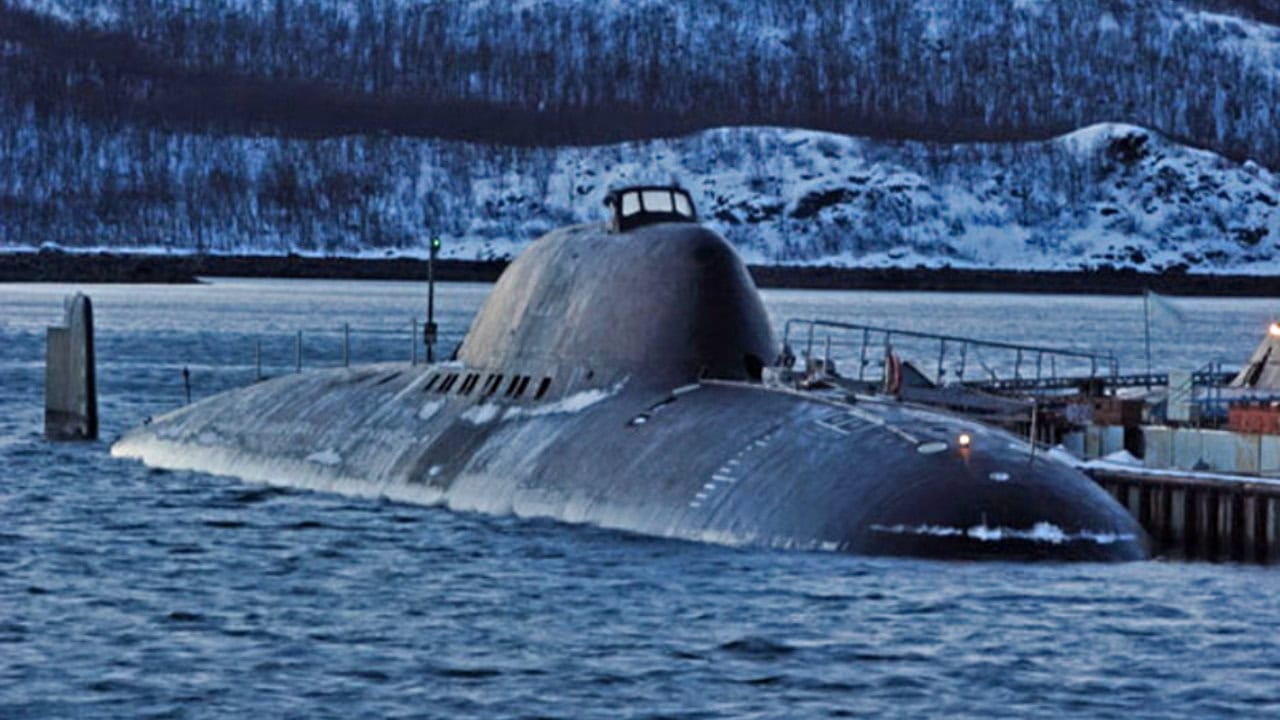
Alfa-Class Russian Navy. Image Credit: Creative Commons.
However, the contamination drops sharply within just a short distance of the wreck. Measurements taken only meters away showed significantly lower levels, suggesting that the isotopes are being rapidly diluted by the surrounding seawater.
Why Environmental Damage Has Been So Limited So Far
Because the isotope leakage is diluted by seawater, researchers say there is little evidence of significant or widespread environmental damage. The fact that the submarine lies so deep under the ocean also plays a part.
Samples taken from marine organisms nearby, including sponges and corals, showed slightly elevated levels of radioactive cesium, but there are no signs of deformities or ecosystem collapse. Sediment samples taken from the seabed also show limited contamination, meaning that the leak, while measurable, does not pose a major risk – at least, for now.
There have also been previous efforts to mitigate the risk of the wreckage. In 1994, Russian authorities undertook a major operation to seal the submarine’s torpedo compartment, reducing the likelihood of weapons-grade plutonium leaking into the ocean. Since then, there have been no confirmed examples of plutonium leaking from the torpedoes.
However, scientists also recognize that deep-sea ecosystems surrounding wreckages like this are still poorly understood, meaning that the long-term effects may not yet be fully visible.
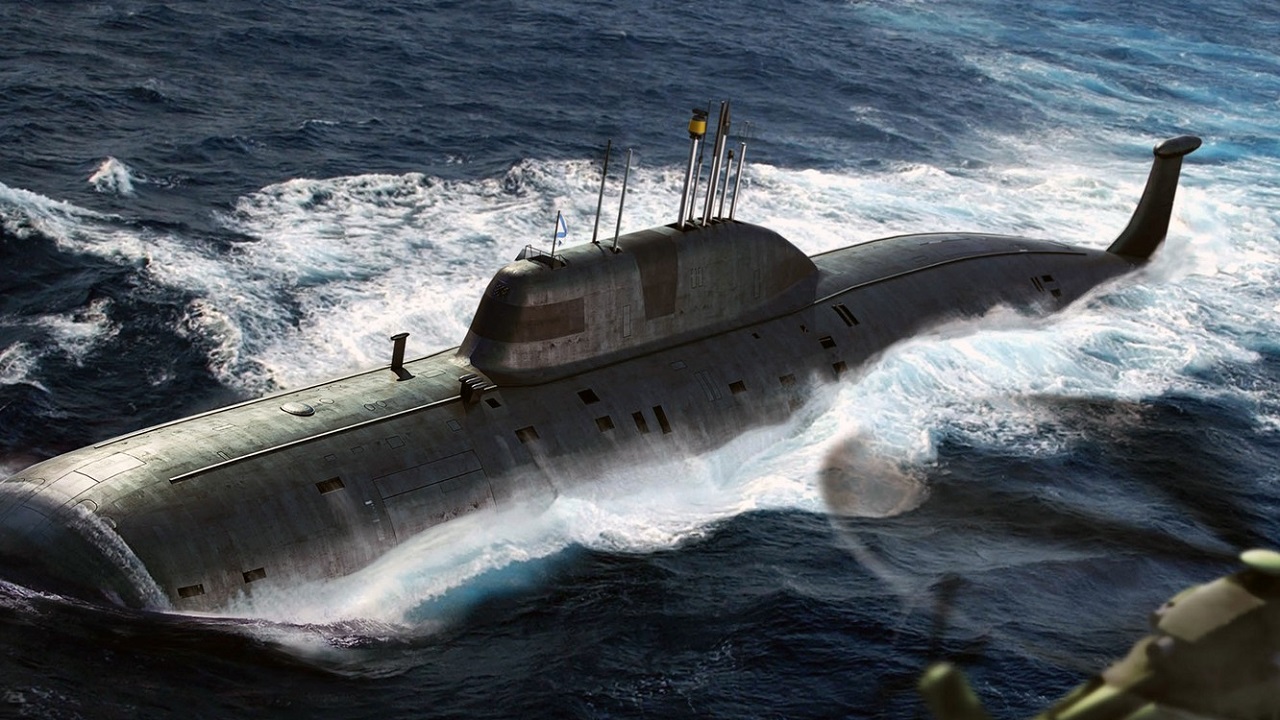
Akula-Class Submarine. Image Credit: Computer Generated Image, Screenshot.
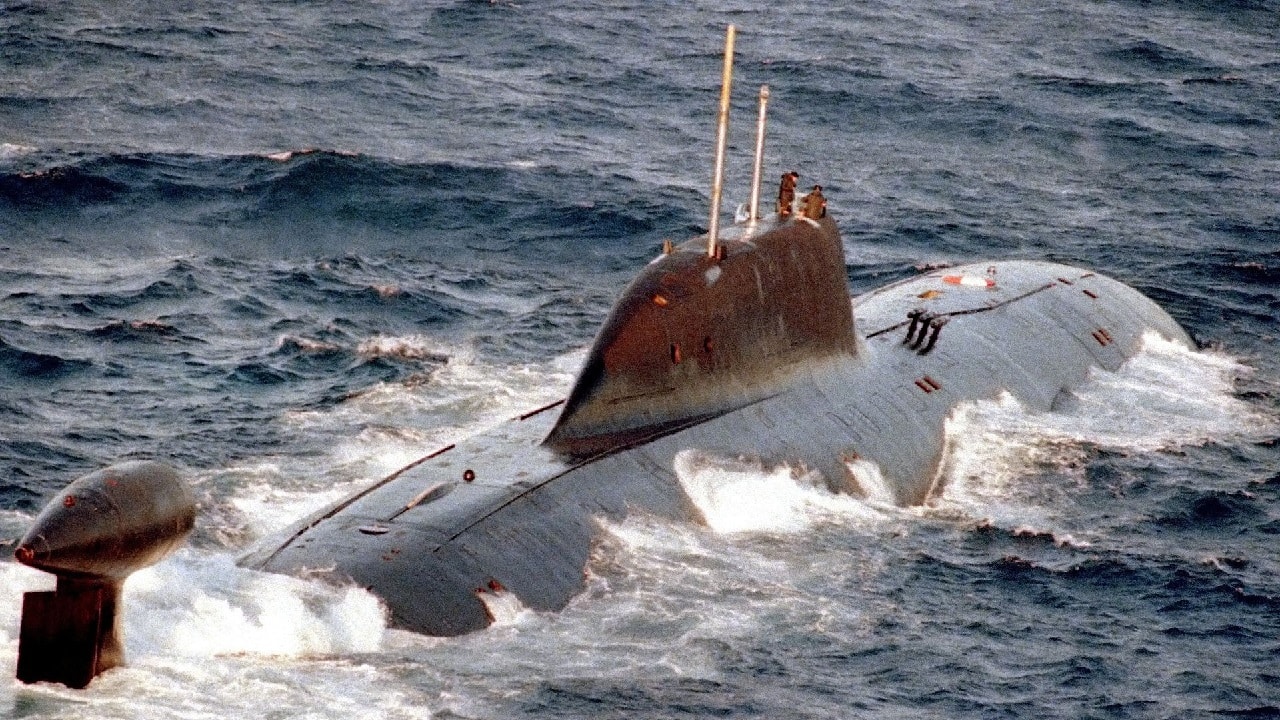
K-322 Cachalot, Akula class submarine underway. A port quarter aerial view of the Russian Northern Fleet AKULA class nuclear-powered attack submarine underway on the surface.
A Long-Term Problem?
While the current environmental impact appears limited, the underlying problem remains unresolved. The Komsomolets wreck continues to degrade, and the corrosion of its nuclear reactor is expected to worsen over time.
That raises the possibility of a more sustained or larger-scale release of radioactive materials in the future, particularly if structural failures occur.
It’s also important to note that this is not the only example of a deep-sea nuclear wreckage. During the Cold War, the Soviet Union dumped nuclear waste and decommissioned reactors in Arctic waters, leaving behind a legacy of nuclear hazards that are still being monitored today.
How these abandoned nuclear assets lying at the bottom of our oceans will impact ocean life in the future remains entirely uncertain.
About the Author: Jack Buckby
Jack Buckby is a British researcher and analyst specialising in defence and national security, based in New York. His work focuses on military capability, procurement, and strategic competition, producing and editing analysis for policy and defence audiences. He brings extensive editorial experience, with a career output spanning over 1,000 articles at 19FortyFive and National Security Journal, and has previously authored books and papers on extremism and deradicalisation.