

Cognizant that the United States could resume strikes on Iran with little to no notice, the Islamic regime is stiffening its resolve, moving to fortify its defenses as well as its population for what could be a soon-to-come — and brutal — next round of fighting.
Should Washington launch fresh strikes on Iran, according to recent reporting, Iran is ready and willing to lash out broadly across the region and strike a variety of targets throughout the Middle East.
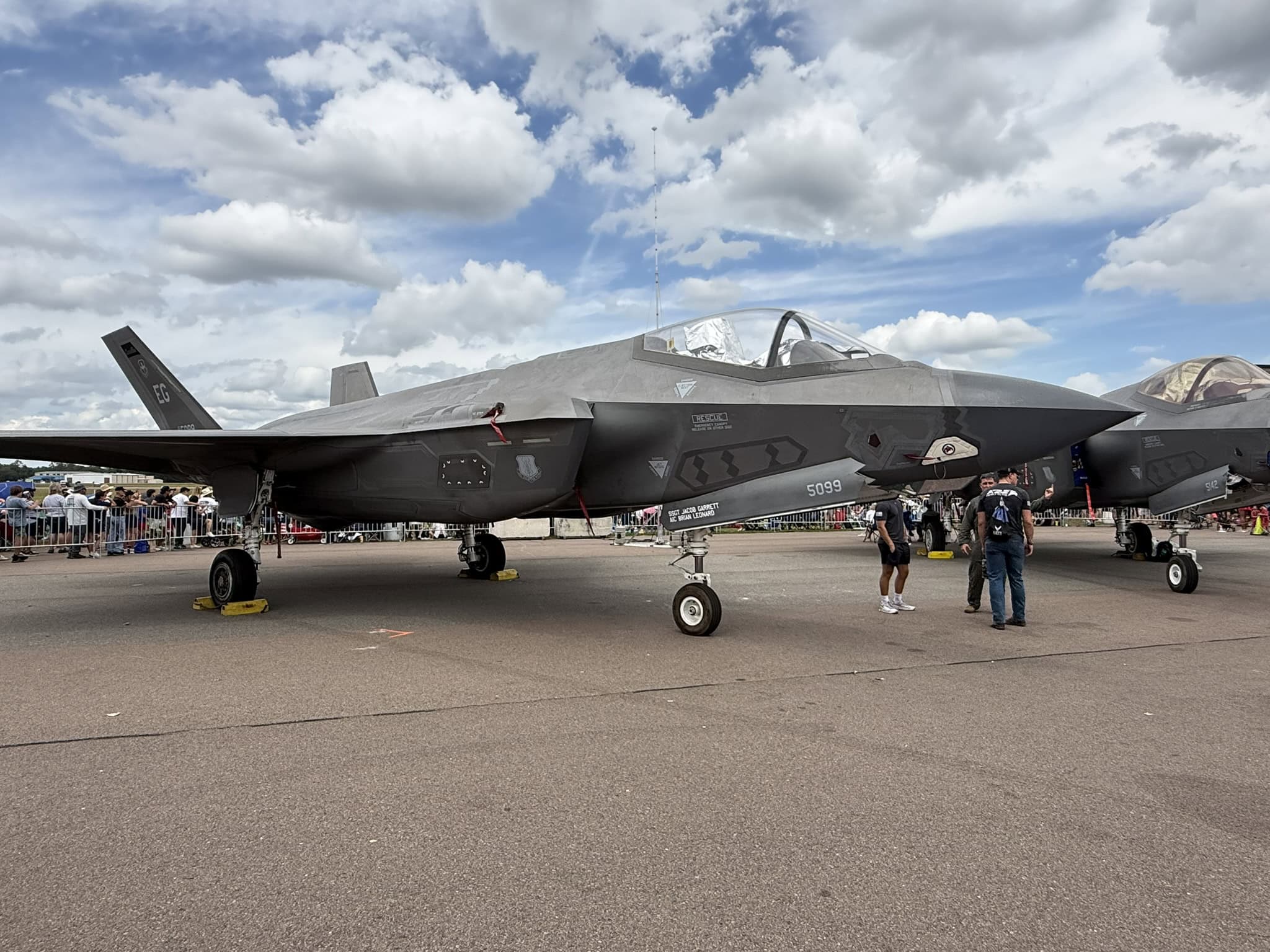
F-35 at Lakeland, Florida Air Show. 19FortyFive Photo.
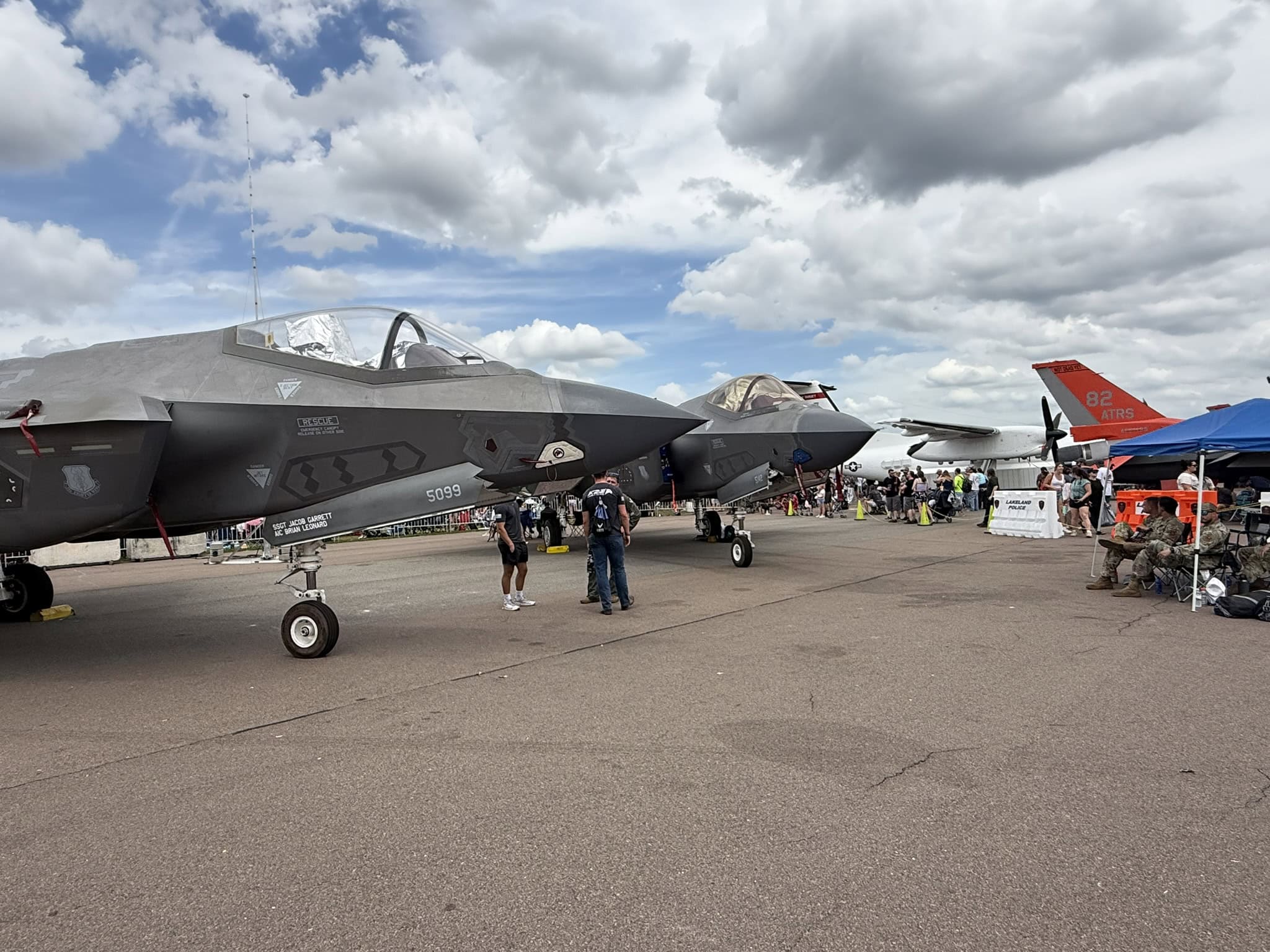
F-35 at Lakeland, Florida Air Show. 19FortyFive Photo.
Iran’s notionally theocratic leadership is, according to The Wall Street Journal, bolstering a variety of locations across the country, but in particular its borders as well as sensitive nuclear facilities.
The country’s civilian population is also being encouraged to take up free government weapons training and to hold public demonstrations of their support for the entrenched regime.
In reality, however, Iran has little viable military recourse against the United States directly, should American forces renew their attacks on Iran.
While the United States military has suffered some combat-related losses since the beginning of hostilities, the Pentagon’s fighters and bombers, in particular the advanced fifth-generation stealth aircraft that have been relied upon for some of the most dangerous missions, are able to overwhelm Iran with virtually complete impunity.
Iran has little recourse against air- and ground-launched missiles too.
But despite the poor hand Iran has to play, it does nonetheless have other options to respond to a potential renewed American attack.
A Bad Hand, but Still Cards to be Played
Iran’s neighbors in the region have found themselves in Tehran’s crosshairs on multiple occasions before.
And while Iran has launched many waves of drone and missile attacks, the majority of those thrusts have been successfully parried.
But Iran’s leadership has signaled that this round of fighting could be different.
A-10 Warthog. 19FortyFive Museum Photo.
Iran is believed to have used the pause in fighting to bolster its drone and missile capabilities, potentially aided by support from Moscow and Beijing.
Iranian political and military leaders have publicly hinted at which places could become targets of Iranian ire.
Saudi Arabia’s energy facilities are likely at the top of that list, as well as civilian transportation hubs — ports and airports — around the region.
Over the weekend, a preview of the kind of destruction that could be expected was put on full display when the Houthis, the Iran-backed rebel group vying for control of Yemen, attacked the King Khalid International Airport, an international airport in the Saudi capital of Riyadh.
Oil Keeps on Moving
While the price of Brent Crude, a global oil benchmark, is down from its high earlier this April following the eruption of hostilities between American and Iranian forces, prices remain high relative to their prewar levels.
The United States Navy has largely broken the stranglehold Iran exerted on the Strait of Hormuz, the maritime bottleneck through which about a fifth of the world’s oil moved before the war in Iran.
Extensive demining efforts have allowed ships to sail through the Persian Gulf out toward the Gulf of Oman and the wider world.
Smaller cargo ships running the gauntlet of Hormuz, often with their transponders turned off, have helped make ship-to-ship oil transfers just outside Hormuz possible.
But fleets have had to contend with higher shipping and insurance costs, making the future viability of the strategy questionable even as oil flows have surpassed eighty percent of their prewar levels, and Iranian attacks on vessels moving past the country have recently spiked.
Strengthening Defenses
According to satellite images analyzed by the Institute for Science and International Security, Iran has moved to reinforce the defenses around some of its most sensitive nuclear sites, creating dirt mounds around Natanz and Pickaxe Mountain where the country’s nuclear infrastructure is deep underground.
According to The Wall Street Journal, the mounds aim to stymie a ground invasion and occupation of the sites.
It is unclear, however, how useful such defensive measures would ultimately be in defending from an aerial attack that would be an all-but-certain precursor to any ground invasion or storming of Iran’s nuclear facilities.
While American President Donald Trump has all but forsworn renewed fighting against Iran ahead of the American midterm elections next month, the American military is preparing to execute a variety of options presented by the Pentagon to the Commander in Chief.
And for now, both sides eye each other with what can only be described as equal measures of respect and contempt.
About the Author: Caleb Larson
Caleb Larson is an American multiformat journalist based in Berlin, Germany. His work covers the intersection of conflict and society, focusing on American foreign policy and European security. He has reported from Germany, Russia, and the United States. Most recently, he covered the war in Ukraine, reporting extensively on the war’s shifting battle lines from Donbas and writing on the war’s civilian and humanitarian toll. Previously, he worked as a Defense Reporter for POLITICO Europe. You can follow his latest work on X.