
Abu Dhabi Talks Face a New Energy War Before 10–11 November

Abu Dhabi Talks Face a New Energy War Before 10–11 November
Four claimed interceptions out of 36 missiles is not, on its face, a usable measure of Ukrainian air defence. It is a Ukrainian official claim, not independently verified evidence; it may describe a particular sector, a subset of weapons, or preliminary battle-damage reporting. Yet it is analytically important precisely because Kyiv chose to make it public after the overnight strike of 7–8 November. President Volodymyr Zelenskyy said Russia had used a North Korean KN-23 ballistic missile against a “critical” energy facility. The claim came as Ukraine, Russia and the United States prepared for talks in Abu Dhabi on 10–11 November. Moscow and Kyiv are not merely arriving at the table with competing maps. They are trying to alter what each map is worth.
The immediate facts should be kept separate from the political noise. AP, the Guardian, RFE/RL, DW and Anadolu reported a combined missile-and-drone attack during the night of 7 November across Kyiv and more than ten other regions. Kyiv experienced electricity and water disruption; early reporting put the number injured at at least nine. Those figures may change as regional authorities complete their accounting. The point for the coming talks is not that one night can decide a war. It is that an attack on a power system on the eve of negotiations has an effect beyond physical damage: it forces the defender to spend interceptors, mobilise repair crews and demonstrate continuity of government while its negotiators are being asked to discuss restraint.
A date on the calendar changes the target list
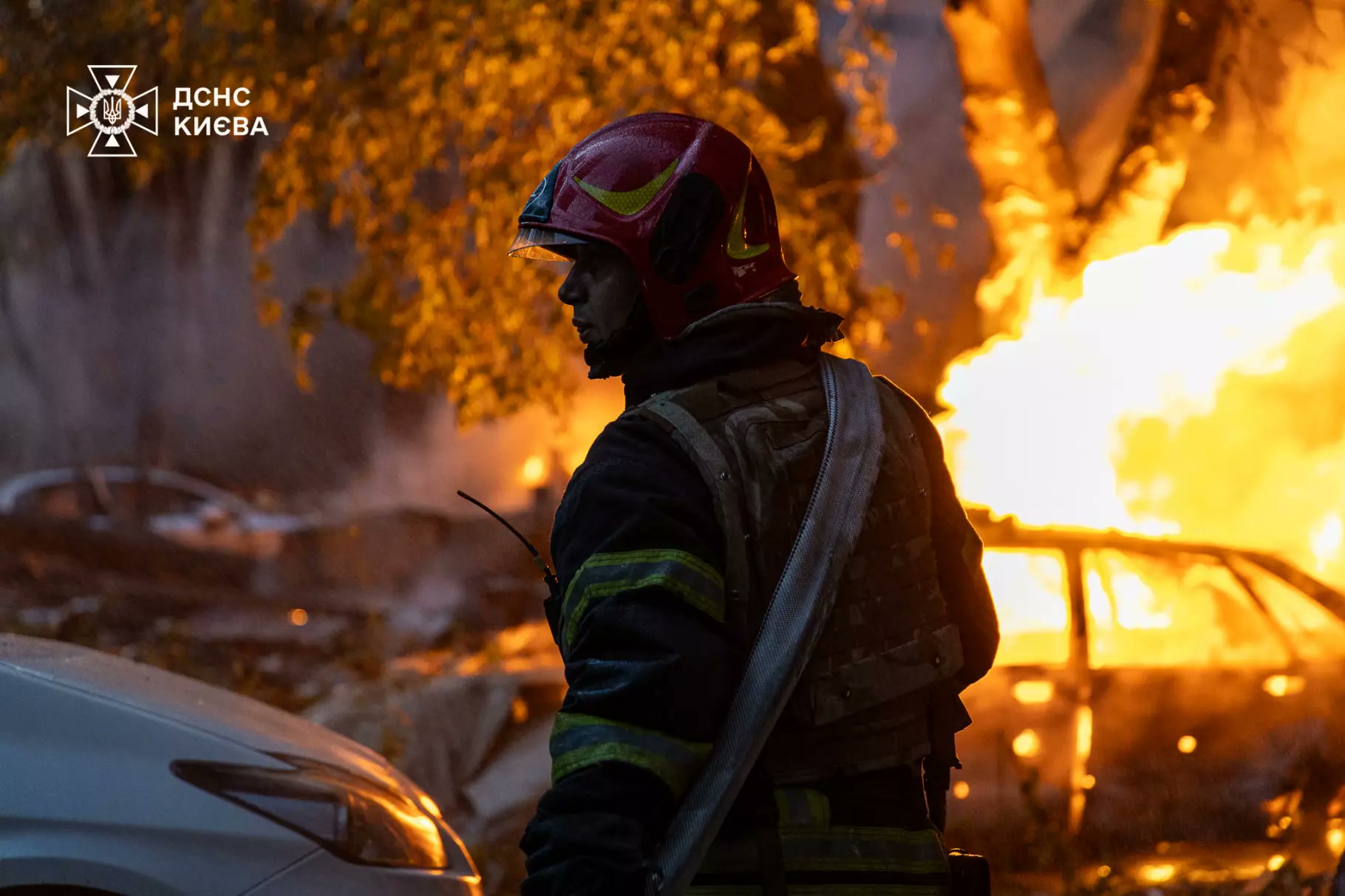
The significance of Abu Dhabi is not that a meeting by itself promises a settlement. It is that the dates are fixed: 10–11 November, with Ukrainian, Russian and American delegations expected in the same venue. Once dates are public, military action becomes a form of pre-negotiation communication. Russia can use long-range strikes to signal that it retains escalation options against civilian infrastructure and that any pause must take its operational concerns into account. Ukraine, for its part, has incentives to preserve the credibility of its own deep-strike and defensive capacity and to insist that attacks on energy infrastructure cannot be treated as a normal background condition while a ceasefire is discussed.
The bargaining objects are concrete. Energy nodes matter because they turn a military campaign into pressure on industry, rail movement, municipal services and the population during winter. Bridges matter because their damage or threatened closure changes logistics and the civilian economy at once. The front-line contact line matters because every local advance can later be presented as a fact that a monitoring mission must inherit. None of these objectives is abstract “leverage.” Each affects the costs, verification problems and domestic political price of an eventual arrangement. The Russian preference for strikes that force Ukraine to disperse scarce air-defence assets intersects directly with the diplomatic objective of demonstrating that Moscow can impose costs without accepting a political concession.
This is the old, unpleasant grammar of fighting while talking. Soviet and post-Soviet staffs have long distinguished between operational results and the political use of operational results. The purpose is not always to conquer a city before lunch. Often it is to shape the other side’s estimate of what happens if it refuses the proposed terms. But there is a limit to that logic. Heavy attacks can harden the public line of the side being pressured, make a limited technical agreement politically toxic, and give the mediator less room to present compromise as prudence. “To fight in order to negotiate” is a doctrine of coercion, not a guarantee of diplomatic success.
The delegations already describe the agenda
Politico reported that Russia had announced a delegation with both diplomatic and military personnel, describing it as an upgraded format. That composition deserves more attention than the usual choreography around an opening photograph. A delegation that includes officers or defence representatives can discuss practical military questions with more authority: a contact line, notification channels, force separation, monitoring procedures, prisoner exchanges, local ceasefire incidents, maritime or airspace deconfliction, and possible restrictions on particular weapons or strike categories. It does not mean that Moscow has accepted any of those measures. It means that the meeting is built to test a military-technical track alongside, and perhaps ahead of, a political one.
Ukraine’s choice of Rustem Umerov to lead its side conveys a related message. Umerov has operated at the junction of defence management, security policy and negotiation. His presence gives Kyiv a channel capable of discussing implementation without pretending that technical language can settle sovereignty. The contrast is revealing: both sides may be willing to explore mechanisms that reduce risk, while neither has shown that it will concede on territory, legal recognition, security guarantees or the political future of occupied areas. Military representatives can draw a line on a map or define an inspection radius; they cannot make that line legitimate.
That boundary matters. A technically competent group might produce a schedule for exchanges, a hotline, a record of prohibited incidents, or principles for monitoring an agreed pause. It cannot quietly convert a provisional line of contact into an internationally accepted border. Nor can it resolve Ukraine’s demand for credible future security support, or Russia’s demand that such support be constrained. The most useful reading of the Russian delegation is therefore modest: Moscow appears to want the meeting to have enough military competence to discuss implementation, and enough ambiguity to avoid committing itself on the political questions that would make implementation durable.
KN-23 claims and the problem of air-defence arithmetic
Zelenskyy’s assertion that a KN-23 struck an energy facility raises a separate set of questions. If confirmed, the use of a North Korean-origin ballistic missile would underline the extent to which Russia’s campaign can draw on external supply relationships as well as domestic production. It would also show why a winter infrastructure campaign cannot be assessed only through the number of drones launched. Ballistic missiles compress warning time and impose different interception demands from slow one-way attack drones. A mixed salvo can seek to complicate sensor, command and interceptor allocation even when individual weapon performance is uncertain.
Caution is essential here. The public account does not independently establish the missile’s type, trajectory, accuracy or target-selection process. Analysts should not infer technical parameters from a presidential statement, and they should not turn a reported nationality of origin into proof of a decisive new capability. KN-23 has been associated in open-source reporting with Russia’s acquisition of North Korean ballistic missiles, but the operational significance of any individual launch depends on configuration, launch conditions, guidance, reliability and the defender’s engagement opportunities. Those variables are not available in the public reporting cited here.
The reported “36 missiles, four intercepted” figure is equally unsuitable for a sweeping conclusion about the entire Ukrainian air-defence system. It is a Ukrainian claim and remains unverified. We do not know whether it counts all missiles launched, only missiles assessed as threatening particular defended areas, or a preliminary sequence later revised by the air force. But even a partial account points to the central pressure: Ukraine must allocate a finite pool of interceptors against several classes of threat while protecting cities, energy infrastructure, military facilities and logistics. Russia does not need perfect missiles for that arithmetic to hurt. It needs enough simultaneous threats to make every defensive decision a choice of what will be left exposed.
Three parties in the room do not make a three-sided settlement
The United States enters Abu Dhabi with a structural tension that neither protocol nor optimistic headlines can erase. It is a mediator in the room and a principal provider of military support to one of the belligerents. That dual role may give Washington unusual leverage, but it also ensures that Moscow will question its neutrality and Kyiv will question whether mediation can become pressure. The tension has been visible in the surrounding sequence: the 1 November Patriot-related arms-sale development and the 4 November Brussels meeting placed US-enabled air defence and allied coordination alongside the search for a negotiating format. For Ukraine, air defence is not an accessory to diplomacy; it determines whether the state can bear the consequences of a failed round.
This is why the format should be described accurately. It is not a conventional three-sided negotiation in which each party has comparable interests and responsibilities. Russia and Ukraine are the belligerents. The United States is a mediator with its own strategic, alliance and military-assistance interests. That arrangement can still generate limited agreements, particularly where American support can help make monitoring or compliance credible. It also makes every discussion of weapons limits politically charged. Moscow may seek constraints that affect Ukraine’s external support; Kyiv may seek guarantees precisely because external support is what prevents coercion from becoming capitulation.
What to watch in Abu Dhabi
Three outcomes are plausible, and their indicators should be observable. The most attainable is a technical memorandum: a framework for further meetings, a prisoner-exchange mechanism, a contact group, incident-notification procedures, or instructions to develop monitoring options. The signs would be careful language about “implementation,” named working groups, deadlines and a second meeting. Such a document would not end the war, but it could establish whether the military-technical channel is real.
A more ambitious outcome is a ceasefire framework, probably phased and conditional rather than comprehensive. Its credible indicators would be geographic specificity, a stated start time, a monitoring actor, definitions of violations, and provisions for access, communications and consequences. A document that contains only aspirations and no mechanism should not be called a ceasefire. The hardest questions would be whether energy infrastructure is included, how the contact line is treated, and whether either side accepts verification that can expose violations.
The third outcome is breakdown: no agreed language, incompatible accounts of what was discussed, or an abrupt return to maximal public demands. The indicators would be delegation walkouts, accusations framed around sovereignty rather than procedures, and immediate increases in strike rhetoric or operational tempo. If that happens, the winter energy war is likely to enter its next stage: repeated mixed salvos aimed at exhausting air-defence inventory, forcing emergency repairs and exploiting the time required to restore a damaged grid. Ukraine would seek to disperse and protect critical nodes while asking partners for faster delivery of interceptors and repair equipment; Russia would test whether cumulative disruption produces political fatigue.
The cold conclusion is that the Abu Dhabi talks may be useful without being close to peace. A technical channel can lower particular risks, but only if it is insulated from the fantasy that technical language settles the war’s political core. The attack of 7–8 November suggests that neither side expects diplomacy to remove the need for military leverage before 10 November. The meetings will show whether that leverage can be translated into limited rules—or whether the next negotiation will again be conducted through transformers, bridges and air-defence magazines.
Sources and verification note
- AP, the Guardian, RFE/RL, DW and Anadolu reporting on the 7–8 November air attack and its reported effects.
- Politico reporting on the announced Russian delegation and its upgraded military-diplomatic composition.
- Ukrainian presidential statements for the asserted KN-23 use and the “36 missiles, four intercepted” figure; these claims have not been independently verified in the reporting reviewed.
- Public reporting on the 1 November Patriot-related arms-sale development and 4 November Brussels meeting for the US support context.
Ukrainian Armed Forces reported missile and drone attacks on energy infrastructure in Kyiv and other regions on 7-8 November, resulting in electricity and water disruptions. President Zelenskyy claimed a North Korean KN-23 missile was used by Russia against a critical facility. The attacks occurred just before scheduled talks in Abu Dhabi on 10-11 November, highlighting the ongoing military tensions and the strategic significance of energy infrastructure in the conflict.
- Ukrainian officials claim 4 out of 36 missiles were intercepted.
- Russia allegedly used a North Korean KN-23 ballistic missile against a critical energy facility.
- Kyiv experienced electricity and water disruptions due to missile attacks.
- At least nine injuries reported from the attacks on 7-8 November.
- Abu Dhabi talks scheduled for 10-11 November involve Ukraine, Russia, and the U.S.