
After the Liaoning's Western Pacific Training, Why Has the 2026 Circum-Taiwan Grand Exercise Not Yet Appeared?
 Li Minghui
After the Liaoning's Training in the Western Pacific, Why Has the Large-Scale Exercise Around Taiwan in 2026 Not Yet Appeared?
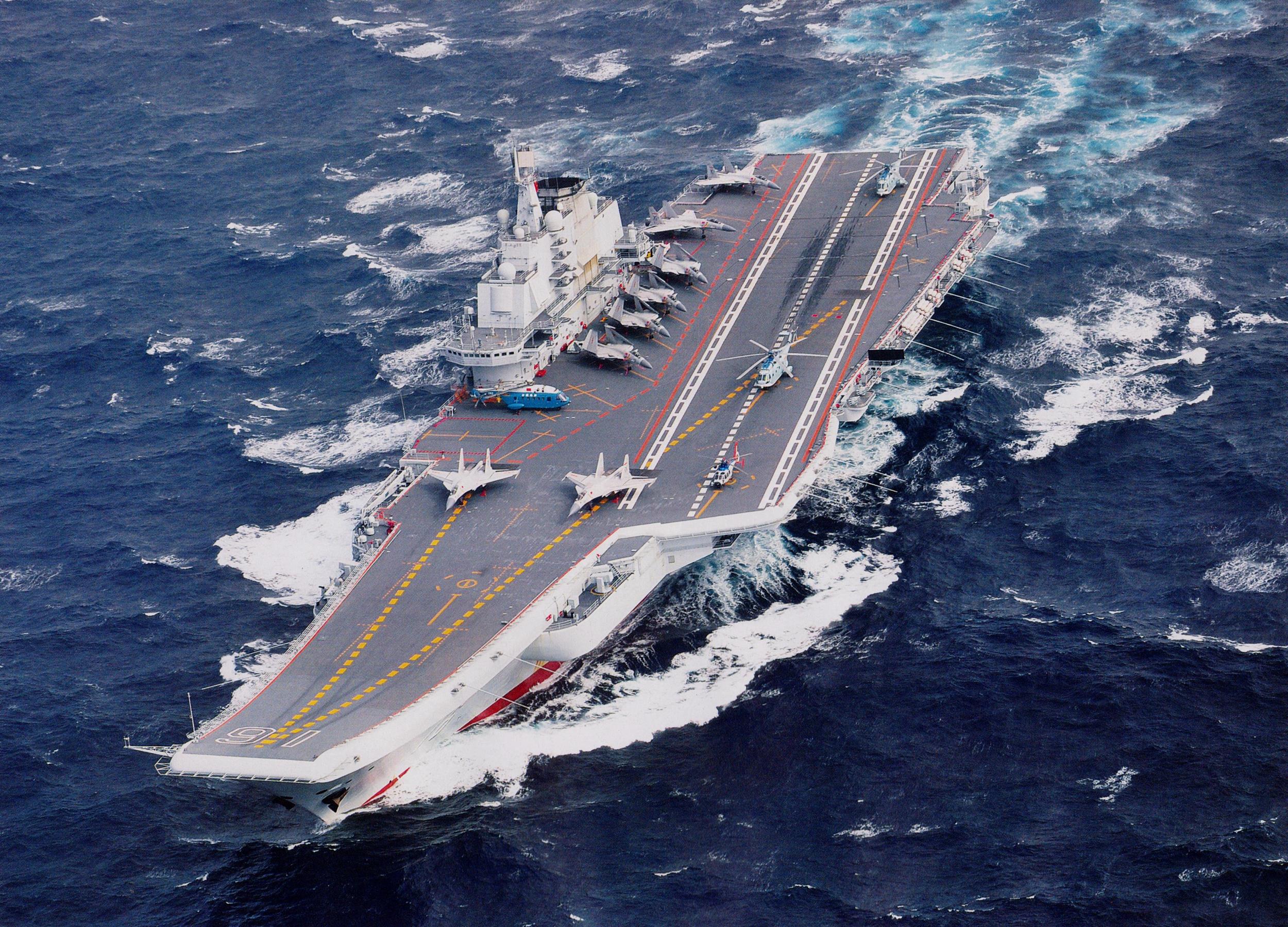
Around October 15, Taiwan reported consecutive activities of the PLA's naval and air forces. The Taiwanese military stated that between 6 PM the previous day and 6 AM the next day, they detected 15 military aircraft, 10 warships, and 7 civilian vessels, among which 13 military aircraft crossed the median line of the Taiwan Strait, entering the northern, central, southwestern, and eastern airspace of Taiwan. Meanwhile, the Liaoning carrier group conducted what Beijing calls "routine training" in the Western Pacific. Interestingly, what the Taiwanese defense department is most concerned about at this time is not the already announced exercise around Taiwan, but rather the absence of large-scale operations similar to those from 2022 to 2025 this year.
The Large-Scale Exercises Have Not Disappeared, They Have Just Been Divided
According to a report by the Taipei Times on October 16, the Taiwanese military assesses that the PLA may still enter its annual training peak from November to December and continue to use joint intelligence, surveillance, and reconnaissance methods to monitor movements. This assessment has some basis, but it should not be simply understood as "it will eventually replicate the exercises around Taiwan." Since 2026, the PLA seems to be breaking down a centralized political signal into multiple routine tasks such as carrier training in distant seas, military aircraft crossing the median line, coast guard patrols on the eastern side, and naval vessels transiting key straits.
From a military perspective, this division does not equate to a decrease in intensity. Centralized exercises require the establishment of no-fly zones, mobilization of large forces, and advance exposure of training windows; dispersed actions allow the air force, navy, and coast guard to accumulate flight hours, coordination, and law enforcement experience separately. In simple terms, it transforms the question from "Can it be done once?" to "Can it be done regularly?"
The True Value of the Liaoning's Training
The Liaoning itself is not new equipment, and its ski-jump takeoff limits the effective payload and sortie efficiency of its carrier-based aircraft. However, its value in training in the Western Pacific lies not only in how far its aircraft can fly but also in whether the group can maintain supply, early warning, anti-submarine operations, and air cover under conditions far from its home bases. This activity, occurring in close temporal proximity to military aircraft and naval operations around the Taiwan Strait, at least indicates that the PLA is simultaneously managing two training directions: advancing the carrier beyond the first island chain while maintaining pressure with conventional forces around Taiwan.
It is important to be cautious, as public information is insufficient to prove that these actions are directed by a unified script. Carrier training, Taiwan Strait patrols, and coast guard law enforcement may belong to different plans. Interpreting all actions as a single "invisible exercise around Taiwan" would overestimate their immediate operational integration; however, viewing them as unrelated routine activities would similarly underestimate their cumulative effects.
Why This Year May Delay Centralized Training Exercises
First, the PLA may be testing a lower-cost, normalized pressure model to observe the reaction thresholds of Taiwan, the United States, Japan, and the Philippines. Second, the Liaoning's distant sea training itself requires the occupation of naval and air resources, and centralized exercises around Taiwan may not necessarily coincide with distant sea training. Third, the timing of political signals remains important; announcing large-scale exercises too early could give opponents more preparation time and may turn a training event into a crisis event that attracts external attention.
The author believes that what is truly worth observing in 2026 is not whether a "surrounding map of Taiwan" will appear on a certain day, but rather three indicators: whether the coast guard can maintain continuous presence east of Taiwan, whether military aircraft crossing the median line forms a stable rhythm, and whether the Liaoning carrier group can complete multiple rounds of distant sea training in the Western Pacific. If these three lines persist simultaneously, the PLA will not need to rely on a high-profile exercise each year to prove its presence.
The Taiwanese side has already begun to raise its alert for a potential training peak from November to December, but the question remains unanswered: Is Beijing waiting for a more suitable political window, or has it already replaced traditional large-scale exercises around Taiwan with a more dispersed and harder-to-define approach?
Sources
Chinese military activities were reported near Taiwan, with 15 aircraft and 10 warships active in the region on October 15-16, 2026. The Liaoning aircraft carrier conducted routine training in the Western Pacific, while 13 aircraft crossed the median line into Taiwan's airspace. Taiwan's defense authorities are on alert for potential military exercises by the PLA in the coming months, indicating a shift in PLA strategy towards more frequent, smaller-scale operations.
- 15 military aircraft and 10 warships were reported active near Taiwan.
- 13 military aircraft crossed the median line into Taiwan's airspace.
- The Liaoning aircraft carrier conducted routine training in the Western Pacific.
- Taiwan is on alert for potential military exercises by the PLA in November and December.
- The PLA's activities are seen as a shift from large-scale exercises to more dispersed operations.