
Airport attack results in hundreds dead and injured, multiple countries issue travel warnings, Saudi Arabia and Houthi forces enter high-intensity confrontation?
[Global Times Special Correspondent in Saudi Arabia Ren Haoyu, Global Times Reporter Zhang Wanshi, Pei Ming] The General Authority of Civil Aviation of Saudi Arabia announced on the 11th that King Khalid International Airport in the capital Riyadh was attacked on the 10th, resulting in 12 deaths and 309 injuries. The BBC reported that this is the deadliest single attack on Gulf countries since the U.S.-Israel-Iran conflict escalated in February of this year. Saudi Arabia and its allies accused the Houthi armed group from Yemen of launching the attack. The latter warned international airlines and the public again on the 11th not to use Saudi airports. On the same day, King Khalid International Airport was attacked again. Several countries, including China, the United States, the United Kingdom, and Canada, have issued travel advisories to their citizens. The New York Times stated that the escalating violence has spread the flames of war from Yemen to Riyadh, expanding the regional impact of a potential U.S. war against Iran, and highlighting the Houthis' capability to attack critical infrastructure in Saudi Arabia. Saudi Arabia cannot simply curb the increasingly complex and targeted attacks. Whether the U.S. will join Saudi Arabia in its strikes against the Houthis is once again under close scrutiny. U.S. President Trump stated on the 10th, "We may do so," and that a decision would be made "as soon as possible." However, foreign media analysis suggests that one of the main reasons Saudi Arabia is now deeply entrenched in the turmoil of the Middle East is its over-reliance on the highly unpredictable U.S. government, and even if the U.S. launches airstrikes again, it would be difficult to completely curb the Houthis.
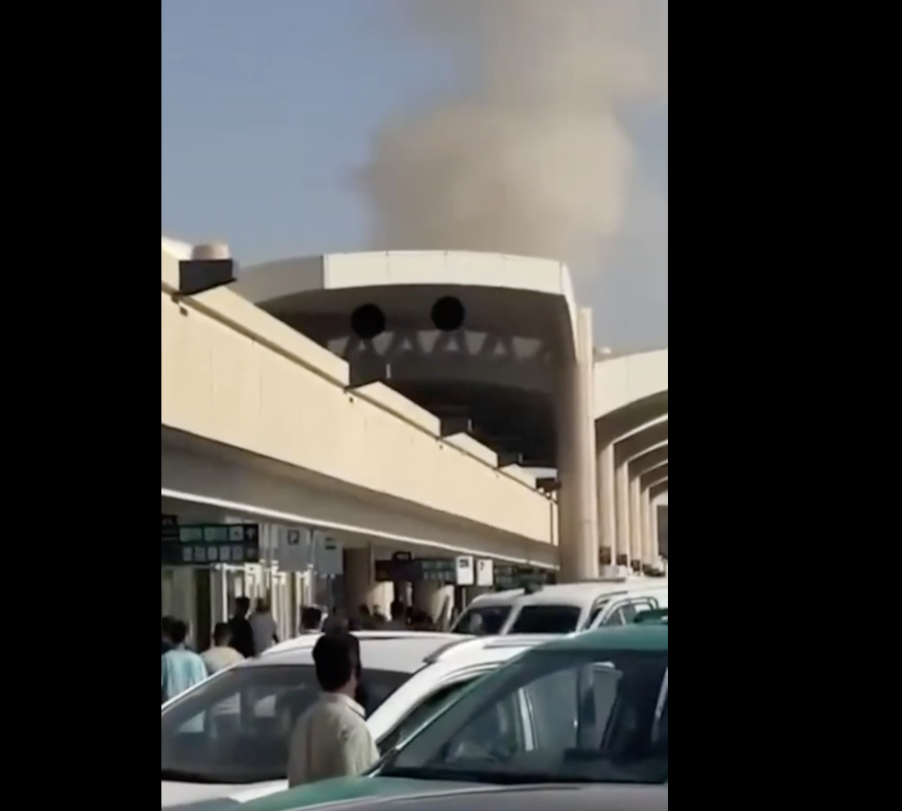
Riyadh Airport Attacked for Two Consecutive Days
On the afternoon of the 10th local time, King Khalid International Airport was attacked, with the deceased including 4 Saudis, 2 Bangladeshis, and the remaining 6 from the United States, Egypt, Jordan, Syria, Palestine, and Sudan. CNN reported that this was the third attack on the airport within a week. According to a report by Saudi Arabia's Arab News on the 11th, information from the flight tracking website FlightAware indicated that at least 291 flights were canceled at Riyadh Airport within 24 hours. Due to this attack, all schools in Riyadh will implement remote teaching this week.
According to comprehensive reports from Arab News and Al Jazeera on the 11th, Turki al-Maliki, spokesperson for the Saudi-led coalition, accused the Houthi armed group of attacking the passenger terminal of King Khalid International Airport on the 10th, calling it a "complete war crime," and emphasized that the coalition would "respond resolutely." Senior researcher Obaid from King's College London stated that based on the damage caused, this attack was likely a ballistic missile hitting a "very clear civilian target."
According to reports from NBC and other foreign media, the Houthi armed group did not immediately claim responsibility for the attack on King Khalid International Airport on the 10th, but on the 11th, they warned international airlines, airport staff, and travelers not to use Saudi airports, although the airspace over Mecca and Medina would not be affected by the attacks.
CNN stated that the events of the 10th exposed Saudi Arabia's weaknesses in defense capabilities. The Jerusalem Post reported on the 11th that Saudi Arabia possesses expensive air defense systems, yet it has been proven that the Houthi armed group can breach these defenses. According to the Wall Street Journal, insiders revealed that Saudi Arabia is increasingly concerned about the tight supply of intercept missiles used to defend against attacks.
After the attack on King Khalid International Airport on the 10th, multiple embassies in Saudi Arabia issued travel advisories to their citizens. According to Al Jazeera on the 10th, the British and Irish embassies in Saudi Arabia issued warnings about the "serious incident" at the airport that day, while Canada advised its citizens in Riyadh to avoid going to the airport, stating that "military activities are currently ongoing."
The Chinese embassy in Saudi Arabia stated on the 11th that King Khalid International Airport was attacked on the 10th, and there have been no reports of casualties among Chinese citizens. The Chinese consulate in Saudi Arabia again reminded Chinese-funded institutions and citizens in Saudi Arabia to firmly establish risk awareness, reduce unnecessary outings, remain calm, and ensure personal safety.
On the 11th, loud explosions were heard again in Riyadh, and black smoke was seen rising. Al-Maliki stated that a projectile landed at Terminal 4 of King Khalid International Airport. The attack caused a fire.
According to the original schedule, Saudi Arabia is set to welcome visitors from various countries for major global events this month. The World Petroleum Congress, which brings together officials and executives from the global energy sector, is set to begin on the 11th in Riyadh. Reports indicate that this event will proceed as planned. At the end of October, Riyadh also plans to host the Future Investment Initiative Conference.
The Houthi Armed Group Attempts to Apply "Maximum Pressure" on Saudi Arabia
Professor Liu Zhongmin from the Middle East Studies Institute of Shanghai International Studies University told Global Times reporters on the 11th that the escalation of hostilities marks a new phase of high-intensity confrontation between Saudi Arabia and the Houthi armed group. Meanwhile, the contradictions between the U.S. and Iran remain unresolved. In this context, the risk of crises erupting simultaneously in the Red Sea, Persian Gulf, and Strait of Hormuz is rising.
The New York Times recalled that tensions between Saudi Arabia and the Houthi armed group escalated again in July of this year. On October 5, the Saudi-backed Yemeni government announced the launch of "Operation Yemen Dawn," aimed at recapturing areas recently controlled by the Houthi armed group. The Saudi-led coalition participated in the operation on the same day. Reports suggest that this signifies the outbreak of a "full-scale war," further entrenching Saudi Arabia in the regional impacts of the U.S.-Iran conflict. Saudi Arabia currently faces a daunting task: to prevent Houthi attacks while avoiding another protracted war, or else its economic development plans will be hindered.
CNN believes that a series of miscalculations have put Saudi Arabia at risk of further escalation in the Yemen conflict. Senior analyst Najee from the International Crisis Group stated that Saudi Arabia was unprepared for Houthi attacks and lacked coordination with the Yemeni military forces that previously received support from the UAE.
Al Jazeera reported that experts from the Sana'a Center think tank believe that the Houthi armed group is trying to apply "maximum pressure" on Saudi Arabia, and their current momentum is "very strong." Tafeer, executive director of the Gulf International Forum, believes that the conflict between Saudi Arabia and the Houthi armed group is far more than a "tit-for-tat" struggle; Saudi Arabia does not wish for the situation to escalate in the long term, while the Houthi armed group poses a threat to Saudi national security and international maritime security, making de-escalation difficult.
As Saudi Arabia and the Houthi armed group engage in fierce mutual attacks, the situation in Yemen remains stalemated. The Houthi armed group controls northern and western coastal areas of Yemen, accounting for about one-third of the country's territory and covering approximately 70% to 80% of the population. Most areas in the south and east, such as Aden, are controlled by the Yemeni government, while the Houthi armed group has recently advanced to the southwestern province of Taiz. The New Yorker reported that senior researcher Mesa Shuja Din from the Sana'a Center believes that the Houthi armed group is likely to leverage their recent victories and newly acquired "bargaining chips" in the Red Sea region to raise their demands in any potential peace negotiations.
Observers analyze that considering the overall situation in Yemen, the Houthi armed group does not wish for the conflict to continue indefinitely. If Saudi Arabia reduces its level of intervention or ultimately ends its military involvement, the Houthi armed group may engage in political negotiations with the government forces. Al Jazeera quoted Middle East expert Zwaireh as saying that the Houthi armed group is raising the "cost of war" for Saudi Arabia to force it to end its intervention in the Yemen situation.
The U.S. Says It "May" Join Saudi Actions
CNN cited experts' views that one of the main reasons Saudi Arabia faces such a severe situation is its over-reliance on U.S. support. The Saudi crown prince spoke with Trump twice last month, but the latter refused to intervene in the current conflict between Saudi Arabia and the Houthi armed group. Former U.S. Ambassador to Saudi Arabia Ratney stated that the Saudis did not fully anticipate the need to face such wars alone, and they are gradually realizing how unpredictable the U.S. government is.
After the attack on King Khalid International Airport, the U.S. attitude is under close scrutiny. Trump stated to reporters at the White House on the 10th that he is evaluating whether the U.S. should join Saudi Arabia in its strikes against the Houthi armed group. He said, "We may do so."
The New York Times reported that last year, the U.S. launched airstrikes against the Houthi armed group, but in just the first month, the U.S. consumed about $1 billion worth of weapons and ammunition. "Deutsche Welle" believes that even if the U.S. launches airstrikes against the Houthi armed group, it is unlikely to resolve the issue. The Council on Foreign Relations believes that the U.S. needs to conduct large-scale, coordinated ground operations to mitigate the threat posed by the Houthi armed group. Moreover, Saudi Arabia is not keen on this option.
CNN stated that many experts also believe that the Yemen conflict is related to the U.S. war against Iran. As long as the conflict between them continues, the Iranians will continue to have strong motivation to pay attention to the conflict between the Houthi armed group and Saudi Arabia.
Houthi forces conducted airstrikes on King Khalid International Airport in Riyadh on October 10, 2023, resulting in 12 deaths and 309 injuries. This attack prompted multiple countries, including the U.S. and the U.K., to issue travel warnings for their citizens. The incident represents a significant escalation in the ongoing conflict, highlighting the capabilities of Houthi forces to target critical infrastructure in Saudi Arabia.
- King Khalid International Airport in Riyadh was attacked on October 10, 2023.
- The attack resulted in 12 deaths and 309 injuries.
- Multiple countries issued travel warnings for their citizens in Saudi Arabia.
- Houthi forces are suspected of carrying out the attack.
- This incident marks a significant escalation in the conflict between Saudi Arabia and Houthi forces.