
Algeria and Mali Resume Dialogue — Sahel Security Enters a Pragmatic Phase
 Marie Dubois
Algeria and Mali Resume Dialogue — Sahel Security Enters a Pragmatic Phase
In Algiers, on September 15, 2026, the resumption of contacts with Bamako took a very concrete form. The visit of Algerian Prime Minister Sifi Ghrieb and the converging statements from the Algerian and Malian leaders signal a thaw after months of tension. It is not yet an operational alliance. However, along a border that stretches nearly 1,400 kilometers, diplomatic silence had become a military risk.
A Thaw Under Ground Pressure
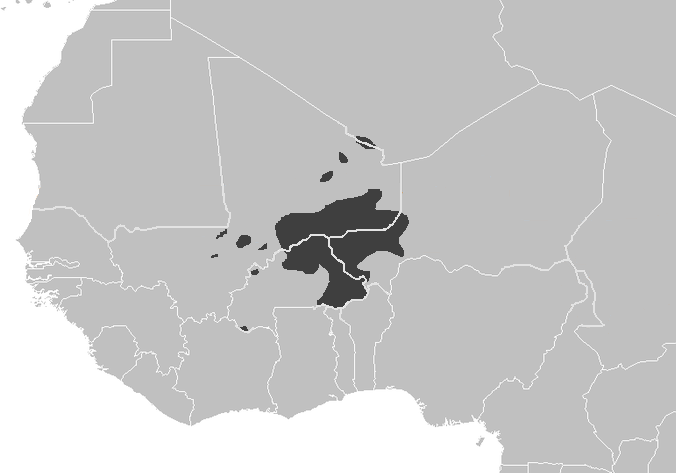
Algeria and Bamako are now discussing reactivating institutional cooperation and strengthening bilateral solidarity. The terms are diplomatic, but the timing is not. Northern Mali remains a fragmented theater of operations, where jihadist groups, Malian forces, Tuareg armed movements, and smuggling networks compete for routes rather than recognized borders.
The crisis was exacerbated by the breakdown of Algerian mediation on the 2015 peace agreement. For Bamako, the agreement limited state sovereignty and no longer corresponded to the military reality after the recapture of Kidal. For Algiers, its disappearance removed the main de-escalation mechanism in Azawad. The two capitals then exchanged accusations, particularly after aerial incidents and tensions surrounding armed groups in the north.
The return to dialogue does not erase this dispute. It simply acknowledges a ground reality: no Malian force can monitor the desert between Kidal, Tessalit, and the Algerian border alone, while Algiers cannot treat Sahelian instability as a problem located entirely on the other side of the border line.
What Algeria Can Really Offer
Algeria has three levers that Bamako's Russian partners do not easily replace. The first is geographical. Its bases and units in the South can observe the approaches to Tanezrouft and the corridors connecting the Adrar des Ifoghas to the Algerian road network. The second is political: Algiers maintains channels with Tuareg and Arab notables that the Malian authorities have often treated as adversaries. The third is institutional: its experience in counter-terrorism relies on intelligence, control of routes, and infiltration, not just on strikes.
This offer, however, has clear limits. Algeria does not want to send an expeditionary force to Mali. Its doctrine remains hostile to prolonged military intervention outside national territory, and its public opinion would poorly accept the return of a border war. The most likely cooperation is therefore discreet: intelligence sharing, coordination of patrols, monitoring of crossings, and facilitation of local contacts.
For Bamako, this format presents a political advantage. It allows for diversifying its partners without giving the impression of renouncing its relationship with Moscow or the logic of the Sahel States Alliance. For Algiers, it is about regaining strategic depth to the south without bearing the cost of an occupation or direct engagement.
The Jihadist Factor and the Tuareg Question
The main danger is not a spectacular offensive against a capital. It is the consolidation of movement zones. The Support Group for Islam and Muslims, or JNIM, thrives in areas where the state provides neither justice, nor escort, nor conflict resolution. In northern and central Mali, the mobility of fighters depends less on the permanent capture of a city than on the ability to tax roads, recruit from communities, and exploit local rivalries.
An Algerian-Malian rapprochement can only reduce this freedom of movement if it includes local actors. Cooperation limited to the staff will produce statements and a few arrests. It will not control secondary tracks, wells, and weekly markets that structure the logistics of the desert. This is where the difference between military presence and area control is measured.
The Tuareg issue is therefore the breaking point. Algeria can serve as a channel, but it cannot impose a compromise on Bamako nor speak on behalf of all armed factions. Available information confirms the diplomatic thaw, not a detailed security agreement. The intentions are clear; the operational modalities remain to be verified.
A Less Visible Geopolitical Competition
This rapprochement occurs as France has lost most of its military access to the Sahel and Russia is providing Bamako with security and political support. However, it would be erroneous to read every Algerian gesture as an anti-Russian maneuver. Algiers primarily seeks to prevent Malian instability from reaching its own South, while refusing to allow Moscow to become the sole interlocutor for Sahelian regimes.
The difference is practical. Russian instructors and units can reinforce certain offensive operations, but they do not automatically replace the diplomatic, commercial, and community networks of a neighbor. Conversely, Algeria can reopen channels, but it neither has yesterday's French expeditionary apparatus nor the political freedom necessary to wage a war in Mali.
The most likely outcome is armed coexistence: Bamako retains its Russian partnership, Algiers resumes targeted security mediation, and jihadist groups test the spaces left between the two approaches. The border will not become stable by decree.
The Next Test Will Be on the Ground
In the coming weeks, three indicators will need to be monitored: the effective reactivation of bilateral commissions, the opening of channels with northern communities, and the flow of intelligence on the Kidal–Tessalit–Bordj Badji Mokhtar routes. If these mechanisms remain at the protocol level, the thaw will only be a diplomatic pause.
From experience, a desert border cannot be secured from a conference room. It is secured through reliable local information, convoys capable of reaching water points, and a decision-making chain fast enough to act before the armed group disappears into the terrain. Algiers and Bamako have just reopened the door. JNIM, for its part, will mainly observe whether anyone is finally capable of keeping it open.
Sources
- Algeria Press Service, dispatches from September 14 and 15, 2026, on the resumption of Algerian-Malian cooperation.
- The Arab Weekly, “Algeria, Mali revive ties as insecurity reshapes the Sahel,” September 15, 2026.
- Middle East Online, analysis of Sifi Ghrieb's visit to Bamako, September 15, 2026.
- International Crisis Group, “Algeria-Mali: Taking Advantage of the Thaw,” July 15, 2026.
Algeria and Mali resumed diplomatic dialogue on September 15, 2026, signaling a thaw in relations after months of tension. The two nations aim to enhance cooperation on security issues in the Sahel, recognizing the need for joint efforts to address instability. Algeria's strategic position and local connections may facilitate this cooperation, although the effectiveness will depend on involving local actors in the process.
- Algeria and Mali resumed diplomatic dialogue on September 15, 2026.
- The dialogue aims to enhance bilateral cooperation and address security issues in the Sahel.
- Algeria has strategic advantages in monitoring the region and maintaining local connections.
- The situation remains complex with jihadist groups operating in northern Mali.
- The effectiveness of the dialogue will depend on local community involvement.