
Algeria Deploys Its Soldiers to Niger in 2026 — Arlit Becomes the New Lock of the Sahel
 Marie Dubois
Algeria Deploys Its Soldiers to Niger in 2026 — Arlit Becomes the New Lock of the Sahel
Arlit, northern Niger, October 30. An Algerian military convoy crossed the border and reached this mining town located a few dozen kilometers from the Aïr massif. This movement, reported on November 9 by Defence24, is not yet an announced combat operation. Nevertheless, it represents a major shift in posture for Algiers, which had avoided engaging its ground forces beyond its borders for decades.
A Deployment Still Unclear but Politically Acknowledged
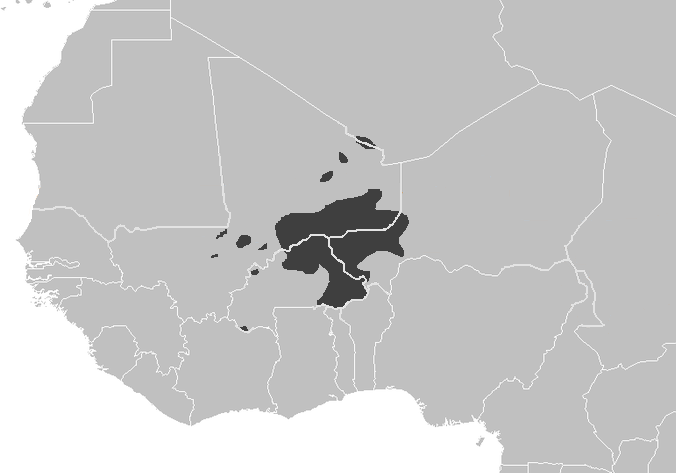
On October 26, President Abdelmadjid Tebboune obtained the necessary parliamentary authorization. The 148 members present in the upper chamber voted in favor of the deployment. Four Su-30 aircraft, one Il-76 transport plane, and one Il-78 tanker had already been transferred to Niger in August, officially in the context of an attempt to destabilize the authorities in Niamey.
However, the ground sequence remains poorly documented. The CrisisBrief report confirms the arrival of the convoy in Arlit but emphasizes that its mission is not established. It is not possible to say, at this stage, whether this is a permanent presence, a protection detachment, or a movement related to military cooperation. The assertion that this would be Algeria's first overseas ground deployment since 1973 should therefore be considered probable but not definitively confirmed.
Why Arlit Matters on the Ground
Arlit is not a secondary regional capital. It is a logistical hub in northwestern Niger, connected to Agadez by a road axis that traverses vast and difficult-to-control spaces. The city concentrates mining interests, smuggling routes, and access to the Malian border. A force that protects an airfield, a corridor, or energy facilities can monitor a theater of operations much larger than a simple urban perimeter.
The Algerian-Malian border measures nearly 1,400 kilometers. For several years, Algerian authorities have been trying to keep violence, trafficking, and flows of fighters south of their territory. In October, Algiers declared that it had detected a collective crossing attempt involving about 5,000 people, without establishing that all came from Mali. Again, the figure indicates pressure, not proof of jihadist infiltration.
The choice of Niger allows Algiers to act at a distance from its own territory while maintaining control over the mission. The risk is that a detachment initially presented as defensive gradually becomes responsible for escorts, intelligence, or air support. In the desert, the line between protecting an axis and participating in a campaign is thin.
Russia is in the Same Room
Algerian soldiers operate in a country where elements of the Russian Africa Corps are also present. This does not constitute an operational Algerian-Russian alliance. But the two military apparatuses now share the same space, the same threats, and some Soviet or Russian-origin equipment. Algeria can therefore cooperate with Niamey without entering Moscow's framework, while complicating the Western reading of the theater.
Since the French withdrawal, Niger has been seeking partners capable of providing concrete means without the political conditions comparable to those of Paris. Russia offers instructors and protection for the regime. Algeria provides geographical proximity, a heavy army, and knowledge of Saharan threats. None of these actors alone replaces the intelligence, transport, and coordination capabilities that France had accumulated. Together, however, they can make the regional framework much less readable.
The meetings in November reinforce this impression. The Algerian Foreign Minister met with the leaders of Chad on November 3 and Niger on November 4. Malian leader Assimi Goïta visited Niger and Burkina Faso on the 5th to discuss security and the Confederation of Sahel States. Meanwhile, Paris was re-establishing contacts with rival authorities in Libya. This is not yet a new coherent alliance, but a theater where each capital seeks to secure its own corridors.
The Real Test Will Be the Mission, Not the Announcement
For Algeria, the question is not whether it has the means to intervene. It can. The question is whether it accepts the cost of a prolonged presence in an environment where jihadist groups avoid frontal battles, strike convoys, and exploit local rivalries. A visible column in Arlit can protect a site. It does not control the paths that bypass the city, nor the networks that connect northern Mali to southern Libya.
The next indicator will be concrete: announcement of a permanent mission, new air rotations, convoy escorts, or extension towards Agadez. Without these signs, the convoy may remain a limited political signal. With them, Algiers will have crossed a historic line and assumed a role as a Sahelian military power.
On the ground, the immediate danger is not a pitched battle between Algeria and the jihadists. It is the discreet entrenchment of a poorly defined mission, in a corridor where each vehicle depends on the weather, fuel, and local intelligence. If Arlit becomes a forward base rather than a transit point, northern Niger will be the first place where this new posture will be put to the test.
Sources
Algeria deployed a military convoy to Arlit, Niger on October 30, 2026, following parliamentary approval for the deployment. This move includes 148 soldiers and military aircraft, marking a significant shift in Algeria's military engagement beyond its borders. Arlit serves as a strategic logistical hub, enhancing Algeria's ability to monitor and respond to regional threats.
- Algeria deployed a military convoy to Arlit, Niger on October 30, 2026.
- 148 members of the Algerian parliament approved the deployment on October 26, 2026.
- Four Su-30 aircraft and other military equipment were transferred to Niger in August 2026.
- Arlit is a strategic logistical hub in northwestern Niger.
- The deployment marks a significant shift in Algeria's military posture.