
Algeria Deploys Its Troops to Niger in 2026 — The Bet That Redefines the Sahel
 Marie Dubois
Algeria Deploys Troops to Niger in 2026 — A Bet That Redefines the Sahel
In Niamey, the timeline is as important as the numbers. Algeria is preparing to deploy troops to Niger, marking the first military projection of this scale outside its borders in over fifty years, according to several reports published on November 4 and 5, 2026. The exact format of the contingent, its mission, and its rules of engagement are not yet public. It is precisely this ambiguity that makes the announcement significant: Algiers is not promising a new Barkhane, but signals that it is now willing to bear part of the security risk south of its border.
A Border That Ceases to Be a Backyard
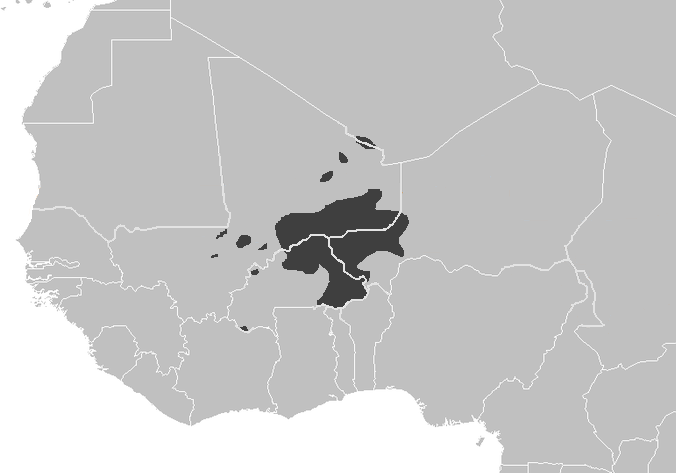
The Algeria-Niger border stretches nearly 950 kilometers across desert. On the map, it appears empty. On the ground, it is crisscrossed by tracks, smuggling corridors, and water points that regular forces cannot monitor continuously. Northern Niger connects the Libyan border area to the Aïr basin and, further south, to the routes leading to Agadez and Lake Chad. An infiltration does not resemble a column crossing a border post. It resembles several pick-ups disappearing into the terrain and reappearing hundreds of kilometers away.
Algerian and Nigerien authorities have already spoken of cooperation for the security and stability of the Sahel. However, military engagement changes the nature of the message. An intelligence link or coordinated patrols remain reversible. Algerian soldiers in Niger create a political responsibility, especially if a convoy is attacked or if an operation results in civilian casualties.
Algeria's Calculation
Algiers pursues three objectives. The first is defensive: to prevent instability in Niger from spilling over into Tamanrasset, Djanet, and the energy facilities in the South. The second is diplomatic: to regain the initiative in a space where France has lost its positions, where Russia seeks to consolidate its own, and where the states of the Sahel States Alliance want to speak in their own name. The third is regional: to prevent the crisis from turning into direct military competition between neighbors in the Maghreb and the Sahel.
The deployment also occurs in a climate of expanded suspicion. Analyses published by The Cradle, Middle East Eye, and the Soufan Center link the Algerian decision to rivalries between Algiers and Rabat and to the reconfigurations involving the United Arab Emirates, Israel, and Morocco. This interpretation should be handled with caution: part of these accusations stems from strategic perception rather than public evidence of operational support for an armed group. However, on the ground, perceptions are enough to trigger troop movements.
The Sahel of Cross-Accusations
At a forum dedicated to West Africa, officials from Niger and Mali accused neighboring countries of supporting or facilitating terrorism, according to Reuters and Africanews. These statements do not constitute proof in themselves. However, they show that the fight against armed groups has become inseparable from the struggle to designate the political enemy. Each capital now sees a sanctuary in its neighbor, a logistical corridor behind a poorly controlled border, or a foreign hand behind a jihadist offensive.
This is a poor configuration for cooperation. Nigerien, Malian, and Burkinabé forces may share a common adversary while refusing to share their intelligence. By entering the framework, Algeria risks becoming the guarantor of a balance it does not control. If it only protects its border access, Niamey may judge its assistance insufficient. If it pushes southward, it will have to operate in areas where jihadist networks intermingle with trafficking and community conflicts.
What Soldiers Will Actually Have to Do
The decisive point will not be the number of announced troops, but the mission. A presence limited to border surveillance can improve detection, secure bases, and close some routes. It will not eliminate the causes of insecurity around Tillabéri, Tahoua, or Diffa. A training mission can strengthen the Nigerien army, but it requires years and units capable of retaining their own information. An offensive operation, finally, would place Algiers in the Sahelian theater of operations, with the same constraints that have exhausted foreign partners: distances, maintenance, incomplete intelligence, and dependence on road axes.
From experience, a patrol in the desert only controls the space it can reach before breakdown, nightfall, or radio failure. The real capability is one that combines human intelligence, drones, medical evacuation, and administrative presence after the military passage. Without this last element, every tactical success remains temporary. The armed group returns as soon as the vehicles leave.
A Lock, Not a Solution
The Algerian initiative may slow cross-border movements and give Niamey additional strategic depth. It may also open a channel of dialogue between Algiers and the regimes of the Sahel States Alliance, at a time when regional mediation is fragmenting. But it will not restore security in Niger on its own. Public intelligence remains incomplete regarding the format of the deployment, its bases, and its rules of engagement; any definitive conclusion would be premature.
The most immediate risk is not an Algerian-Nigerien war or a major jihadist offensive against the contingent. It is a misinterpreted border incident: a strike against a moving group, a lost convoy, a downed aircraft, followed by an accusation made before verification. Algeria may have just closed a door to the expansion of violence. It must now avoid having its own soldiers become the new focal point of the Sahel.
Sources: Reuters, November 6, 2026; Algeria Press Service, November 5, 2026; The Soufan Center, November 5, 2026; The Conversation, November 5, 2026; Al Arabiya English, November 5, 2026.
Algeria is preparing to deploy troops to Niger in 2026, marking its first significant military projection abroad in over fifty years. This deployment aims to address security concerns and prevent instability from affecting Algeria's southern regions. The exact details of the troop numbers and mission remain undisclosed, but the move signifies a shift in Algeria's approach to regional security in the Sahel.
- Algeria is set to deploy troops to Niger in 2026, marking a significant military projection.
- This deployment is Algeria's first of this scale in over fifty years.
- The exact format and mission of the deployment are not yet public.
- Algeria aims to prevent instability from affecting its southern regions.
- The deployment is seen as a shift in Algeria's security posture in the Sahel region.