
Allison wins new U.S. Army contract for Abrams transmissions
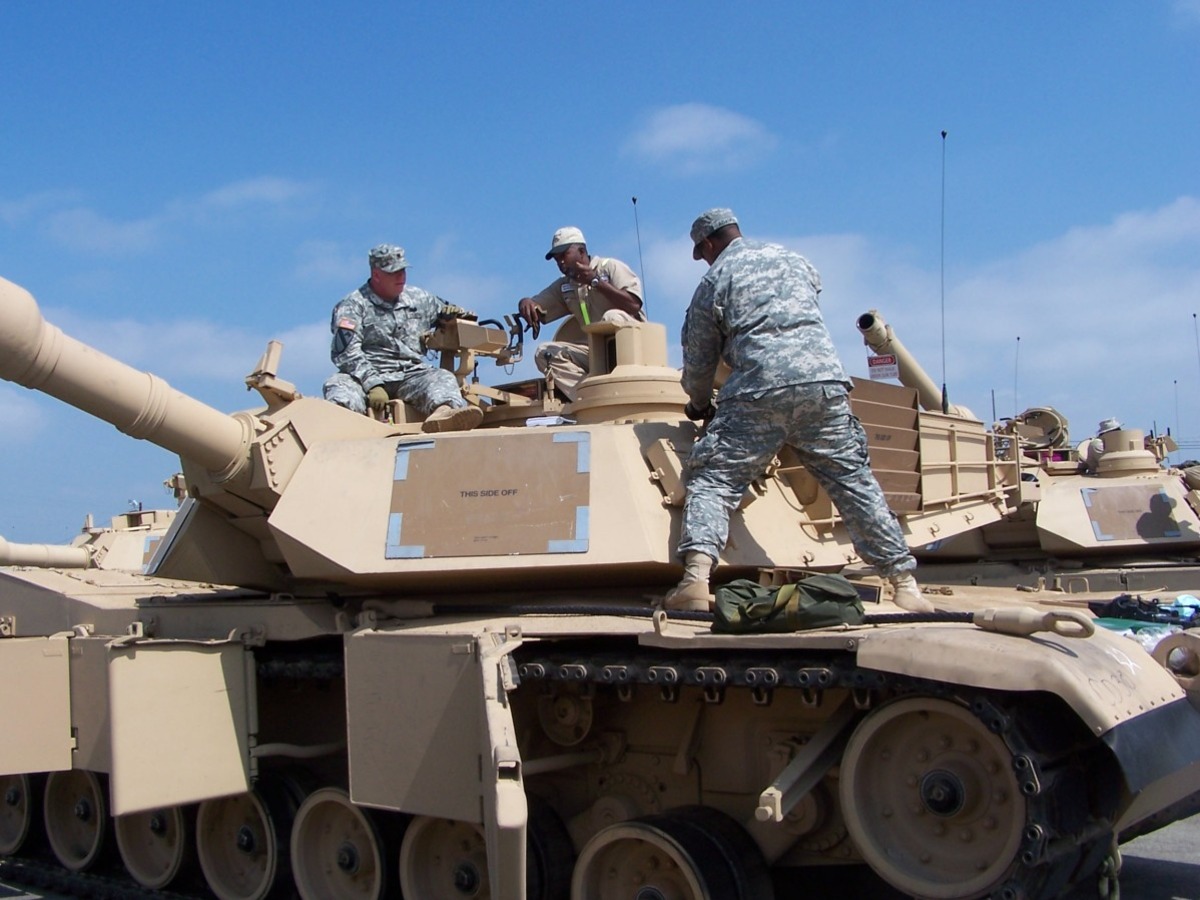
The U.S. Army awarded Allison Transmission Inc., a transmission manufacturer headquartered in Indianapolis, Indiana, a contract worth $67 million to produce new and upgraded transmissions, transmission kits, and technical support services for the Abrams Main Battle Tank, according to a Department of War contract announcement covering awards made Aug. 5, 2026.
The deal is a firm-fixed-price contract, meaning Allison agreed to deliver the work for a set price regardless of how its own production costs shake out, and it brings the total cumulative value of the underlying contract to $345,169,402.
The Army solicited this contract through the internet and received exactly one bid in response, a detail that reflects how few companies in the world are actually capable of building the specific transmission the Abrams tank requires. Work will be performed at Allison’s Indianapolis facility, with the contract carrying an estimated completion date of Aug. 5, 2026, the same day the award itself was publicly announced, a detail the Army’s notice does not further explain and that likely reflects either a rolling completion date tied to an existing multiyear agreement or a formatting quirk in how the contract’s timeline was recorded rather than a genuinely same-day delivery. Army Contracting Command at Detroit Arsenal in Michigan, the office responsible for managing ground combat vehicle contracts, oversees the deal, which carries the designation W912CH-26-F-0040.
Funding for the award drew from an unusually layered mix of sources that tells its own story about how long-running defense programs get financed. The Army obligated $90,667,633 at the time of the award, pulling from fiscal year 2026 Army working capital funds, fiscal year 2026 and 2024 Army procurement appropriations, and fiscal year 2010 Foreign Military Sales funds tied specifically to Australia and Taiwan. That 16-year-old funding line matters because it shows how international Abrams customers can lock in purchasing agreements years or even more than a decade before actual production and delivery catches up, a common pattern in major weapons programs where allied nations pay into long-term agreements that draw down gradually as the manufacturer works through a queue of both domestic and foreign orders.
The transmission at the center of this contract has been part of the Abrams tank’s design since before most of the soldiers currently driving one were born. Allison’s X1100 series transmission, a cross-drive design that combines steering, braking, and gear-shifting functions into a single compact unit rather than requiring separate systems for each task, has been standard equipment on the Abrams since Allison began producing it in 1979, four years before the tank itself entered service with the Army in 1980. The X1100 is built to handle heavy tracked combat vehicles weighing up to 63,500 kilograms (140,000 pounds) and pairs with either a diesel or turbine engine generating up to 1,120 kilowatts (1,500 horsepower), giving the Abrams the combination of raw power and precise low-speed maneuverability that has helped keep the decades-old tank design competitive against newer foreign armor.
This latest award continues a contracting pattern that has repeated almost annually in recent years as the Army works through successive rounds of Abrams modernization. The service awarded Allison an $80.6 million contract in January 2025 covering that year’s production cycle, followed by a separate award in October 2025 that pushed the program’s cumulative contract value to roughly $277 million at the time, figures that show how the Army has steadily funded Abrams transmission production and upgrades year over year rather than committing to one enormous lump-sum purchase. Much of that recent work has centered on supporting the Abrams System Enhancement Package version 3, known as SEP v3, the most heavily upgraded configuration of the tank currently fielded, which the Army has been rolling out through a combination of new production and upgrades to existing hulls that combine fresh transmission hardware with a customer’s existing tank components to reduce overall costs, a process the industry sometimes calls a zero-mileage rebuild since the resulting transmission performs like new despite reusing parts of the original vehicle.
Production and support work tied to Abrams transmissions typically flows through a small handful of specialized facilities beyond Allison’s own Indianapolis plant. New tank production runs through the Joint Systems Manufacturing Center in Lima, Ohio, the sole facility in the United States that builds new Abrams hulls, while the Army’s Anniston Army Depot in Alabama handles much of the tank fleet’s overhaul and repair work, meaning transmission kits purchased under contracts like this one often end up supporting sustainment work happening hundreds of miles from where Allison actually manufactures the components. That distributed production and repair network reflects how deeply the Abrams program has embedded itself across American industrial infrastructure over more than four decades of continuous service.
What the contract notice does not specify is exactly how many transmissions or kits this particular $67.5 million award covers, whether the work is destined primarily for new-build tanks, upgrade kits for existing vehicles, or a mix of both, or how the funding tied to Australia and Taiwan will be allocated against the broader production run. Those specifics typically remain confidential business details between the Army and its contractor rather than information included in routine daily contract announcements, leaving outside observers able to track the dollar figures and funding sources precisely while the operational details of who receives which tanks and when stay considerably harder to pin down.
The Abrams tank has now outlasted the Cold War it was designed to fight, and contracts like this one explain part of why it has managed to stay relevant for so long. A tank is only as good as the components keeping it moving and steerable under fire, and for nearly half a century, that job has run through a transmission built in Indianapolis, quietly getting upgraded, contract by contract, while the tank around it keeps changing.
Content preview only. Full article available at source. View Full Article
The U.S. Army awarded Allison Transmission Inc. a $67 million contract for the production of transmissions for the Abrams Main Battle Tank, with work to be performed in Indianapolis. The contract, announced on August 5, 2026, brings the total value of the underlying contract to $345 million. This contract continues a pattern of annual awards for Abrams modernization, reflecting the Army's ongoing commitment to upgrading its armored capabilities.
- Allison Transmission Inc. awarded a $67 million contract for Abrams tank transmissions.
- The contract is a firm-fixed-price agreement with a total cumulative value of $345,169,402.
- Work will be performed at Allison's Indianapolis facility with an estimated completion date of August 5, 2026.
- The contract funding includes a mix of fiscal year appropriations and Foreign Military Sales funds.
- The X1100 series transmission has been standard equipment on the Abrams tank since 1979.