
American Warning of Striking Iran After November 3 Elections Puts Saudi Arabia and the UAE to the Test of Independent Defense in 2026
 Ahmed Al-Rashid
American Warning of Striking Iran After November 3 Elections Puts Saudi Arabia and the UAE to the Test of Independent Defense in 2026
On October 28, 2026, Washington informed its Gulf allies that a new American-Israeli operation against Iran could begin after the midterm elections on November 3, and it could be short and violent. This is not just political leaks; it is an operational message to Riyadh, Abu Dhabi, and Doha that the region could return to a pattern of open warfare within days, with Gulf bases, facilities, and energy remaining within the range of Iranian retaliation.
The Warning Is Not a Defense Plan
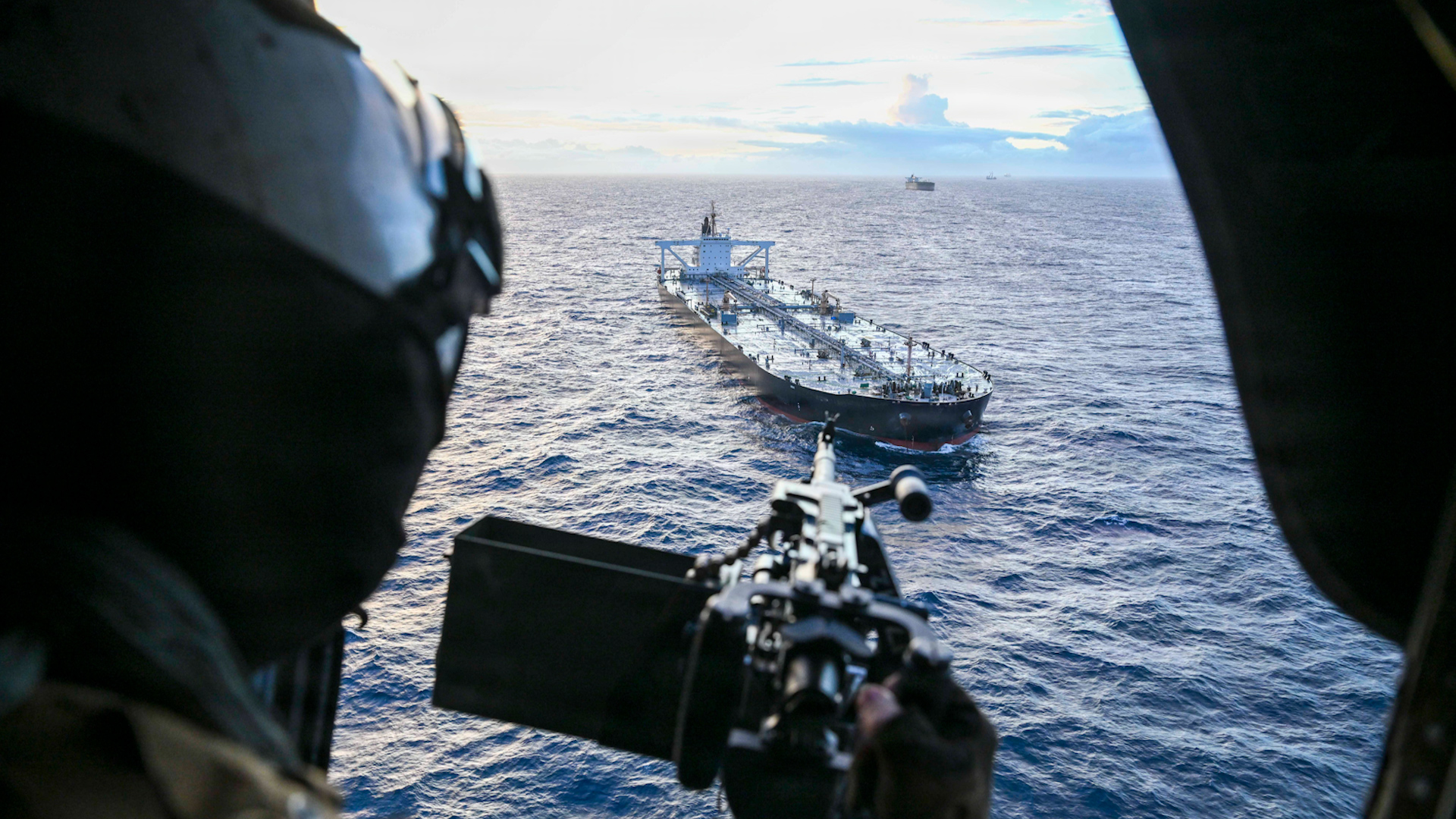
The Wall Street Journal reported that Gulf countries were asked to prepare for the possibility of renewed fighting, while reports from Haaretz and The Times spoke of a campaign that could last several days. Meanwhile, other reports indicated that the United States had sent or was preparing to send a Patriot system to Israel, and that Washington was maintaining its blockade on Iran while Qatar handled mediation communications. The final military details are uncertain, but the pattern of messages is clear: the United States wants the freedom to strike Iran and wants its partners to bear the consequences of retaliation.
Here lies the gap between possessing weapons and the ability to use them. Saudi Arabia and the UAE have a multi-layered air defense that includes Patriot and other Western systems, but they do not solely control the full picture of the threat. Early warning, satellites, target discrimination, software updates, and air battle management are all linked to varying degrees with the American network. Therefore, sending an additional interceptor missile to Israel does not mean that the Gulf has received a similar umbrella; it means that American priorities may be decided elsewhere.
The Iranian Equation Does Not Stop at Missiles
Iran does not need to destroy every American base to impose a political cost on Washington's partners. It is sufficient for it to expand the area of danger through ballistic missiles and drones, or to threaten navigation and oil facilities, or to use proxy networks against soft targets. A report from Reuters on October 29 about Iranian military networks passing equipment despite the blockade illustrates that economic pressure does not equate to operational paralysis. Tehran's ability to conceal, distribute, and rebuild stockpiles may be more important than the number of missiles displayed in military parades.
Practically, the Gulf will face three types of attacks simultaneously. The first is a direct strike on a base or facility, which air defense can partially handle. The second is a saturation attack that combines cheap drones, cruise missiles, and decoy targets, where the density of interception and its cost become an issue. The third is indirect pressure on ports, energy, and maritime insurance, which is the type that a Patriot battery alone cannot address. Anyone who has served in the region knows that protecting the runway is much easier than protecting the electricity grid, desalination plant, and pipelines all at once.
Saudi Arabia and the UAE Between De-escalation and Alignment
In recent months, Gulf countries have chosen to keep channels of dialogue with Tehran open, as war threatens not only the bases but also the economy that underpins Vision 2030 and port and energy projects. According to reports about the acceleration of direct communications between U.S. allies and Iran, this path is not out of love for Tehran, but rather to secure an exit when priorities change in Washington. The old Gulf axiom still holds: do not put all your house keys in the pocket of an ally who may change his agenda.
However, practical neutrality comes at a price. If Riyadh or Abu Dhabi allow their airspace or bases to be used in any attack, they will become direct parties in the eyes of Iran. If they refuse, they may face American pressure and lose part of their intelligence and logistical support. This is the dilemma for the Gulf buyer: spending billions of dollars on aircraft and missiles, only to discover that the decision of war and peace is still outside the national operations room.
The Triple Capability Test
- Equipment — Patriot and long-range defenses provide an important layer, but they are insufficient against a wide composite attack or against distributed civilian targets.
- Training — What is needed is not just the purchase of new batteries, but training Gulf crews to manage an independent battle and to resupply and repair under fire.
- Institutions — The absence of a unified regional decision-making center means that each country sees only part of the picture, while the adversary operates through a more flexible single network.
In my estimation, this is the true meaning of the American warning. Washington is not only testing Iran's readiness but also testing how much the Gulf depends on it. If a new round breaks out, Saudi and Emirati strength will be measured by the number of days they can operate with their own data, munitions, and national decision-making, not by the number of platforms displayed at defense exhibitions.
Conclusion
The crisis comes at a politically unstable Israeli moment after elections that did not produce a clear mandate, and at a time when Qatar is attempting mediation while Gulf countries fear a partial American withdrawal after the war. Therefore, the promised short strike may be the beginning of a longer series, not its end. Riyadh and Abu Dhabi can buy more missiles, but they cannot purchase operational independence with a single contract. The contradiction that will remain is that the Gulf wants American protection from Iran while simultaneously wanting diplomatic freedom to prevent war; and the two cannot be achieved as long as national defense relies on a network over which it does not have full operational control.
Sources
- Wall Street Journal on Gulf warning of a short and violent renewal of war
- Haaretz on preparations and American messages to allies
- Reuters on Iranian military equipment networks and circumventing the blockade
- The National on the mediation path, oil prices, and Gulf developments
The U.S. warned Gulf allies of potential military action against Iran following the November 3 elections, urging them to prepare for renewed conflict. Reports indicate that the U.S. may send Patriot missile systems to Israel and that Iran's military capabilities pose a significant threat. Gulf states are maintaining dialogue with Iran to mitigate risks of escalation.
- U.S. warns Gulf allies of potential military action against Iran after elections.
- Gulf states are urged to prepare for renewed conflict.
- Patriot missile systems may be sent to Israel.
- Iran's military capabilities include ballistic missiles and drones.
- Gulf states maintain communication channels with Iran to avoid conflict.