
Amidst Turmoil in the Gulf Region, Kuwait and Pakistan Reach Defense Agreement
[Global Times Special Correspondent in Pakistan Huang Xiaona, Global Times Special Correspondent Wu Ming] According to a report released by Kuwait's official media "Kuwait Today" on July 27, Kuwait has officially approved a comprehensive defense cooperation agreement with Pakistan, laying the framework for the two countries to expand military and security cooperation, "as Gulf countries are facing a more turbulent regional security environment." This is another instance of a Gulf country expanding defense cooperation with Pakistan following the signing of a joint strategic defense agreement between Saudi Arabia and Pakistan last September. The Indian "First Post" reported that the conflict between the U.S. and Iran, along with the Houthi attacks on shipping, has shifted perceptions regarding the long-term predictability of the U.S. security umbrella. Gulf countries are diversifying their security strategies to mitigate risks. Earlier, Reuters cited sources revealing that Turkey, Pakistan, and Saudi Arabia are drafting a joint defense agreement, while Bahrain has also shown interest in a similar agreement. As the reliability of the U.S. raises concerns among its Middle Eastern allies, countries like Pakistan are becoming an alternative or supplementary option outside of U.S. protection.
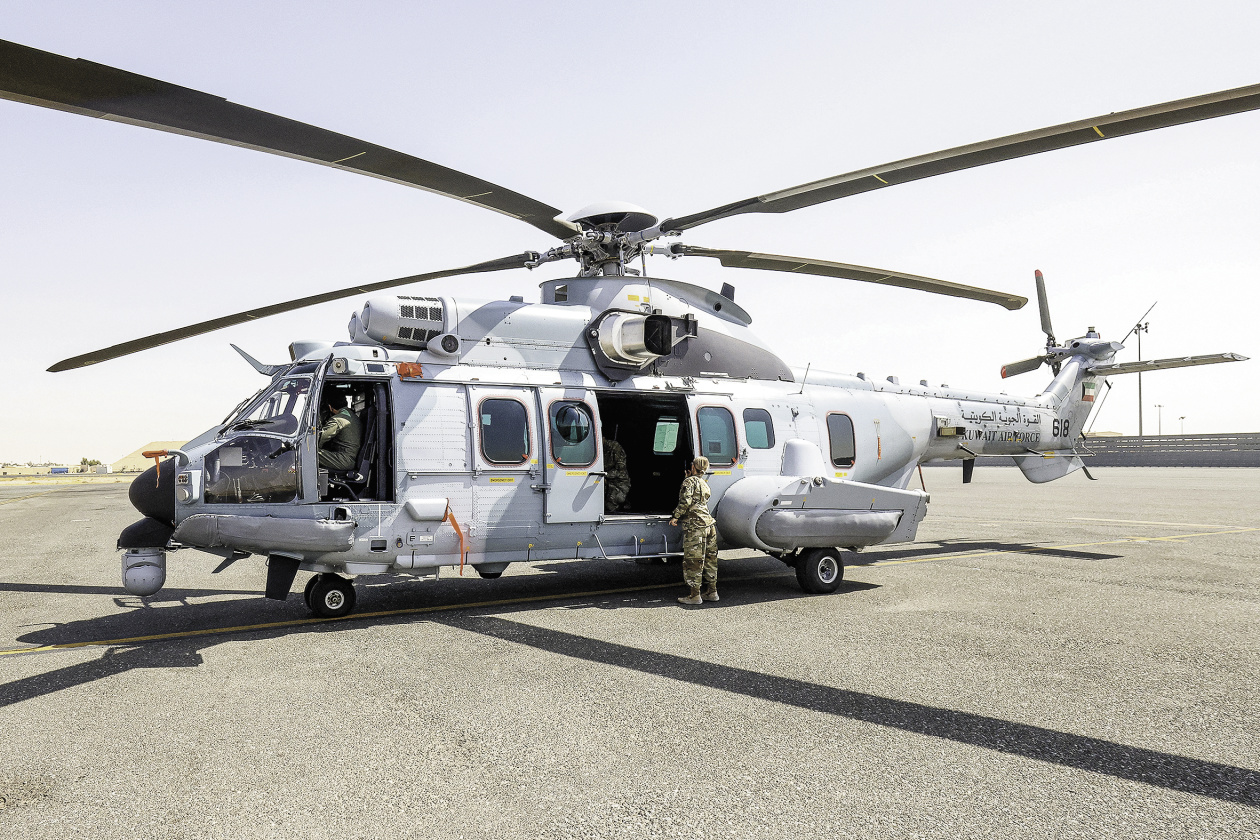
Five years, automatically renewable
According to "Kuwait Today," the five-year defense agreement reached between Kuwait and Pakistan stems from a memorandum of understanding signed by the two countries in 2023. The agreement will automatically renew after five years unless one party proposes termination. "Kuwait Today" stated that this move marks an important step for Kuwait in strengthening defense partnerships and enhancing military readiness, especially as tensions in the Gulf region continue to escalate and regional countries face increasingly severe security challenges.
Under the defense agreement reached between Kuwait and Pakistan, the two countries will enhance cooperation in military training, education and training, logistics supply, intelligence exchange, and technology research and development, and will conduct regular exchanges of military personnel and technical experts. Reports indicate that the two countries will implement, coordinate, and supervise various defense cooperation through the establishment of a joint military committee formed by representatives from the defense ministries of both countries, based on an annual cooperation plan.
Although this agreement is often compared to the joint defense agreement signed between Pakistan and Saudi Arabia, it does not contain explicit joint defense or collective security clauses. A Pakistani official familiar with the talks stated earlier this month to Reuters that although "Kuwait's wish list is extensive," Pakistan "will not, and cannot, consider deploying combat troops at this stage."
According to the "Kuwait Times," the aforementioned agreement was approved following a series of high-level meetings between the two countries in recent months. After meetings between the two militaries in May and June, Kuwaiti Foreign Minister Sheikh Salem Al-Jaber visited Islamabad from July 28 to 29 at the invitation of Pakistani Deputy Prime Minister and Foreign Minister Bilawal Bhutto Zardari. According to a statement from the Pakistani Foreign Ministry, during the visit, the two foreign ministers will hold talks and comprehensively review bilateral relations, exchanging views on regional and international situations of mutual concern. Sheikh Salem will also pay a courtesy call on Pakistani leaders. "This visit reflects the common determination of Pakistan and Kuwait to further strengthen the enduring partnership between the two countries and expand cooperation for mutual benefit," the statement said. The Pakistani "Forum Post" commented that the backdrop of the Kuwaiti Foreign Minister's visit is the recent resurgence of hostile actions in the Gulf region, with Iran attacking Kuwait and other Gulf Cooperation Council member states. Kuwait hosts at least three U.S. military bases, with approximately 13,000 U.S. soldiers stationed there.
Diversification of Kuwait's defense cooperation
According to the "Kuwait Times," this year, Kuwait has strengthened defense cooperation with several countries. Earlier this month, Kuwait approved a new decree implementing the defense cooperation agreement signed with Ukraine in 2018, focusing on military technology cooperation, including arms procurement and supply, maintenance and modernization of military equipment, and arrangements for weapons production licenses. In January of this year, Kuwait also signed an agreement with Italy to expand the strategic defense partnership between the two countries.
The London-based "Arab Weekly" commented that for decades, Kuwait's defense has heavily relied on its security partnership with Washington, including the presence of U.S. troops in Kuwait. However, recent regional crises have prompted Kuwait and other Gulf countries to seek broader defense cooperation relationships to enhance their military capabilities. The defense agreement with Pakistan reflects Kuwait's desire to expand its security partnership network.
Reports indicate that Kuwait has traditionally pursued a cautious foreign policy, and expanding defense cooperation with Pakistan still aligns with this approach, as it can enhance national defense capabilities without signaling a shift towards joining a military bloc. Reuters noted that as Gulf countries increasingly worry about the reliability of the U.S. as an ally, Pakistan offers another potential option or supplementary solution outside of U.S. protection.
Is a new regional security framework emerging?
Pakistan possesses one of the largest militaries among Islamic countries and has rich experience in air defense, counter-terrorism, intelligence, and military training. In September of last year, Pakistan signed a joint strategic defense agreement with Saudi Arabia to strengthen joint deterrence against any aggression. Pakistan's Defense Minister Khawaja Muhammad Asif stated in an interview with a local television station in May that Turkey and Qatar may also join this joint defense agreement.
"Pakistan is at the center stage," commented the Pakistani "International News" on the 28th, stating that security in the Gulf region has been based on a core assumption for decades: the U.S. would deter threats, defend airspace, and maintain the freedom of maritime routes. However, after Iran launched over 3,000 missiles and drones at Gulf countries, these nations should understand that purchasing the world's most expensive weapons does not automatically guarantee security. A reassessment of security strategies is now needed. Gulf countries are not abandoning the U.S., but are ensuring against insufficient U.S. protection. This assurance has three layers: the first layer is U.S. strategic protection, the second layer is the Gulf countries' domestic capabilities, and the third layer is regional military partners. The commentary pointed out that Pakistan could become the core of the third layer, as it brings together the elements currently most needed by Gulf countries: military scale, combat experience, geographical advantages, mutual trust, and domestic defense production capabilities.
"Saudi Arabia has taken action, Kuwait is taking action, Bahrain has also shown interest, and Pakistan, Saudi Arabia, and Turkey are discussing the construction of a cooperation framework," the commentary stated. "This is no longer speculation. A brand new regional security framework is beginning to take shape."
Kuwait and Pakistan signed a five-year defense cooperation agreement on July 27, 2023, aimed at enhancing military training, logistics, and intelligence exchange. This agreement reflects Kuwait's strategy to diversify its defense partnerships in response to increasing regional security challenges. The move follows a series of high-level meetings between the two nations and indicates a shift in military alliances in the Gulf region.
- Kuwait approved a defense cooperation agreement with Pakistan on July 27, 2023.
- The agreement is for five years and focuses on military training, logistics, and intelligence exchange.
- This agreement follows a series of high-level meetings between the two countries.
- Kuwait is diversifying its defense partnerships amid regional security challenges.
- Pakistan is becoming a potential alternative security partner for Gulf states.