
Arizona firm patents smarter battlefield power system
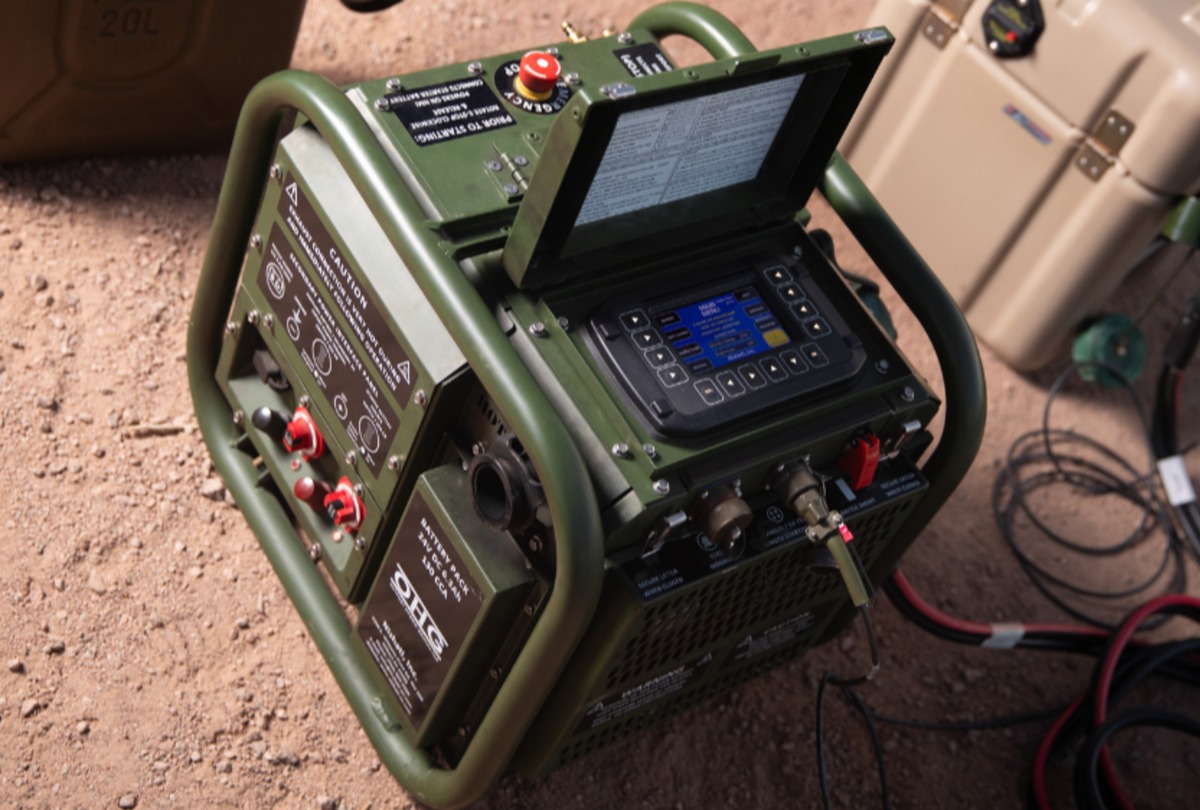
Nishati Power Technologies announced that the U.S. Patent and Trademark Office issued it Patent No. 12,671,257, covering hybrid power generation technology built specifically to solve that problem for troops operating far from any power grid.
The issue Nishati’s patent addresses sounds technical, but it plays out as a very physical headache for soldiers in the field. Large-format lithium batteries, the kind increasingly used to power drones, sensors, radios, and other battlefield electronics, draw an especially large surge of electrical current the moment charging begins on a nearly empty battery, a phenomenon engineers call inrush current. Many of the smaller generators the military currently fields cannot handle that initial surge cleanly, either stalling out entirely or requiring troops to haul along extra external electronics just to manage the load, adding weight and complexity to exactly the kind of small, mobile units that need to travel light. Nishati built its patented system to manage that surge directly within a single control unit, eliminating the need for that extra equipment altogether.
The technology is already built into Nishati’s Outpost Hybrid Generator, a line of portable power units the company markets specifically for what it calls the tactical edge, the front-line environment where small units operate with limited logistics support and increasingly rely on battery-powered equipment for everything from communications to unmanned systems. Robert Charette, Nishati’s chief executive officer, framed the patent as a direct response to what troops have been asking for.
“Our newly patented technology was built around today’s operational reality. Warfighters need less equipment, not more,” Charette said. “As battery-powered capabilities continue to expand across the battlefield, we created a solution that simplifies how units generate and manage power in the field while remaining portable, scalable, and ready to support next-generation systems.”
Weight matters enormously for equipment troops have to physically carry or load into a vehicle, and Nishati says its flagship OHG 2000-DC generator weighs just 127 pounds (57.6 kilograms), a figure the company describes as delivering superior power density compared to similar tactical power generation options currently available, though that specific comparison reflects the company’s own claim rather than independent testing. The generator is designed for plug-and-play integration with existing battery systems and DC power setups already in military use, letting it provide standalone power at the point troops actually need it without requiring a tactical vehicle to sit still and function as a mobile charging station, a tradeoff that would otherwise strip away the vehicle’s ability to keep moving.
Rick Schilke, Nishati’s chief operating officer, said the design grew out of studying exactly how small units actually operate rather than starting from a generic power specification.
“Our team approached this challenge from both an operational and engineering perspective,” Schilke said. “We understood the growing power demands facing small units and designed a solution that could move with the warfighter, integrate with next-generation systems, and reliably perform in harsh environments, addressing a challenge that has historically been difficult or impossible for generators of similar size and output.”
That modular design lets units run individual generators on their own or link multiple units together in parallel, giving a small team the flexibility to scale up power generation as its equipment load grows without needing to swap in an entirely different, larger generator every time mission requirements change.
The Marine Corps selected the company’s OHG 2000-DC as its Lightweight DC Generator under the Small Unit Power program, a Marine Corps effort to standardize and modernize how small units generate and manage electricity in the field, with more than 600 units expected to reach Marine units over the next two years. Nishati separately completed early delivery of its Outpost Solar Generator 600, a portable solar power kit that forms the larger solar component of that same Small Unit Power portfolio, giving Marine units a way to generate electricity from sunlight rather than fuel when operating in extended, remote deployments where resupply runs are limited or risky.
Nishati has built its business specifically around this narrower slice of the military power market, focusing on systems delivering roughly 5 kilowatts or less rather than competing in the large, vehicle-mounted generator category that has traditionally dominated military power generation. The company, a certified Service-Disabled Veteran-Owned Small Business that has worked with the Department of War and other national security customers since 2014, designs, engineers, and assembles its systems entirely in the United States, an approach the company says lets it move quickly from early concept to fielded hardware compared to larger, less vertically integrated competitors.
As the military continues pushing artificial intelligence tools, autonomous drones, and other battery-hungry systems further down to the individual small unit level, the unglamorous question of how those systems actually stay charged in the field becomes harder to ignore. Nishati’s bet is that solving the specific, narrow engineering problem of charging a nearly dead lithium battery without stalling a generator or bolting on extra equipment matters just as much to a unit’s operational readiness as any of the flashier technology that battery is ultimately meant to power.
Content preview only. Full article available at source. View Full Article
Nishati Power Technologies announced the issuance of a patent for a hybrid power generation system designed for military use, specifically addressing the power needs of troops operating away from power grids. The U.S. Marine Corps plans to acquire over 600 units of the OHG 2000-DC generator, which weighs 127 pounds and integrates with existing military battery systems. This technology aims to simplify power management in the field, enhancing operational readiness for small units.
- Nishati Power Technologies received Patent No. 12,671,257 for hybrid power generation technology.
- The OHG 2000-DC generator weighs 127 pounds and is designed for tactical use.
- The U.S. Marine Corps plans to acquire over 600 units of the OHG 2000-DC generator.
- The technology addresses the issue of inrush current in lithium batteries used in military equipment.
- Nishati's systems are designed to integrate with existing military battery systems.