
AUKUS Gets One U.S. Attack Submarine and a Ten-Year Problem
 Marcus Chen
AUKUS Gets One U.S. Attack Submarine and a Ten-Year Problem
A Virginia-class attack submarine is scheduled to support Australia’s Submarine Rotational Force-West in 2027. That is a real military capability, not a press-release concept. It is also one boat. The gap between those two facts is the central problem for AUKUS.
The 2027 Commitment
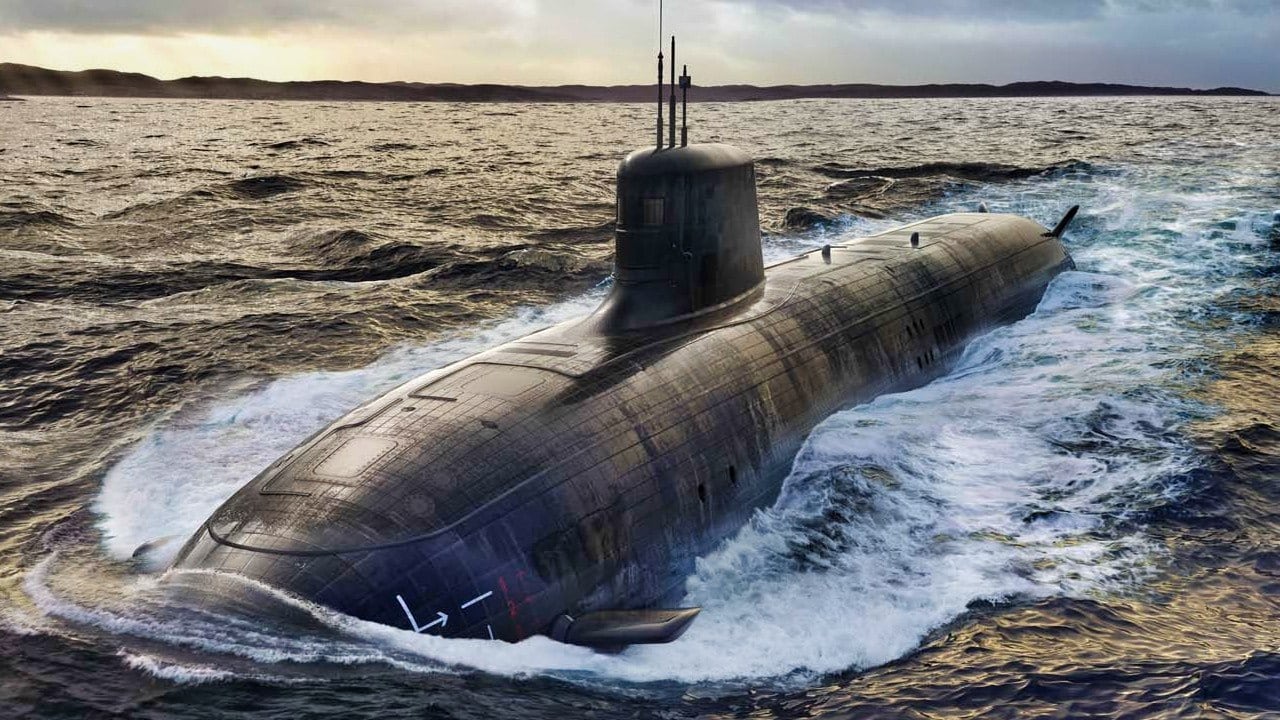
The U.S. Navy and Australian officials have now identified the first American attack submarine assigned to the 2027 rotational force in Western Australia. The arrangement is part of the pathway toward SSN-AUKUS, the nuclear-powered submarine Australia and the United Kingdom intend to build. Until those Australian boats enter service, Canberra will depend on visiting U.S. and British submarines for the undersea presence that AUKUS promises.
The immediate operational value is straightforward. A Virginia-class submarine brings stealth, long-range sensors, Tomahawk land-attack missiles, heavyweight torpedoes, and the ability to remain submerged for months. From HMAS Stirling, it can train with Australian crews, improve antisubmarine warfare coordination, and complicate Chinese planning across the eastern Indian Ocean and western Pacific.
But a rotational assignment is not a permanent squadron. A single submarine has to transit, train, maintain, and eventually return to its home port. Even with careful scheduling, one hull cannot provide continuous coverage. When it enters a maintenance period, the presence disappears. Anyone who has served on a destroyer knows the difference between an operational promise and an available ship.
Why the Numbers Matter
Australia is building the infrastructure for a larger force at HMAS Stirling, but concrete, piers, and a support complex do not create submarine availability. The United States still has to produce Virginia-class boats for its own fleet while repairing an aging attack-submarine force. The Royal Australian Navy must also develop nuclear stewardship, maintenance, engineering, and crew pipelines before it can operate SSN-AUKUS independently.
That creates three separate clocks. The first is the 2027 rotational presence. The second is the planned transfer of Virginia-class submarines to Australia later in the 2030s. The third is the arrival of Australian-built SSN-AUKUS boats in the 2040s. The first clock is moving. The second depends on U.S. production capacity and political approval. The third depends on an industrial base Australia is only beginning to assemble.
The danger is that policy language treats these clocks as one continuous capability. They are not. A submarine in Australian waters in 2027 does not mean Australia has a submarine force. It means Washington has temporarily extended one of its own forces into the region.
The Chinese Calculation
Beijing will not evaluate AUKUS by counting announcements. It will count hulls, patrol days, weapons, and the distance between a submarine’s operating area and its repair base. China’s first aircraft carrier has recently shown a more regular pattern of voyages through disputed Asian waters, while Chinese naval and maritime forces continue to test how quickly they can monitor U.S. activity. AUKUS is entering a theater where presence is measured over time, not at the moment of a ceremony.
A single Virginia-class boat can impose uncertainty. It can force the People’s Liberation Army Navy to allocate more aircraft, ships, and undersea sensors to antisubmarine search. That is useful even when the submarine is not firing. But the effect is strongest when the patrol pattern is persistent and difficult to predict. One rotational boat produces intermittent pressure. Several boats, supported by Australian aircraft, sensors, and allied logistics, would produce a different problem.
This is why the 2027 deployment should be treated as a trial of the operating model rather than proof that AUKUS has solved its military problem. The test is whether the United States and Australia can sustain a cycle of deployment, training, maintenance, and replacement without consuming the force needed elsewhere.
The Industrial Constraint
Washington has pledged to expand submarine production while also selling or transferring Virginia-class boats to Australia. That is politically attractive and militarily logical. It is also an arithmetic challenge. Every submarine delivered to Australia is a submarine that must be built, crewed, maintained, and removed from the U.S. fleet plan. Every delay at an American shipyard pushes the same delay into the alliance.
Australia can reduce the risk by funding its industrial contribution early, expanding nuclear-trained personnel, and treating sustainment as the core of the program rather than an afterthought. The United Kingdom can help with design and training, but it cannot manufacture time. The United States can provide the initial capability, but it cannot guarantee an unlimited supply of attack submarines while its own fleet remains below its desired force level.
AUKUS is strongest when it is described as a bridge. It becomes dangerous when the bridge is mistaken for the destination.
What 2027 Should Prove
The first rotational submarine should be judged against measurable standards: how many days it is available in theater; how often Australian crews participate in meaningful operations; whether maintenance can be supported locally; and whether the next boat arrives before the first one leaves. Those figures will tell us more than the number of ministerial statements issued in Perth.
There is a sound military case for the arrangement. Australia’s geography gives allied submarines access to the Indian Ocean, the approaches to Southeast Asia, and the wider Pacific. But geography only matters if ships can be sustained there. The rotational force is a down payment, not a completed capability.
The uncomfortable conclusion is simple. AUKUS will have one U.S. attack submarine in the Australian rotation before it has an Australian nuclear submarine. That is progress. It is not mass. Unless the allies solve production, crewing, and maintenance at the same time, the alliance will spend the next decade advertising a fleet that exists only one hull at a time.
Sources
The U.S. Navy will deploy one Virginia-class attack submarine to HMAS Stirling in Western Australia in 2027 to support Australia's Submarine Rotational Force-West. This deployment is part of the AUKUS agreement, which aims to enhance military cooperation between the U.S., Australia, and the UK. However, the reliance on a single submarine raises concerns about continuous operational capability until Australia can independently operate its own nuclear submarines.
- A Virginia-class submarine will support Australia's Submarine Rotational Force-West in 2027.
- Australia will rely on U.S. and British submarines until its own SSN-AUKUS submarines are operational.
- The U.S. Navy is expanding submarine production while transferring Virginia-class boats to Australia.
- The operational effectiveness of a single submarine is limited due to maintenance and training requirements.
- AUKUS is seen as a bridge to future capabilities rather than a complete solution.