
Australia forges ahead with 155mm ammo production
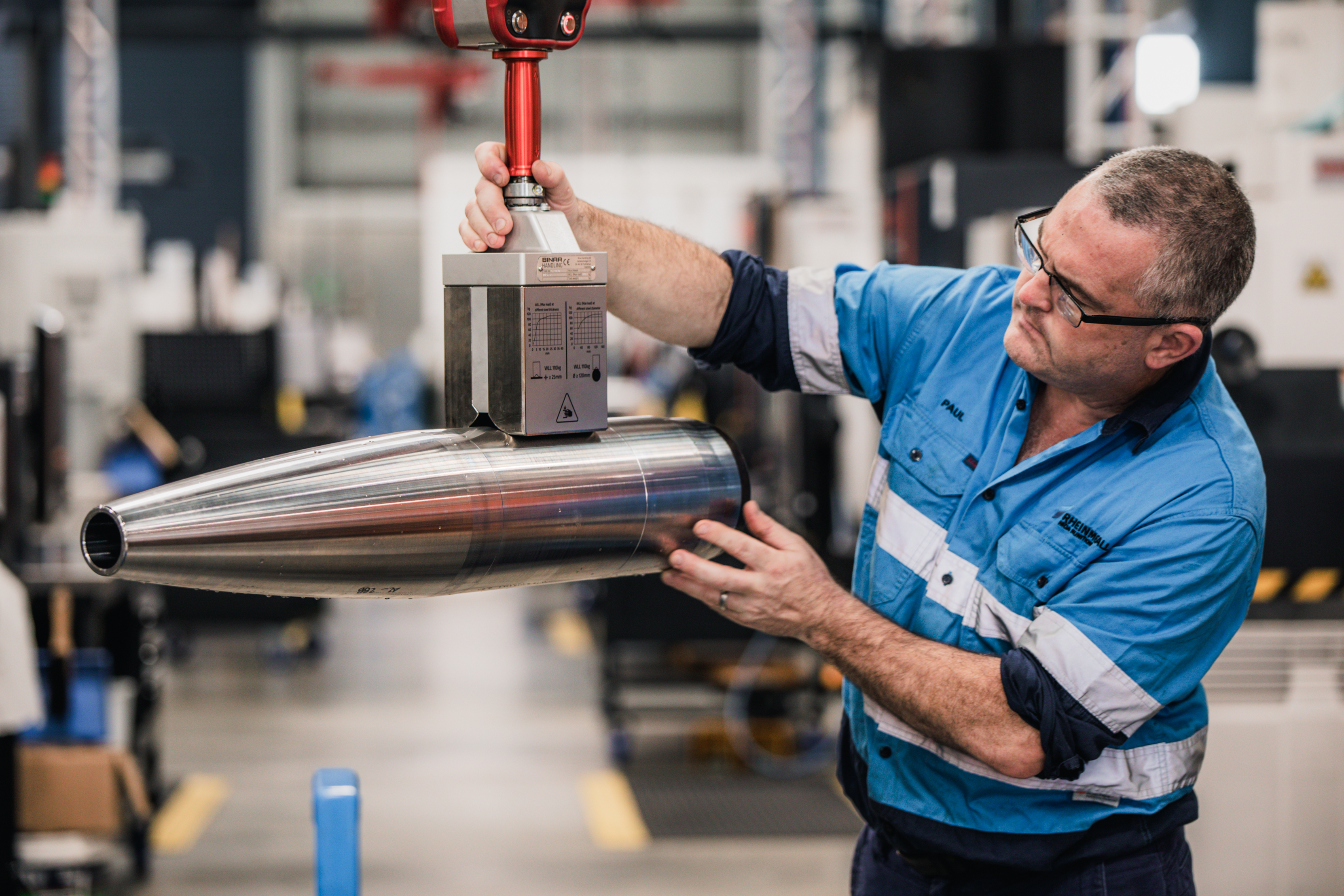
CHRISTCHURCH, New Zealand — Amid efforts to ramp up ammunition production in Australia, the government announced a A$72 million – around US$51 million – contract to set up an M795 155mm artillery projectile production line there.
The deal with Rheinmetall Nioa Munitions (RNM) was announced on June 8. It will see the joint venture forging 155mm shells for the Australian Army and others at its Maryborough facility in Queensland.
Notably, this is the first time M795 shells will be forged outside North America. The ammunition is in heavy demand, as Ukraine chews through 5,500-6,000 rounds every day.
The M795 rounds are fired by Australia’s M777A2 towed howitzers and the AS9 Huntsman self-propelled howitzer now entering service.
The U.S. military and other the force of other partner nations use the ammunition, too, so exports are part of the business equation.
This RNM deal reverses a 2024 move asking Thales Australia to establish a 155mm forging capability at a government-owned site at Benalla.
That decision was unusual because RNM’s Maryborough facility had already been forging 155mm shells since June 2022. Its DM-family casings are sold to Germany, where they are filled and fused for onward delivery to Ukraine.
Allocating the M795 contract to an existing facility rather than creating a parallel production line from scratch appears more sensible, analysts said. Canberra eventually recognized this, for in June 2025 it canceled the M795 award to Thales.
All is not lost for Thales Australia, though, as the government is investing A$9.2 million to modernize and refurbish an existing 5-inch naval projectile production line at Benalla, Australia.
The Maryborough factory will commence M795 production by late 2028 at a rate of 15,000 rounds annually. It will also have an annual surge production capacity of 100,000 rounds.
“Domestic forging ensures Australia has control of the supply chain and will always have access to forged projectiles, reducing lead times and better equipping the Australian Defence Force in times of conflict,” the Department of Defence said in a statement.
Australia also needs to close another sovereignty gap. It currently cannot load, assemble and pack explosives into 155mm projectiles, nor add fuses.
Nioa describes its munitions facility as “the most advanced of its kind” in the world.
“The RNM facility at Maryborough has successfully ramped up to three shifts per day, which is a significant milestone in production capacity expansion,” Mick Ahern, Nioa Australia & New Zealand’s General Manager for Weapons & Munitions, told Defense News. “This equates to a capacity of 3,500 projectile bodies per month.”
Australia awarded a A$72 million contract to Rheinmetall Nioa Munitions to establish a production line for M795 155mm artillery projectiles in Maryborough, Queensland. Production is set to commence by late 2028, with an annual output of 15,000 rounds and a surge capacity of 100,000 rounds. This move aims to enhance domestic ammunition supply and reduce lead times for the Australian Army and allied forces.
- Australia awarded a A$72 million contract for M795 155mm artillery projectile production.
- Production will take place at Rheinmetall Nioa Munitions' facility in Maryborough, Queensland.
- The facility will produce 15,000 rounds annually with a surge capacity of 100,000 rounds.
- M795 rounds are in high demand due to usage in Ukraine.
- The contract reverses a previous decision to establish a new production line at a different site.