

The Australian Army recently modified an American-built M1A2 SEPv3 Abrams main battle tank to appear like a Chinese Type 99 tank, which is the primary advanced armor used by China’s People’s Liberation Army (PLA).
The Abrams was painted in a distinctive Chinese PLA digital camouflage pattern by soldiers from B Squadron, 3rd/4th Cavalry Regiment; It also includes dummy external fuel tanks on the rear hull to recreate the Type 99’s silhouette, something that Russian and Chinese tanks have in common, although they are normally attached to the hull.
The soldiers were acting as the opposing force (OPFOR) element for the Royal Australian Armored Corps Officer Basic Course (ROBC), during their field training. The RAAC are known as the “Black Hats,” and are stationed at Puckapunyal, Victoria, Australia.
The Exercise Is For New Junior Officers Learning Armored Warfare
The training will end with a combined arms training exercise in Exercise Tungsten Forge/Gauntlet Strike, the capstone exercise certifying junior officers for mechanized command against a simulated peer adversary.
“Good luck to the junior officers as they attempt to outmaneuver a seasoned enemy commander,” the School of Armor said on its Facebook page along with the photos.
The end result is an Abrams that’s visually similar to a Type 99, China’s first mass-produced third-generation main battle tank, and the most prevalent in the People’s Liberation Army inventory.
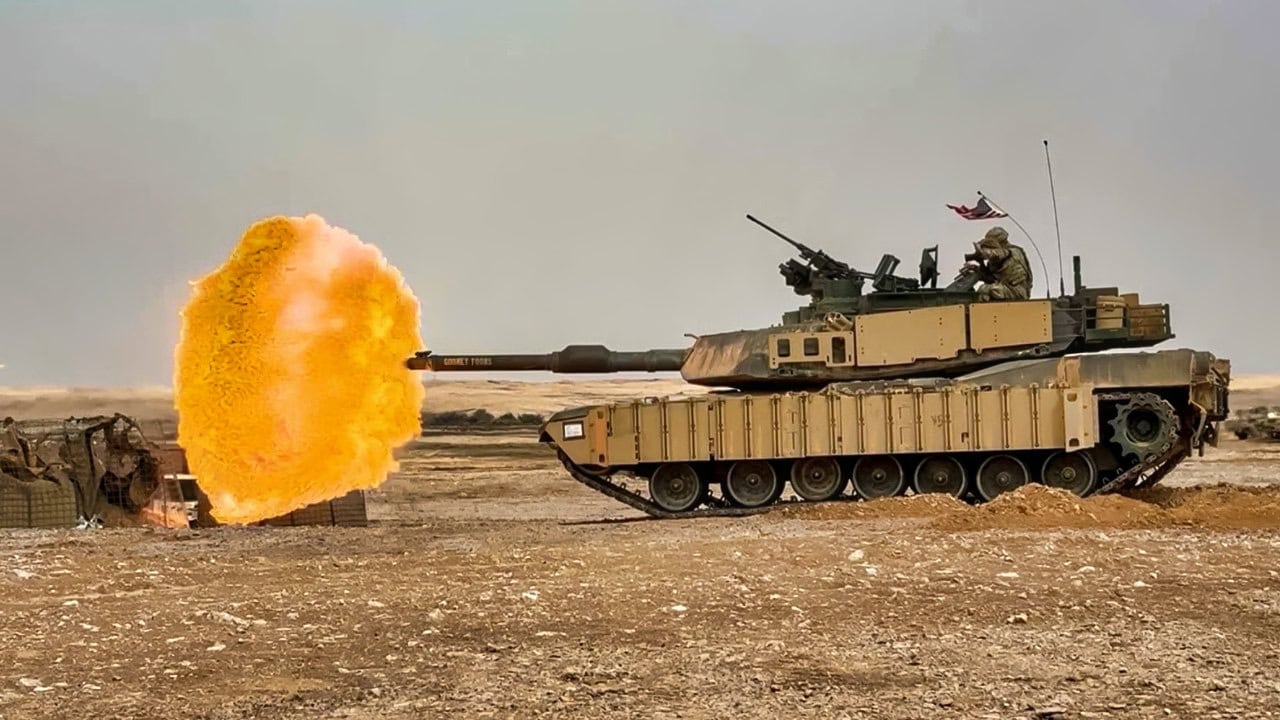
U.S. Army Soldiers assigned to Troop G, 2nd Squadron, 278th Armored Cavalry Regiment, Task Force Reaper fire a M1A2 Abrams tank within the U.S. Central Command’s area of responsibility during the Friendship 25 exercise, Feb. 12, 2025. Exercises like Friendship 25 develop U.S. and Royal Saudi Land Forces service members and enable increased military capacity to address threats to regional security. (U.S. Army Photo by U.S. Army Photo by Maj. Matthew Madden)
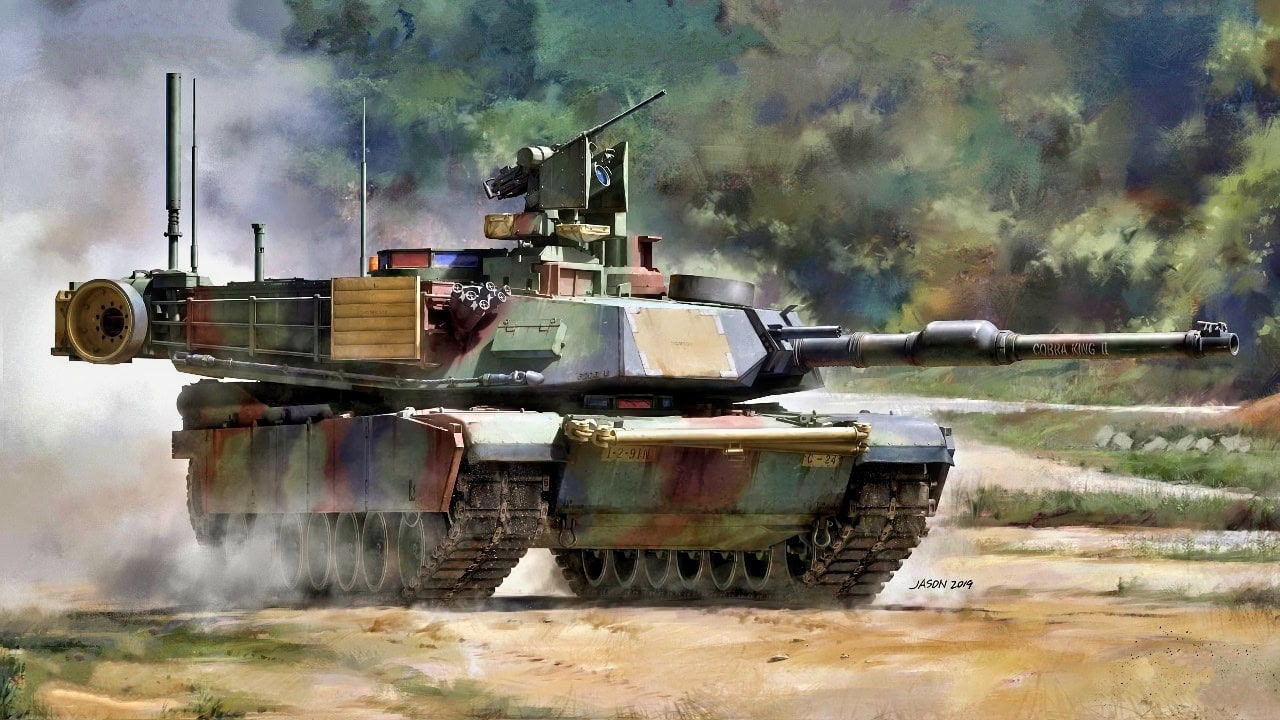
M1 Abrams Tank. Image Credit: Creative Commons.
It helps training cavalry officers practice real-time vehicle identification and tactical engagement; however, it isn’t designed to mimic the capabilities of the Type 99.
American OPFOR At The National Training Center Do This As Well
At the National Training Center (NTC) in Fort Irwin, California, the OPFOR, primarily portrayed by the 11th Armored Cavalry Regiment (Blackhorse), acts as a highly skilled, dedicated enemy.
Their role is to replicate near-peer adversaries using threat-based tactics, forcing visiting U.S. brigade combat teams to fight for survival and readiness under realistic combat conditions.
The OPFOR’s function is to replicate complex, adaptive enemy doctrines, combat strategies, and modern large-scale combat operations.
They aggressively test rotational units by applying pressure through electronic warfare, cyber threats, and tactical maneuvers.
And their intimate knowledge of the terrain in the Mojave Desert gives them a leg up on the units rotating in for training at the NTC.
As for “enemy” vehicles at the NTC, the OPFOR uses visual modifications, known as VISMODs, to make U.S. military vehicles look like enemy or foreign equipment.
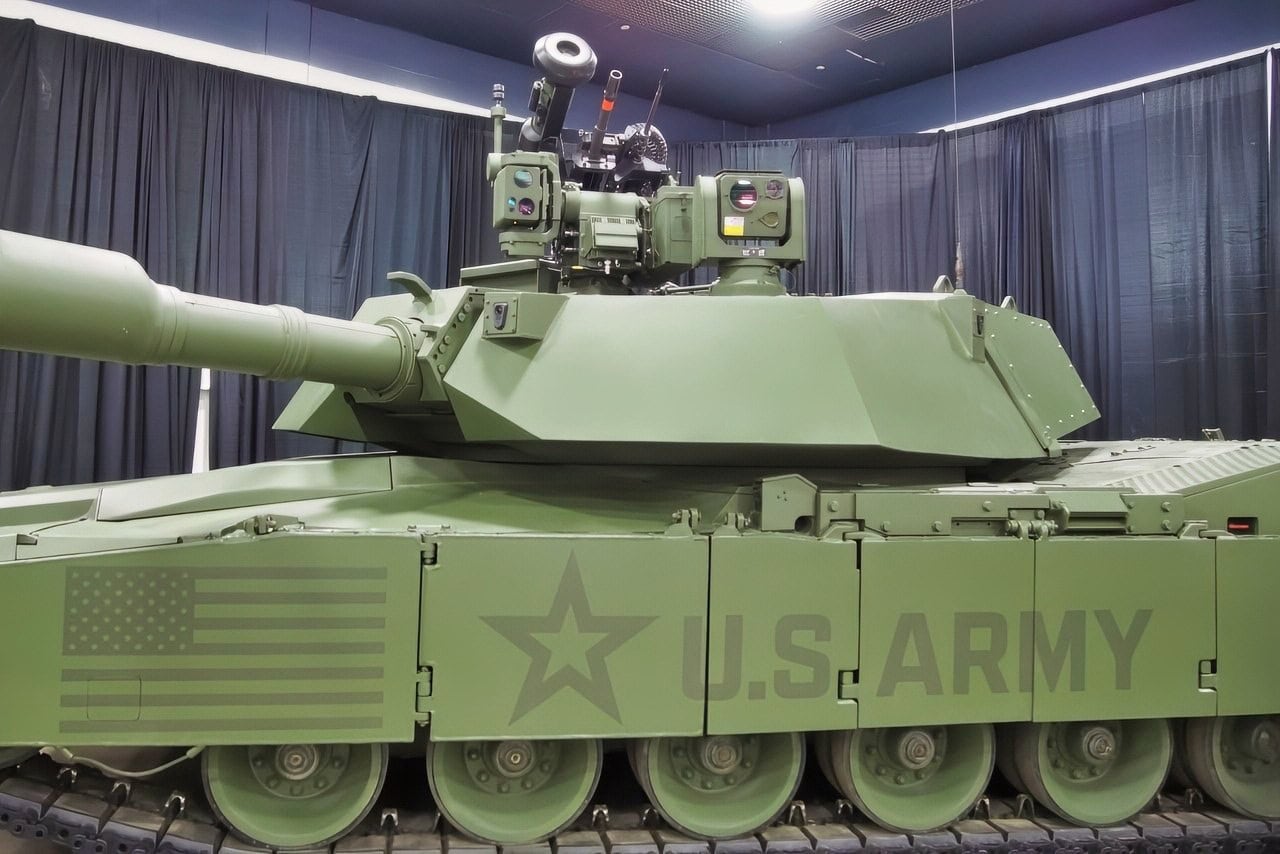
M1E3 from the Detroit Auto Show. Taken by 19FortyFive.com on 1/17/2026.
Modified M113 armored personnel carrier chassis fitted with altered Bradley turrets to mimic foreign infantry fighting vehicles and tanks like the BMP or T-90.
Crews remove side skirts on tanks or add faux shapes, panels, and distinct paint patterns to change their profile and silhouette.
This adds a touch of realism to the training, aiding officers and troops in target recognition, vehicle identification, and honing their battlefield observation skills in realistic conditions.
However, while US OPFOR uses antiquated vehicles for training, the Aussie school uses front-line M1A2 Abrams tanks that can easily be returned to their normal configuration with a few cosmetic changes.
Land 907 Phase 2 Program
Australia is getting 75 new M1A2 SEPv3 Abrams under the AU$3.5 billion (roughly USD 2.3 billion) LAND 907 Phase 2 program, fully replacing its older M1A1 tank fleet, along with the armored support vehicles.
Australia, in turn, sold 49 of its older M1A1 Abrams to Ukraine, something the United States was against. American officials raised concerns over the heavy tanks’ high logistical burdens, difficult maintenance pathways, and vulnerability to modern drone warfare.
Despite these reservations and temporary administrative hurdles, the U.S. cleared the transfer, and Australia began delivering the armor to Ukrainian armored troops.
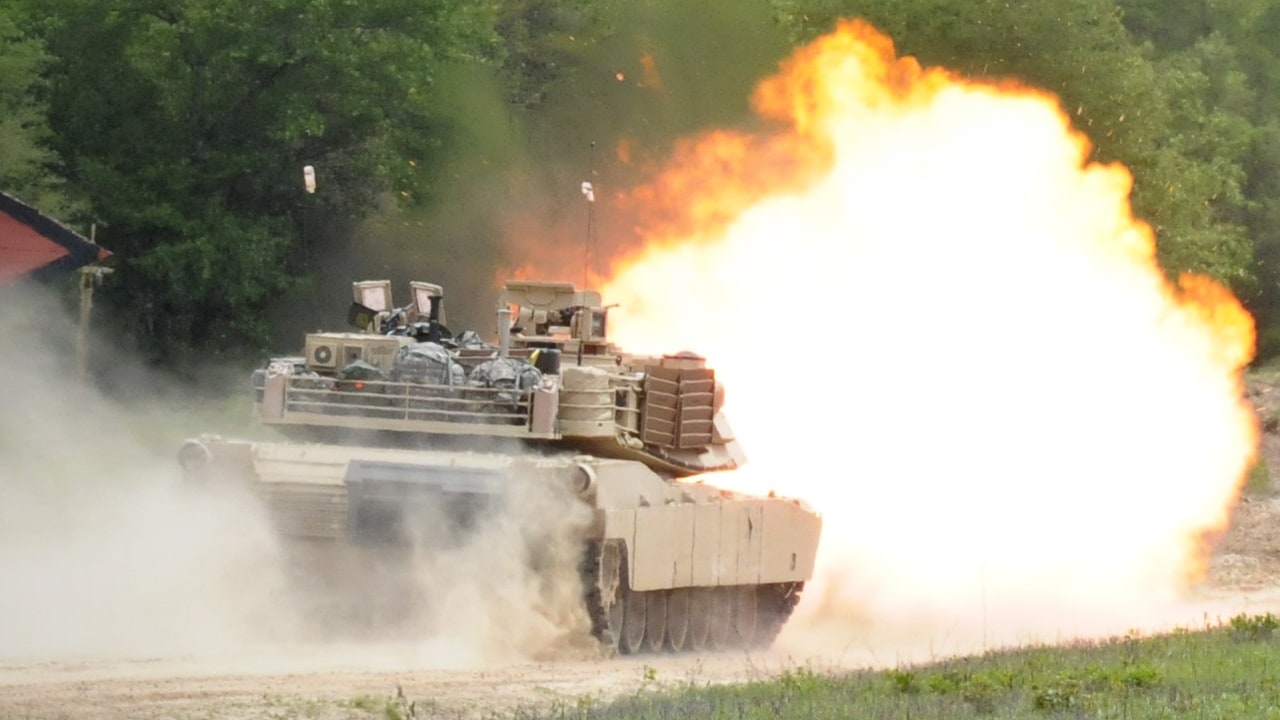
M1 Abrams Tank like in Ukraine. Image Credit: Creative Commons.
China Mimics US-made Vehicles For Their Training As Well
The Chinese military (PLA) configures uncrewed surrogate vehicles, trucks, and full-scale replicas to mimic U.S. vehicles such as M142 HIMARS launchers, Humvees, and Arleigh Burke-class destroyers, even an aircraft carrier, within remote desert training and weapons-testing ranges.
These realistic mock-ups are utilized during opposing force (OPFOR) wargames and precision missile target practice to train targeting sensors and hone long-range strike capabilities.
Life-size 3D models and outlines of U.S. Navy destroyers and aircraft carriers are positioned in the Taklamakan Desert, some mounted on moving rail systems.
These include aviation targets, such as full-scale models duplicating U.S. fifth-generation fighter jets like F-22s and F-35s near mock runways.
“Less About Paint, More About Posture”
The intriguing paint job on Australia’s Abrams tanks speaks volumes about the world situation, especially in the Indo-Pacific region.
With China’s aggressive posturing in the region, it shows that Australia is very much aware of the possibility of a future conflict with Beijing.
Defense Security Asia wrote that “the exercise is less about paint than posture, revealing how seriously Canberra treats prospective high-intensity land conflict with Chinese armored forces.”
MORE – China’s J-20 Stealth Fighter Was Built to Fight F-22 and F-35s
About the Author: Steve Balestrieri
Steve Balestrieri is a National Security Columnist. He served as a US Army Special Forces NCO and Warrant Officer. In addition to writing on defense, he covers the NFL for PatsFans.com and is a member of the Pro Football Writers of America (PFWA). His work was regularly featured in many military publications.