
Australia SM-2 Land Test Shows Pacific Base Defense Is Still Thin
 Marcus Chen
Australia SM-2 Land Test Shows Pacific Base Defense Is Still Thin
One SM-2 left a trailer at Woomera and killed a BQM-74E target drone. That is the useful part of the story. The dangerous part is that Australia had to bolt together a sea-based missile, a virtualized Aegis combat system, a CEA Technologies phased-array radar and a Derringer Expeditionary Launch System to get a medium-range ground-based air-defense shot it could actually fire.
Defense News reported on July 23 that the test took place during Exercise Taipan Strike 2026, after collaboration among the Australian Department of Defence, Lockheed Martin and the U.S. Navy. The interceptor was an SM-2, the launcher was trailer-mounted, the fire-control logic came from an expeditionary Aegis configuration, and the sensor was Australian. That matters because Canberra is not just testing a missile. It is testing whether naval air-defense stocks can defend land bases before a dedicated ground system arrives.
The Shot Was Clever Because The Inventory Is Small
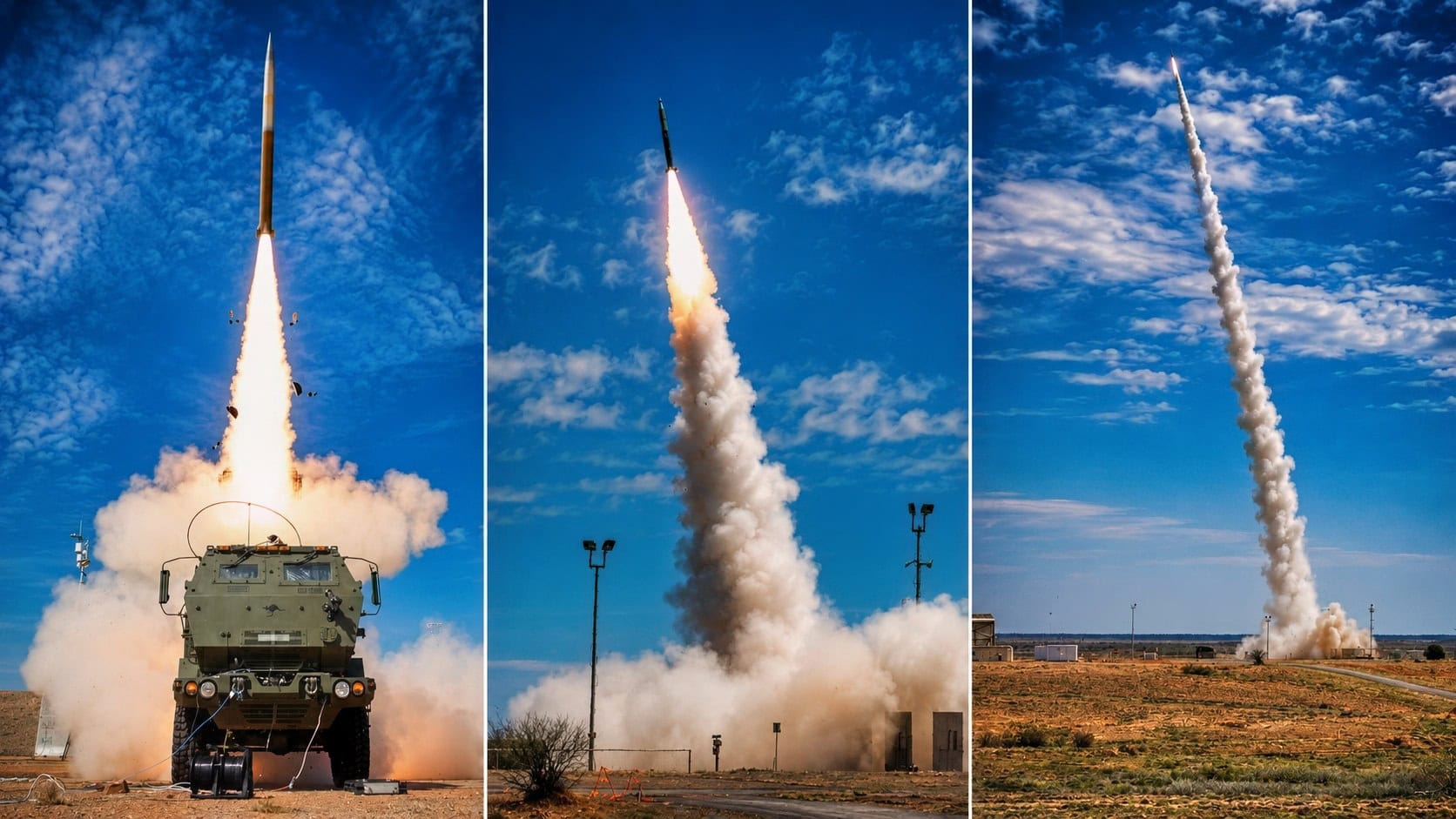
The SM-2 is not a boutique missile in Australian service. It is part of the Royal Australian Navy magazine, carried by Hobart-class air warfare destroyers and planned around the Aegis ecosystem that will also shape the Hunter-class frigates. The Block IIIB and IIIC variants give Australia medium-range air defense against aircraft and cruise-missile type targets. The SM-6, already identified by Lockheed Martin as compatible with the same naval family, opens a more ambitious path toward ballistic-missile defense if the launcher and fire-control chain can handle it.
That is why this test is more than a range-day success. Australia is trying to solve a magazine problem with architecture. If the same command system can cue the same missile family from ship or shore, a commander gets more options than a fixed battery tied to a single service. In a Pacific fight, options matter because bases are few, distances are large, and warning time is short.
But flexibility is not the same as depth. A Hobart-class destroyer has 48 Mk 41 vertical launch cells. Those cells must cover area air defense, self-defense, anti-submarine weapons and, depending on configuration, strike or missile-defense roles. Moving SM-2 or SM-6 logic ashore does not magically create a larger missile stockpile. It creates another place where the same stockpile can be consumed.
China Forced The Timing
The political timing was not subtle. Defense News noted that Australia announced the test on July 9, three days after a Chinese submarine launched a nuclear-capable ballistic missile deep into the South Pacific. Canberra had conducted the shot earlier, but chose that week to publicize it. That is how governments signal without saying too much.
For Australia, the immediate military problem is not a Chinese invasion fleet approaching Darwin. It is long-range missile coercion against northern bases, ports, fuel farms, airfields and command nodes that would support U.S. and allied operations. RAAF Base Tindal, Darwin, Learmonth, Scherger and the Cocos Islands are not abstractions on a briefing slide. They are the places that make air refueling, maritime patrol and bomber dispersal possible across the eastern Indian Ocean and western Pacific.
Anyone who has served on a destroyer knows the geometry is unforgiving. A ship can maneuver, radiate selectively and reposition its defended footprint. A runway cannot. A fuel tank cannot. A pier cannot. If those fixed targets sit inside range of cruise missiles, ballistic missiles or long-range drones, the defender needs interceptors, sensors, decoys, repair crews and enough launchers to keep shooting after the first salvo.
The Patriot Comparison Misses The Point
The easy headline is that Australia is building a cheaper Patriot alternative. That is only partly true. Patriot is a mature land system with its own radar, command architecture and interceptor family. The Australian prototype is closer to a modular air-defense bridge: use naval missiles already bought, put Aegis in a deployable form, connect it to a local radar, and see whether the kill chain works outside a ship.
That bridge has real advantages. CEA radars are a serious Australian industrial asset. Aegis is familiar to the Australian Navy and tightly connected to U.S. Navy doctrine. The SM-2 and SM-6 production ecosystem is larger than anything Australia could build alone. If Canberra can make those pieces talk cleanly, it gains a deployable layer for base defense without waiting a decade for a pristine acquisition program.
The problem is volume. Medium-range air defense is expensive because misses are unacceptable and targets are cheap enough to arrive in numbers. A BQM-74E drone at Woomera is a clean test target. A wartime raid could include decoys, drones, cruise missiles and ballistic trajectories designed to force a defender to spend interceptors. China does not need every missile to hit. It needs enough confusion and enough damage to slow sortie generation and make allied commanders move tankers, P-8s, bombers and munitions farther from the fight.
That is the uncomfortable arithmetic. If Australia has only a handful of expeditionary launchers and a limited magazine of naval interceptors, the system protects selected nodes for selected periods. It does not create a national missile shield, and it does not remove the need for passive defense, hardened storage, runway repair, dispersal and deeper missile stocks.
What Washington Should Notice
The U.S. military should pay close attention because Australia is solving a problem the United States also has. American strategy in the western Pacific depends on distributed operations, but many of the logistics nodes behind that concept are fixed, visible and thinly defended. Guam is the obvious case. Northern Australia is becoming another. The more the United States relies on allied territory for tankers, bombers, Marines and munitions, the more allied base defense becomes an American operational requirement.
The Australian prototype is a practical answer in the Marcus Chen sense: it uses what exists. It is not elegant. It is not clean. It probably creates maintenance and training headaches across services. Still, it is a better starting point than pretending a future perfect system will arrive before the missile threat does.
Canberra should now be judged on boring metrics, not press-release adjectives: how many launchers, how many reloads, how fast they can move, how many crews can operate them, whether SM-6 can be fired from a strike-length mobile configuration, and whether the radar and command network survive jamming and cyber pressure. A single successful SM-2 shot answers the first question only: can the system work once?
The answer is yes. The harder question is whether it can work on the third night of a missile campaign, after the easy interceptors are gone and the bases are under repair. That is where the Pacific defense math still looks thin.
Australia conducted a successful test of the SM-2 missile at Woomera during Exercise Taipan Strike 2026, collaborating with Lockheed Martin and the U.S. Navy. This test aimed to assess the viability of using naval air-defense systems for land base protection amid growing regional threats. The timing of the announcement followed a recent Chinese missile launch, highlighting the strategic importance of enhancing Australia's air defense capabilities.
- Australia tested the SM-2 missile during Exercise Taipan Strike 2026.
- The test involved collaboration with Lockheed Martin and the U.S. Navy.
- The SM-2 missile was launched from a trailer-mounted system.
- The test was politically timed following a Chinese missile launch.
- Australia is exploring modular air-defense solutions using existing naval assets.