
Bangladesh Plans to Purchase 20 to 24 J-10CE Fighter Jets, Chinese Export Fighter Aircraft Begin to Rewrite South Asia's Air Defense Ledger
 Li Minghui
Bangladesh Plans to Purchase 20 to 24 J-10CE Fighters, Chinese Export Fighter Jets Begin to Rewrite South Asia's Air Defense Ledger
The signal released by Dhaka on August 25 is very specific; it is not a vague "interest," but rather that the government committee has already put forward a draft agreement for negotiations with the Chinese side. Reuters quoted the words of Bangladesh's Prime Minister's media advisor, Zahidur Rahman, stating that Bangladesh is approaching formal negotiations for the J-10CE fighter jets and armed helicopters; internal estimates disclosed by the Business Standard further specify the procurement scale at 20 aircraft, with a total price of $2.302 billion. An easily overlooked detail is that the commonly mentioned "up to 24 aircraft" in public statements does not completely align with the 20 aircraft in the budget documents, indicating that the project is still in the bargaining and packaging phase, but the direction is already very clear.
What Really Matters is Not the Airframe, But the Entire Combat Package
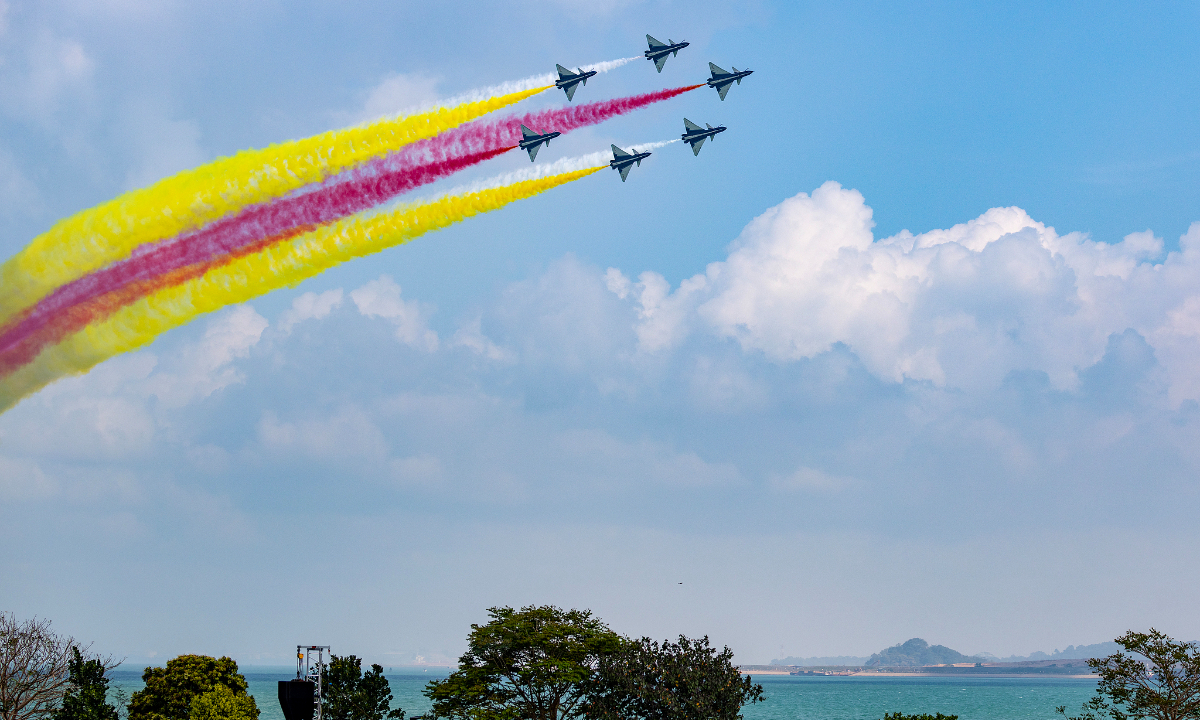
If we only look at the bare aircraft price, this deal is not particularly astonishing. The figure provided by the Business Standard is about $62.7 million per unit, but when including overseas and local training, technical and logistical support, insurance, construction projects, external fuel tanks, and operational support costs, the average actual investment per aircraft is close to $115 million. In simple terms, Bangladesh is not buying 20 aircraft, but a complete system that brings its outdated air force above the threshold of the fourth generation in terms of training, support, and ammunition systems. I believe this is precisely the most noteworthy change in Chinese military trade in the past two years: export models are beginning to upgrade from "cost-effective platforms" to "deliverable systems."
From a technical perspective, the appeal of the J-10CE is not mysterious. Defense News mentioned as early as when Pakistan received the aircraft that the export version of the J-10CE is equipped with an active phased array radar and can carry the PL-15E long-range air-to-air missile. For the Bangladesh Air Force, which still heavily relies on the F-7BG and a small number of MiG-29s, this means it has the opportunity to incorporate beyond-visual-range air combat, data link coordination, and more modern electronic warfare capabilities into the same fleet, rather than continuing to piece together combat power across platforms with significant generational gaps.
Why Now
The timing is also intriguing. Reuters and several South Asian media outlets have mentioned that Bangladesh has clearly referenced the performance of the J-10CE after the 2025 India-Pakistan aerial conflict. There is still controversy over the number of downed aircraft, but the market never waits for debates to conclude before placing bets. For a country with a limited budget that must also consider deterrence against India and maritime air defense, a fighter jet that has already completed preliminary combat endorsement in a neighboring country, and has the long-term financial and logistical support of China, will be significantly more attractive than Western options with higher procurement thresholds.
There is also a more pragmatic industrial logic behind this. Buying French "Rafales" is one thing; maintaining high-intensity combat readiness for over a decade is another. The same reasoning applies to purchasing the J-10CE. What truly determines the balance of air power in South Asia is not just how many new aircraft are parked in the hangar, but who can reliably obtain spare parts, ammunition, ground crew training, and software upgrades. In the past, China excelled in delivering hardware in military trade, but now it is also selling training, infrastructure, and long-term financial arrangements, which is the strategic significance of the J-10CE in the Bangladesh case.
What It Means for India
If this deal ultimately materializes, India will not be facing a simple "Bangladesh replacing aircraft," but rather the further spillover of the Chinese tactical aviation system on both its eastern and western flanks. To the west, there is Pakistan already equipped with the J-10CE, and to the east, there may be new users of the same platform. This may not immediately change the outcome of wartime engagements, but it will force India to allocate more resources to eastern air defense, early warning coverage, and training planning. Meanwhile, Bangladesh itself will also discover that the benefits and costs of procuring advanced Chinese fighter jets come bundled together: as air defense capabilities improve, the reliance on China's logistics chain and weapon upgrade packages will also rise.
What I am more concerned about is not whether Bangladesh ultimately signs for 20 or 24 aircraft, but whether it will also rebuild its ammunition stockpiles, pilot transition cycles, shelters, and maintenance systems. If these latter projects do not keep pace, the J-10CE, no matter how advanced, may just be an expensive promotional photo over Dhaka; but if the entire system is truly implemented, Chinese export fighter jets in South Asia will no longer just be selling aircraft, but rather rules. The next most noteworthy step will be how much sovereignty Bangladesh is willing to hand over to this Chinese supply chain.
Bangladesh is negotiating the purchase of 20 to 24 J-10CE fighter jets and armed helicopters from China, with a total estimated cost of $2.302 billion. This move, confirmed by government officials, marks a significant upgrade in the Bangladeshi Air Force's capabilities. The negotiations are advanced, with a draft agreement already in place, reflecting a strategic shift in military procurement in South Asia.
- Bangladesh plans to purchase 20 to 24 J-10CE fighter jets from China.
- The total estimated cost is around $2.302 billion.
- Negotiations are at an advanced stage with a draft agreement already prepared.
- The J-10CE will enhance Bangladesh's air combat capabilities.
- The deal reflects a shift in China's military export strategy towards comprehensive systems.